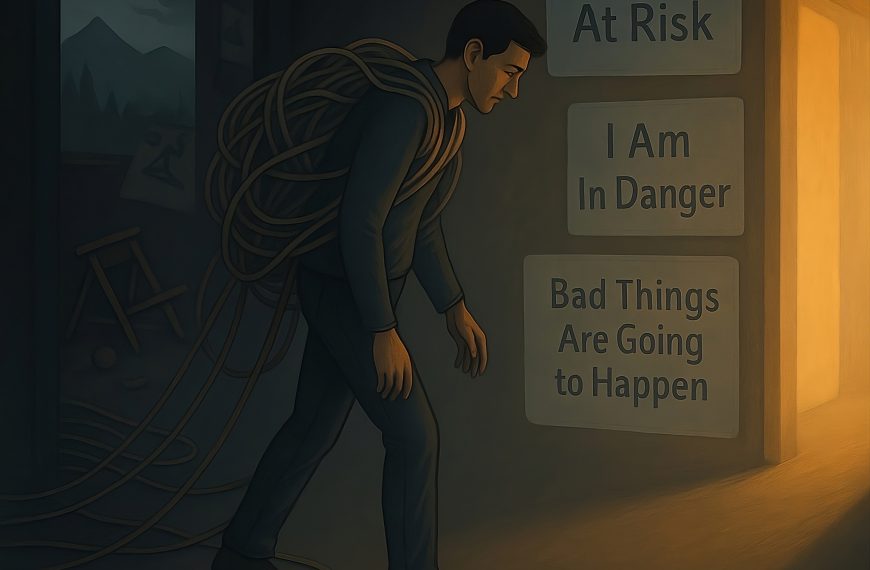
Most people don’t need to be told what anxiety is.
They’ve felt it. Lived in it. Worked around it.
They’ve tried the breathing apps, CBT worksheets, grounding techniques — and even when it helps for a moment, something keeps pulling them back under.
Because here’s what most therapy misses:
Anxiety isn’t just about what’s happening right now.
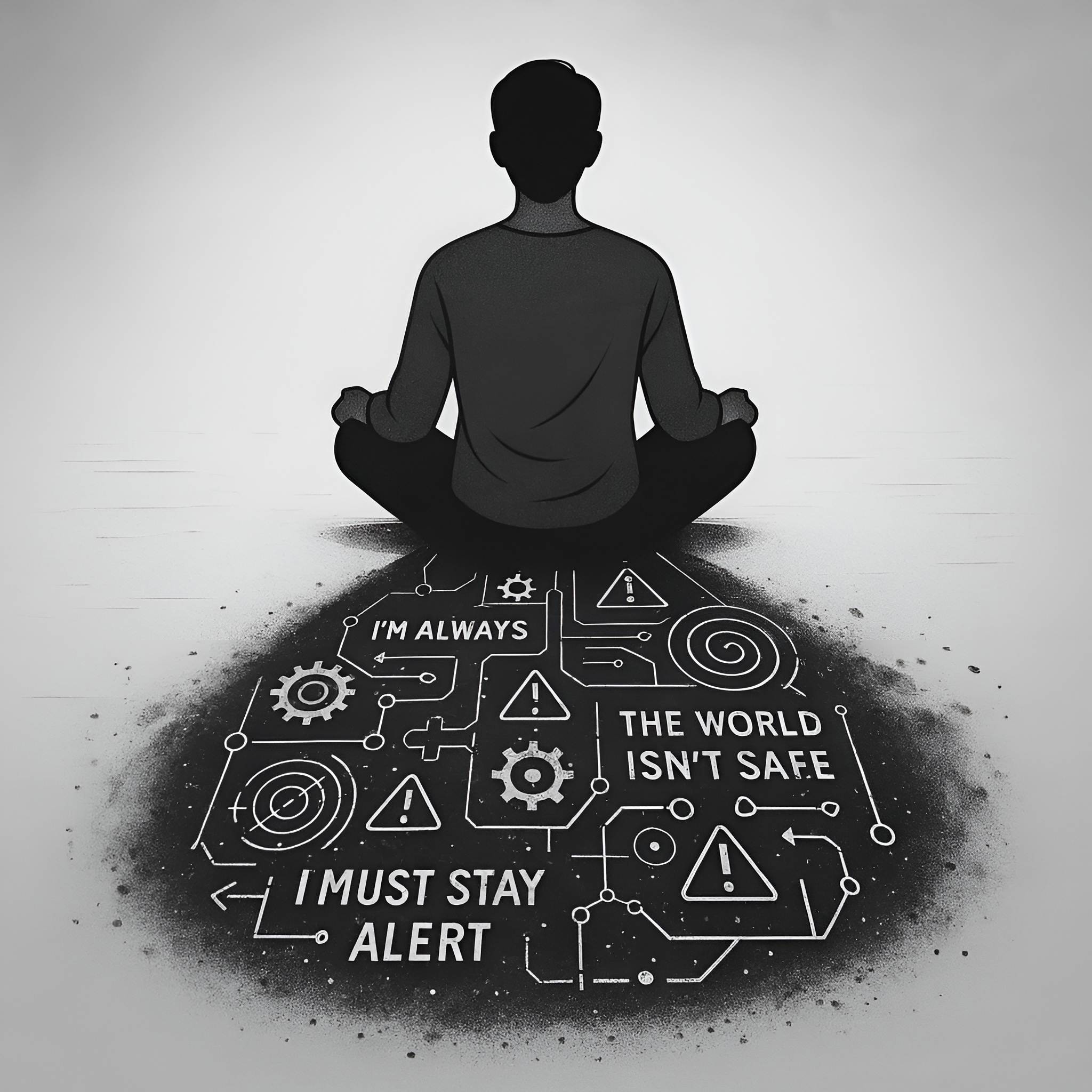
It’s about what your nervous system learned to believe a long time ago.
At ShiftGrit Calgary, we specialize in helping clients not just manage anxiety —
But recondition the deeper pattern that keeps it coming back.
Coping Tools Help. But They Don’t Interrupt the Pattern.
If you’ve done therapy before, you probably know the tools:
- Deep breathing
- Journaling
- Mindfulness
- Challenging anxious thoughts
And while those tools can help, they’re often being applied on top of an unseen identity-level rule, like:
- “If I stop worrying, something bad will happen”
- “I’m not safe unless I overthink every possibility”
- “If I don’t stay alert, I’ll lose control”
- “I can’t relax — something always goes wrong”
These aren’t just passing thoughts.
They’re core beliefs that your emotional system treats like survival logic.
Which means they won’t shift through logic alone.
What We Do Differently: Identity-Level Therapy
Most traditional therapy focuses on what you think.
We focus on what your system still believes.
Our Calgary therapists are trained in Pattern Reconditioning — a structured 5-step method designed to trace your automatic emotional reactions back to the beliefs that power them.
Here’s how the process works:
- We map your emotional pattern — the overthinking, shutdown, avoidance, and perfectionism
- We identify the limiting belief that lives beneath it
- We recondition that belief using imaginal exposure techniques
- Your nervous system rewires the threat loop
- Your reactions change — automatically, not effortfully
This isn’t about coping with anxiety.
It’s about targeting the emotional root, so anxiety doesn’t keep running in the background.
Real-World Example: “I’m Not in Control”
One of the most common beliefs we see in anxiety clients is:
“I’m not in control of what happens to me.”
Here’s how that belief shows up:
- You obsess over planning — and panic when things don’t go to plan
- You can’t relax — downtime feels dangerous
- You micromanage tasks or conversations
- You avoid conflict because it feels impossible to “win”
- You find it hard to trust others without staying hypervigilant
When we target this belief through reconditioning, clients often say:
“I didn’t have to try to stay calm. I just was.”
That’s the difference between coping with a pattern and removing the pattern altogether.
Want to Dive Deeper into the “I’m Not In Control” Core Belief?
Discover related beliefs, emotional triggers, and how therapy can help you recondition this deep-rooted belief for real change.
“But I Already Understand Where My Anxiety Comes From…”
That’s what most of our clients say.
They’ve done the work. They’ve journaled. They know their childhood stuff.
But here’s the problem:
Insight doesn’t rewire a belief.
Insight helps you name it — not erase it.
If you still feel the reaction even though you understand it, that’s your sign the belief still lives in the emotional part of your system.
Pattern Reconditioning is the step that clears it.
Identity-Level Therapy for Anxiety in Calgary
Identity-Level Therapy targets the belief patterns and emotional loops driving automatic reactions—not just surface symptoms. When we shift the identity layer, clients no longer react from shame, urgency, or fear. The result: clearer executive functioning, more predictable follow-through, and fewer threat-based shutdown cycles.
It’s organized around three pillars:

ShiftGrit Core Method™
Our structured framework for breaking outdated identity patterns.
Learn more
The Pattern Library
Real-world examples of loops like perfectionism, procrastination, and shutdown.
Learn more
The Glossary
Clear definitions that keep the language sharp and the process transparent.
Learn moreLimiting Beliefs Commonly Linked with Anxiety Therapy
These identity-level patterns frequently show up for clients seeking anxiety therapy. Explore the beliefs to learn the “why” and how therapy can help you recondition them.

“I Am At Risk”
“I Am At Risk” is a core belief rooted in environments where safety felt unpredictable. It often drives patterns of anxiety, catastrophic thinking, and compulsive control.
Explore this belief
“I Am Not in Control”
When “I Am Not In Control” is running the show, everything feels like too much. You either grip harder—rigid routines, hypervigilance—or give up entirely. Underneath it all is…
Explore this belief
“I Am Falling Behind”
The belief “I Am Falling Behind” shows up as anxiety around progress, panic over timelines, and shame when comparing yourself to others. Therapy addresses the internal pressure and…
Explore this beliefWant to see how these fit into the bigger pattern map? Explore our full Limiting Belief Library to browse all core beliefs by schema domain and Lifetrap.
Why This Works for High-Functioners
This approach is especially powerful for clients who:
- Are analytical, high-achieving, and goal-oriented
- Know the strategies, but still feel stuck
- They are great at supporting others, but can’t shut off their own mind
- Have outgrown old coping mechanisms, but haven’t found new ones that stick
Because this isn’t just about “managing” your anxiety.
It’s about changing the emotional operating system it’s running on.
Why Most Talk Therapy Hits a Wall with Anxiety
Traditional therapy often focuses on insight, venting, and building a safe space. That matters — but it’s not always enough.
Here’s the missing piece:
Your nervous system doesn’t change just because it’s heard and understood.
It changes when it’s shown that the old rule — the belief — is no longer true.
That’s where reconditioning comes in.
You don’t need more self-awareness. You need a new internal rulebook.
One that says:
“I can relax — and I’ll still be okay.”
“It’s safe to pause.”
“I don’t have to overthink everything to protect myself.”
We don’t try to overwrite the pattern with new affirmations.
We pull out the old one and install something that actually fits.
💬 Frequently Asked Questions
What kind of therapy is best for anxiety in Calgary?
How do I know if my anxiety is identity-based?
Is this like CBT or talk therapy?
📍 Ready to Work With a Calgary Therapist Who Goes Deeper?
Our Calgary team is trained to recognize patterned anxiety as more than emotion.
It’s identity logic. And it’s treatable.
🔗 Explore Calgary Anxiety Therapy →
🔗 How Pattern Reconditioning Works →
🔗 See the 77 Beliefs That Drive Anxiety & Other Concerns →
Not in Calgary? We’ve Got You Covered.
Our therapists in Edmonton also offer the same identity-level approach to anxiety therapy — targeting the beliefs that drive overthinking, shutdown, and chronic fear.