In Episode 31 of The Shift Show, Andrea McTague and Baldwin Asala dive deep into the intricacies of high performance psychology, exploring how grit, growth, and mental balance can shape the success of athletes, entrepreneurs, and other high achievers. The episode provides valuable insights into common challenges faced by high performers, such as burnout, limiting beliefs, and transitioning out of peak performance roles. Here’s a detailed breakdown of the key themes and takeaways from the episode.
Table of Contents
The Mental Roadblocks of High Performers
The episode begins with a discussion about the mental roadblocks that commonly affect high performers. Whether it’s athletes striving for an Olympic medal or entrepreneurs aiming for a major business milestone, there’s a universal struggle with blocks that can hinder performance. Baldwin shares his experiences as a coach and athlete, explaining that these roadblocks often stem from the high expectations placed on individuals at different stages of their career. He emphasizes that performance plateaus can feel like failure, particularly when initial rapid growth slows down.
Andrea elaborates on the parallels between athletic and business achievements, where entrepreneurs may hit similar blocks when scaling their ventures. Both populations tend to struggle with self-doubt, perfectionism, and the pressure to constantly perform at peak levels. These challenges can manifest as learned helplessness, where high achievers feel stuck and unable to move forward, despite their previous successes.
The Role of Grit in Performance Psychology
Grit is a major theme in the episode, defined as the perseverance and passion to achieve long-term goals. Andrea and Baldwin discuss how grit can help high performers push through setbacks and maintain resilience. They argue that while talent and skills are important, it is grit that often makes the difference when reaching for the highest levels of achievement.
The conversation turns to the necessity of embracing failure as part of the growth process. Baldwin shares how being placed in unwinnable situations as an athlete helped him learn resilience. The key is reframing setbacks not as failures, but as essential learning experiences. This mindset shift allows individuals to develop the mental toughness needed to keep going, even when faced with difficult challenges.

Achieving Flow States
Another critical topic discussed is the concept of flow—those moments when everything clicks, and performance feels effortless. The hosts explain that flow occurs when there is a balance between challenge and skill. Too little challenge leads to boredom, while too much leads to anxiety. Baldwin suggests that athletes and entrepreneurs need to find that sweet spot where their skills are being stretched just enough to foster growth without overwhelming them.
Andrea adds that flow is often disrupted by the activation of the “threat brain,” a state where anxiety and fear take over, preventing individuals from accessing their cognitive resources. For high performers to achieve flow more consistently, they need to shift away from threat-driven responses and cultivate a mindset where challenges are seen as opportunities for growth. This shift enables a more flexible and adaptive approach to overcoming obstacles.
Burnout and Work-Life Balance
Burnout is a recurring issue among high performers, especially those who equate their self-worth with their achievements. Baldwin points out that the obsessive pursuit of perfection can lead to overtraining in athletes or overworking in business professionals, ultimately resulting in physical and mental exhaustion. Andrea compares this to a “herding dog” mentality, where the individual is constantly on the go without taking time to rest or recover.
The discussion covers the importance of setting boundaries and incorporating rest into one’s routine. For high achievers, it is not always about doing more; sometimes, stepping back can be the most strategic move. The hosts advocate for building hobbies, social connections, and mindfulness practices that allow for mental decompression, which are crucial for long-term well-being.
Overcoming Limiting Beliefs
The episode dives into the power of limiting beliefs, such as “I’m not good enough” or “I need to be perfect.” These beliefs can drive individuals to obsess over their goals to the detriment of their mental health. Baldwin discusses how these beliefs create a cycle of overthinking and hyper-control, which disrupts performance.
Andrea offers practical strategies for overcoming these limiting beliefs, such as cognitive reframing and focusing on learning rather than outcome-based goals. By viewing setbacks as part of a broader learning process, high performers can detach their self-worth from their accomplishments, making it easier to handle challenges with a clear and calm mindset.
Transitioning Out of High Performance
The episode concludes by addressing the challenges of transitioning out of high-performance roles, whether due to injury, retirement, or simply a change in career focus. Andrea and Baldwin stress the importance of having interests and relationships outside of one’s primary field of achievement. Without these safety nets, the transition can feel like a loss of identity.
They recommend building a foundation of resilience by nurturing various life domains while still performing. This approach not only helps prevent burnout but also makes it easier to navigate life’s inevitable changes.
Key Takeaways
- Grit and resilience are crucial for overcoming performance plateaus and setbacks.
- Flow states can be achieved by balancing challenge and skill while managing anxiety.
- Burnout prevention requires integrating rest, hobbies, and social connections into one’s life.
- Limiting beliefs must be challenged to unlock higher levels of performance.
- Transitioning out of high performance is easier when diverse life interests are cultivated.
Episode 31 of The Shift Show offers an in-depth exploration of what it takes to sustain high performance without sacrificing mental health. It’s a must-listen for anyone looking to enhance their mindset, whether in sports, business, or personal growth. Tune in to learn more about finding balance, mastering the mental game, and achieving true resilience.

Explore this topic
Related concerns we work with at ShiftGrit:
Performance Psychology — clinical overview →More from The Shift Show
Episode transcript
Andrea McTague: Welcome to this episode of The Shift Show where we are delving into the world of high performers and high achievers. So professional athletes, C-class level founders, executives, high performers of all sorts. But don't think you need to be in these categories to learn from all the stuff that we're going to get into today. If you push for excellence in any area of your life and you want to sharpen those skills, then this one is for you. So I'm Andrea McTague, I'm the founder of ShiftGrit and its unique psychology based therapy program. And I'm joined today by one of our talented brain benders and provisionally registered psychologist, Baldwin Asala. Baldwin, welcome. Thanks for joining us today. I'm excited to unlock some performance psychology goodies for our listeners with you. So. We both work in the arena of performance enhancement psychology for a good amount of our practice, just with two different populations. So I grew up in a very business oriented family and I gained from this kind of what I like to call my kitchen table MBA and then did some executive ed at the Harvard School of Business and some involvement with EO and other workshops and training and we like to get into their research and all of those journals. And I put that together with my own entrepreneurial experiences and a lot of the ongoing research that we do to work with more of the business crowd, so the founders and entrepreneurs and things like that, to kind of allow them to take their business to the next level while balancing their personal life. Now you've got a little bit of a different background that intersects with your specialty clientele, which is athletes and performers of kind of in the physical domain. Can you tell me a little bit about this and how you got into that? What's your background? there.
Baldwin Asala: Yeah. So my background, how I actually even got into this is that I came from all over the place, born in Nigeria, lived in England, lived in the States, now living here in Canada. And actually when I first came to school here, the whole point was to play football, do wrestling, and just see where that took me. And then that happened to fall in love with psychology as I was doing this. And I learned that a lot of the tricks I was picking up from my classes, a lot of the lessons I was learning actually contributed pretty heavily to and affected how my performance, how I perform, and how I was as an athlete myself.
Andrea McTague: So you're like, you're in this study, you're like learning about this stuff and you're like, wait a minute, there's a dual application here cause you were running kind of both programs. So tell me a little bit about, in terms of athletics, you're still involved in the world of athletics and wrestling. And then tell me a little bit about what that looks like for you in this moment now. What are you up to?
Baldwin Asala: It's so one of the things I do right now is I'm a coach for the Junior Dinos Wrestling Club. And I also help out sometimes with coaching the university team as well, which was my alma mater, where I performed as both a football player and as a wrestler myself. So it's been a nice way for me to kick back and give back. And it's actually really interesting now being a coach myself. And being able to see all the athletes doing the exact same things that I did, but now actually have the tools. And because I'm not that, I wasn't that far removed from my time as an athlete. I get to, um, it gets to me a little bit more. feel like there's a little bit of a weird age range, whether it's like, Oh, this person did it. So you get to it or this person's way older and he's seen so much that he definitely gets it. That weird middle ground.
Andrea McTague: shift these lenses around where you're like first looking at it from like the athlete that's immersed in the game. in it to the coach to now the psychologist slash coach slash athlete. It was like looking at it from all of these things. And I think that that's something that I see in the entrepreneurial realm as well. So when you're in it, like I own businesses and so on. But then I also do the consulting coaching kind of stuff for business owners. So you get to look at it from different angles as well as through the lens of the research. And we're going to talk a little bit about some of the common concerns. So I know you and I off the air many, many, many times we've had conversations about how similar these populations are. So whether it's the athletes that are striving for these very specific competition goals or whether it's my... entrepreneurs that are striving to hit a revenue amount, a mission thing, whatever, it seems to be the same kind of mindset feeding them. And so we've spoken a lot about the opportunity costs and some of the problems that they run into, not only in terms of leveling up and hitting those goals, but things that kind of affect them in their personal lives as well. When the three kind of common concerns that we see a lot of that I drew from our conversations was we see them coming to us for blocks to performance. mmhmm right? Where they're like just running and then they just get stuck on something and can't move past this like one thing and it's like kind of breaking their brains a little bit and we're pretty skilled at moving past those. We're going to talk about that. Second one we're going to talk about is burnout and work-life balance type challenges, right? Because I like to use the analogy of like a collie dog, like a herding dog where they're just like I gotta see this one thing, I gotta see it through, I gotta do it, it, do it, do it, do it and then you're like well how about you come for a walk or lay by the fire. and they're like, huh? Like, how do I do that thing, right? Because very, very skilled, hyper concentrated. And then the third one is... when there are the struggles that come with transitioning out of their performance arena and then going back into like kind of civilian life, right? So how do they do that? And I know for the entrepreneur set, sometimes it's a retirement, sometimes it's a sale of their business. For the athletes, you've mentioned that there's different reasons for that. So we'll get into some of those conversations as well. But let's talk a little bit about the blocks of performance first. So when you're working with an athlete, what are some of these thoughts looking like? How do they present?
Baldwin Asala: It's usually, actually I'll start with, anytime I talk with my athletes, the athletes I coach, I was trying to walk them through how there's levels to this. And we unconsciously, we go through these and some of us we don't even notice it, but when we started in junior high, we go from junior high, junior high to middle school, middle school to high school, high school to university, university to senior level, and then senior level to international and international, like, okay, let's go to the Olympics. Now, what comes with those is that a lot of I find athletes who actually, some athletes, a lot of athletes actually know what their goals are. Mmm. And that plays a big, that plays a really big effect into like what creates these blocks. Cause if you have a, it's a very interesting thing, very different thing when you're 15 and you say, my goal is to go to Olympics. Cause you don't really know what that entails.
Andrea McTague: Yes, yes. So it's just like, this seems like a good one. Pull it out of thin air and then go for it. We are often having conversations with my entrepreneurial clients and myself where it's like, why do you want that? Like, what is that actually? They're like, I want to hit 50 million. Why do you want to that? I want a yacht. Why do you want the yacht? Like, what's the impact for you? And then also what's the opportunity cost involved in that? And are we willing to pay that price right now? And if we are, how do do it? Right. So it's kind of a similar sort of thing. And I think that that's an interesting is like what are the goals like where and then the sub goals too right because from what you're saying the 15 year old that wants to go to the Olympics well there's probably a whole bunch of incremental stuff in in there in that mix it's a little bit of defining those those ones as well
Baldwin Asala: Well, yeah, it's also because when, especially when you're younger, when you're just starting out, we have like that, that the things done in Kruger effect where everything you're rate of growth at the start is so sky high and so impressive. And then when you finally plateau, it feels, which is usually when the blocks kick in, it feels like, I'm a failure. I'm stopping. Like I can't get better, but
Andrea McTague: We talk about that like the last 5 % is way more effort than the first 95, right? So a little bit of that. I think then you're saying, in the blocks to performance that I see, which I'm guessing are going to show up in your population as well. I see a lot of the learned helplessness, they get apathetic. These are also people that are used to winning. They're used to delivering, so they're like, nail it, nail it, nail it, and they get stuck on something and then they're like, whatever, just burn the whole thing down, I don't care, I don't wanna, I'm not gonna show up, et cetera. And there's this apathy or learned helplessness that comes up. Do you see that in the athlete population?
Baldwin Asala: a hundred percent. It's actually, ironically, it was one of the things I didn't understand when I was an athlete myself until near the end, where our coaches, my coaches would set me up to be in unwinnable situations. Because you learn a lot from losing and then getting up, persevering, because very few people in life, in sports or in business, or you're just gonna have a clean sail all the way through. More often than not, unless you're a once in a generation type prodigy, you're gonna lose or you're gonna hit a wall and you're gonna have to try and figure out how do I get past
Andrea McTague: this. 100% And I think that the one thing, so we talk about two things in the biz population. And we talk about the need for approximation of learning, right? So you need to try things that are increasingly challenging and you need to fail at that. You need to screw them up. And that's how you're to get to the next thing. So reframing that from just the like, ah, didn't work, da da da, everything's crap to no, no, this is part of the approximation of learning to get to the next thing. The other analogy I use a lot with them is like a video game model. And I was like, look, the skills that you needed at level one are not the skills that you need at level two or three, four, five, six, seven, eight, whatever. Right. So it's kind of getting that, um, them into the mindset of the evolving self, the evolution of the mindset required for true competition.
Baldwin Asala: You guys play with that? Oh yeah. A hundred percent. Cause it's that you can't all the skills you develop and you start off with, they're not going to be, they're not going to be your bread and butter when you're in like year, year 10, year 15, but they're going to be the things that help build your foundation, understanding, expertise. So it's, don't want to lose it, but you want to build off and use it to evolve yourself, involve how you think about the sport, how you think about it. And want to take it to the business sense, the lessons you learn when you first open your business. whether good or bad, can be used 10 years, 15 years down the line.
Andrea McTague: 100%. And I love that reframe of the like, we call them doing autopsy. So they'll try something, it'll be an abject disaster failure, whatever in their mind, we come back in, we go, okay, let's do an autopsy. And I know that you we've talked about you doing that with the watching the training videos, and that dissection and things like that.
Baldwin Asala: I enjoy having the conversation, especially when it comes from a loss. Because no one likes to watch a video where you get your butt kicked. It's not fun. However, you're going to learn a lot more, both for me as a coach and for you as the athlete, if you can actively see yourself get punished for mistakes.
Andrea McTague: 100 % and I think that this is one of the interesting shifts in mindset is like generally these people are quite Talented at what they're doing. So like level one level two of the game You can your talent dominates right and then because the talent dominates or you lead with talent what's often underdeveloped and I think that this goes into those performance blocks is The grit side of it right where you're like, okay that sucks. You got your ass kicked get up do it again get up, watch that video where you did definitely get your ass kicked, sometimes in a very public way, right? Which is also a thing. And go back in the ring and like do it again and again and again. And that grit and consistency of perseverance type stuff. There's also, so we see the limiting beliefs and we work a lot with limiting beliefs here. So I see the limiting beliefs as the things that actually cause the block or the activation of the threat brain that is like, no, I don't want to watch that video of me losing No, I don't want to go in and give that talk to the company about how we tried this thing, but we got to pivot and it's, you know, admission of failure. Right. So that is one of the limiting beliefs that we do a lot with. Right. I am a failure. need to be successful when and when we can remove that, tweak that. I find that they don't been. things as failure when they can be binned as learning opportunities and that unlocks a new level of the game. What other kind of limiting belief type stuff do you see pushing on the creation of blocks in your athletes?
Baldwin Asala: A very common one is the I'm not good enough, leads to, that limiting belief leads to the perfectionism that I need to, I need to, I need to obsess over this, which oftentimes you do need to be obsessed over it, but there is a balance to be had. And what, what affects us or athletes themselves when they have that, I need to be perfect is you, you start to lose the ability to perform or to play free. You're always so tight, you're overthinking everything. Like, your mind, your body needs to take a step to the right. However, your mind is overanalyzing the steps to the right. Like, okay, what can go right here? What can go wrong here? And as much as our brains can be like computers, we are not computers. And we actually, need to able to slow things down and simplify things, which actually leads us to what they call the flow state.
Andrea McTague: And this, yeah. about the cognitive mind a lot, So when we are into our threat brain, our resources for strategy and hitting those flow states that you're about to tell us a little bit more about is diminished. So I think that the control one as well would play into that, the diagnostic control. But how do you get your athletes to maximize the, to pop into their flow states more? and move away from those performance blocks.
Baldwin Asala: It's a, it's one, it's actually what we just talked about, right? Uh, we just talked about earlier, which is changing the mindset instead of like, can't do this. Like, okay, this is a new chance for me to challenge myself. If I fail here, it means I got more to learn from. It means I have more things to improve on. Uh, the goals, knowing why you want to do this. What, when you have intent, I have to call it intentionality. When you have the intention, you know, the intention behind everything you do. It makes it more purposeful, makes it easier, and it makes the athlete more invested in every step they take.
Andrea McTague: 100%, and I think the combination of the intentionality with the idea that you can overcome the challenge, that you will best it. There was some interesting studies on kids in classrooms regarding learned helplessness and just the messaging around it. So two classrooms, same task, right? So one was given a lot of like negative feedback, like, this task is really hard. It's like insurmountable, blah, blah, blah. And then the other one was like, yeah, you've got this. You can do this. You're smart. You're capable, et cetera. Same task, these guys in the you can do it classroom all accomplished the task and the ones in the negative kind of feedback or looking at it as a challenge or a difficulty or a struggle, they just gave up. So we know that learned helplessness is a major piece of achievement and you have to kind of stay out of that domain of thought and we do that a little bit through the removal of those limiting beliefs that are activated but Talk to us about flow states a little bit, because that's something that we see as, I would say, it's the delicious gift of obsessional qualities.
Baldwin Asala: like that. That's a good way. That's a really good way to put it. It's essentially like you said, it's the present you get for finding that balance between challenge, anxiety, and skill set, skill level. When your mindset, your mindset to aim for challenge, to push yourself, push yourself towards a goal. It's essentially, the flow state is essentially our reward for everything that's soup. in our mental soup coming together and hitting the right one.
Andrea McTague: Yes, this is like the perfect sort of temperature internally.
Baldwin Asala: It actually is what it's the flow state is actually what happens when when you suddenly break into the next level, like actually not just like you're not just getting there actually like, okay, now I am if one if you want to use it for like the universe for wrestling. Okay. I'm in university. I was a badass when I was in high school. However, now everyone here in university was a badass in high school. And it takes a while before it clicks before like, okay, now I'm a university wrestler.
Andrea McTague: 100%. We see that when we're... when my clients are pushing revenues. So maybe, you know, they've got maybe a $5 million company. It's flowing nicely. They know the game. It's almost kind of on autopilot. They've done this before, but now they want to push up to that $25 million category and they're in rooms with different people. It's different types of things. They've got to relinquish some of their leadership at the delegation, like new skills. So it's the entry of these new skills that need to be identified, but then also are quite uncomfortable, right? Because you're like, well, no, I was really great and now I'm crap and I don't know what I'm doing. So you're back to the beginner, right? So it's like the beginner teacher is like that cycle happens a lot faster for high performers because it's not just like you start out as the beginner and then you evolve into the expert. You start out as the beginner, you evolve into the expert and then you're back to zero. So it's almost like a game of snakes and ladders, which is where the mindset stuff and the grip comes into it. Cause I think when you acknowledge that, and you look at where are my internal blocks, because I'm constantly blathering to them about taking things that are going to activate the threat brain and moving them out of the way so that you can stay in the cognitive mind. Because if you can't hit the cognitive, that intentionality that you were mentioning cannot happen. Because, talk to me a little bit about why, why does it require the cognitive mind to hit that?
Baldwin Asala: Actually, I'll start with I'll start it off with actually explaining what this flow state is when we hit the flow state it this is when you start this is when an athlete say the game slowed down for me. This is what they mean is that their mind and body are working in perfect harmony It's like they don't have to think they just know like I need to accept the right I need to twist my hips this right way This is how I need to move my body if I need to make this shot and make this throw Now, when we have these mental blocks, it disrupts this harmony from happening. This is when, like that early example I said of like when you step to a right, you overthink everything about it.
Andrea McTague: So like I used to fight as you know, and then, or do like a lot of Latin dance, but when it's like, you have to stop and think, when you think about it, you're like, where am I putting my arm versus just like doing it? And then, then of course you mess it up or whatever, but on a much bigger scale or much more consequential scale, right? But I think it's an interesting one, cause how do you get to that point then where you can... have such level of mastery that you're almost not thinking.
Baldwin Asala: It's the foundation. It's learning from all the mistakes, all the successes, all the lessons. All the lessons have happened in the past and just being able to, like this is the obsessive quality of it when it's become second nature, when you've gone over it so many times. I mean, what's that saying of, I don't fear the man who knows a thousand kicks. Who knows what I do with a thousand kicks? I fear the man who's practiced one kick a thousand times, something like that.
Andrea McTague: Oh, 100%, I love that, I'm steal that. And I think that that's where we get into the value of doing. So one of the things that I see that's a problem with the blocks to performance is it stops the trying, right? And so what you're talking about is that practice being required. So not practice of like, analytics or talking about it or breaking it down, but the actual doing, like doing that one kick a thousand times. You get up and do it and do it and do it and do it until it is like zone level flow state level. And I think when I see that in the high performers, those blocks stop them. So they stop them from doing whatever and you'll see these avoidance kind of scripts coming up whether they're like, I don't like public speaking. I'm not going to do that or I can't delegate. I'm just going to do it myself or whatever it is blocks the application of it. And sometimes there's still the seeking of knowledge, right? So I feel like that stage isn't as often blocked. They'll read the books, they'll watch the videos, they'll go to the trainings and the workshops and whatever. But when it comes to application that walnut brain or threat brain feeling becomes so so dominant that it just gets stuck there. And that's what the blocks kind of look like in, think, a lot of the high performer populations. And then you do not move to the next level.
Baldwin Asala: because you kind of said that you obsess over when you say like you want to have that obsessiveness sometimes you can obsess over the wrong thing which is then it stops you from challenging yourself which like said like if you're not
Andrea McTague: And I give my people a little bit of a litmus, and I was like, because I often get asked, like, how do I decide whether I'm in the cognitive mind or whether I'm in the walnut brain? And I was like, ooh, that one's an easy one. If you look at the types of thoughts that you're having in the cognitive brain, they tend to be... problem solving oriented or analytical. You're like, okay, well, how could I have done this better? Where was my foot in the wrong place? Did I deliver that with a tone that wasn't going to people weren't going to be receptive to whatever the thing is. You're thinking about the problem from a Rubik's Cube kind of vibe versus the Walnut Brain, which is going to be accompanied by like a gross physical sensation like that feeling. And it's going to say things on repeat. So just like, my God, you suck at this. This is terrible. I don't want to do this. I don't want to do it. it's on this loop, the loop doesn't have any context. It doesn't have any timeframe, it doesn't take into nuanced skill analysis, stuff like that. So when we've got one of those loops happening in the threat brain, that's when we're gonna tie it to the limiting belief that's binning the thing as a threat, and then I'm gonna crush that first. And then we put them over to the cognitive. and then we're getting into like different back to practice stuff implementation. Is that kind of what it looks like in the realm of the athletes or is there anything a little bit different?
Baldwin Asala: Oh, it's actually what you talked about. Well, me, myself as a coach, I really like to work with a more of a positive mindset, building someone up. Because once we, with the positivity, once we take away those negative thoughts of like, suck, I'm never going to do this. I can never amount to anything. Once we get rid of those voices and give them the confidence or in mind and like, you've got, you've, didn't just get here, you earned your way here. It makes it a lot easier for them to start to kind of do that Rubik's puzzle. but with a clear mind and actual focus. And it makes it, the intentionality sticks more, hits more, matters more.
Andrea McTague: And I think that that's why I think people kind of have to understand that the brain doesn't really operate in like one cohesive unit all the time. This is why we go to like kind of the regulation of the perceived threat first and then into the honing of the cognitive. So lots of interesting things that the blocks to performance. And we see a good amount of that in our populations. And then the next one though, and I'd say this is probably the most common problem that people... the high achievers come in with and it's a whole bunch of burnout and balance. We touched on this a little bit about the learned helplessness and the apathy kind of stuff. What does the burnout look like and what are some of the things implicated in the balance problem of these individuals that you see?
Baldwin Asala: at the downside of the obsessiveness when you're spending too much time training, when it's, this is often, it's an often one of those thoughts that happen, which is that I need to, I've hit a wall and the only way I can overcome it is by training twice as much, three times as much. And then you lose all the things that kind of give the help given meaning, which is it comes back to that. Why, why are you doing this?
Andrea McTague: Once we. Yeah. misalignment sometimes too, right? Like I'm doing this to build because my family is so important. I'm like, yeah, but then why are you at the office for 80 hours a week, 100 hours a week? What do you, like that's not, that doesn't match with that, right? How does it look in the realm of the athletes?
Baldwin Asala: It's, want to, a lot of times it's like, I don't want to let anyone down. I don't like, I, all my coaches believe in me. All my teammates believe in me. They've invested so much in me. I have to repay them. I'm like, well, if you keep training this much, doing way more than your body can handle, and then you break yourself, it doesn't really, then we all feel bad that we let this happen in the first place.
Andrea McTague: So do you see a lot of like, I'm a disappointment as a limiting belief or I'm, yeah, that one. Cause I see a lot of the, I'm a failure, will fail. I see a lot of worthless. And I always get a pushback on this one when I approach it. And like, I don't feel worthless. I'm like, yeah, that's because with every limiting belief, there's a dysfunctional need. And I was like, and you are damn good at meeting that. So I'm worthless. I need to provide value. And then it's, that one. coinciding with the I'm not good enough, I need to be exceptional. Those two together create this like beautiful storm of striving beyond capacity. you're smiling because you've seen a bit of this,
Baldwin Asala: I see it all the time. And it's that I can show like I've won all these awards. I've won all these tournaments. I'm like, well, yes, you have, but you also kind of choke on the big ones because, and then you lose to people you shouldn't lose to because you're so, you're so in your head all the time. thinking that like, if one thing goes wrong in your game plan, your game prep, your warmup, your rec the rest of the day.
Andrea McTague: 100%. Like, I was working with a professional golfer for a while and he's like, I just gotta hit the first three perfectly. And I was like, well. First of all, that's the, I'm not good enough and dysfunctional need. need to be perfect, which is problematic because you can't always be perfect. I was like, but what happens if you don't? he's like, is if I make a mistake in the first three, then the whole game shot. And so what we were working on is like, how do we keep your head in it? Even if something doesn't go according to plan, because the nature of competition is that things will not go according to plan. So we were honing on that one. remove that side of things. And then also a little sprinkle of the need to control every single detail all the time and it has to go like that almost to like a ritualistic point then there was able to be some flexibility that didn't throw the mindset so it's kind of like in the short term it was going to create less outcome but in the long term it was going to be the thing that's required for winning.
Baldwin Asala: Yes, I always like to personally preach balance to my athletes and clients myself. Because perfection is actually a fun thing to strive for. But the way I was trying to reframe it is that perfection implies that there is a point where once you hit it, you can't get better.
Andrea McTague: Yeah, you're done now.
Baldwin Asala: Yeah, and all that's going to do is limit your growth, especially if your idea of perfection is different.
Andrea McTague: Well, that's right. Even moving the goals from, okay, I'm going to win this championship or I'm going to make this many millions to I'm going to evolve my mindset. One's like a continual program. one is just like related to this one thing, which we'll get into our next point when they lose that one thing. But I think also when you've got this constant sense of striving, it does begin to dominate things. And this changes a little bit with age because the 20 year old that's, you know, got their startup launched or into their like athletic career, that's a very different thing from somebody who is given into the total domineering workaholic level obsession for like a 25 year career and now maybe we've underdeveloped certain areas of life. Right? What do you see as the most common ones in the athlete population that are underdeveloped that kind of a price will be paid for a little bit later?
Baldwin Asala: It's usually, actually it's very similar to the same thing for entrepreneurs, is no friend, lack of social life, lack of close relationships, of meaningful, romantic interests of people that you trust, no friends or relationships outside of sports, which is...
Andrea McTague: guys often like, it's like social life, meh, hobbies, meh. And here's one that's like the silent one that kind of sneaks around is the ability to do things that will develop distress tolerance for slow. So I always joke with them, put, threatened to put them in like a yin yoga class or a meditation or a slow walk by themselves or hang out on the beach for a day. Go crazy. like, absolutely not. That shows also on the psych level, it shows a negative impact on the ability to heal the adrenal system. So to down-regulate that nervous system, which eventually has physical consequences, sleep consequences, stress consequences, elevated levels of cortisol and all the stuff that comes with that, right? So we're wanting to put those things in while they're performing rather than like, yeah, yeah, I'll get to that later. when I retire and you're like, yeah, but by then we got some stuff that is very, it's like moving the Titanic then. It's a bit hard to course correct it.
Baldwin Asala: I mean, it's kind of like trying to save for retirement when you retired instead of earlier on.
Andrea McTague: a great analogy.
Baldwin Asala: Cause it's all you're doing. You might as well do it now while you have energy and while the lessons you learn now can actually matter. Cause as much as we all like to believe that we're going to be professional athletes or high level athletes for the rest of our lives, does have a time limit. you're eventually going to have to like hang it up.
Andrea McTague: And I think that that's something in the entrepreneurial realm where I talk to them about that because there's a weird little thing that causes people to need to hang it up and that is age, right? So you often will like because I work particularly a lot with people transitioning out. of their businesses, right? So often these are older individuals and they're ready to be like, okay, they can't go at that pace that they were going at before, or, you know, it's just, it's time to kind of take a step back, but none of the skills to take a step back have been built. And so we got no distress tolerance, no hobbies, no friendships, da da da da. We got some problems going on. So there are things that we need to very, very quickly get in there and like edit mindset wise. So certain beliefs about what has value, what doesn't have value, et cetera, get in there and rejake that. And it's interestingly and irritatingly for them at the beginning, they like it later, but it's the learning how to do those things that they're like, I don't want to do this. I just want to perform.
Baldwin Asala: I just want to win. And it's, well, it's trying to convince them to that if you do it now, it's going to decrease your chance, the likelihood of burnout occurring. It's going to allow you a more chance to grow your business or grow in your skillset. It increases your window of opportunity to perform. one that I see quite often, is, especially once you hit the burnout or you sacrifice too much. for your sport is a resentment towards the sport.
Andrea McTague: interesting. We've talked a little bit about that. about that resentment where it becomes almost like the thing that you love becomes the thing that you hate because you can't control it anymore. And I kind of give them the analogy sometimes of like, I'm like, what's your favorite food? So someone says like, I don't know, spaghetti bolognese. And I was like, every meal, every day, all the time, how much are you going to like it in a month? Right? And it's kind of that sort of thing. And it might be the best on the planet. So, but getting at those like core things that cause that drive. And there's some interesting research recently on the role of traumatic upbringings in performance. And we've talked about this one, but basically that we see that the high achievers, the extreme strivers in whatever realm it is, whether it's sports or business or whatever, they didn't grow up super nice often. Lots of what we call non-nurturing elements. Do you see that in your client population quite a bit?
Baldwin Asala: Yes, yes I do actually. And we see them in professional sports too, especially US sports like basketball, football.
Andrea McTague: I just watched that Dennis Rodman documentary and I was like, this is so sad, Dennis, we could have helped with that. But you see it in whether it's Alex Rodriguez or whatever. There's it's quite common.
Baldwin Asala: Well, it helps too because the reasons come and the reason you see this in so much in professional athletes, it helps with the intention because it's very, the why is very simple, very prominent. And you see that you have, you can see the reminder all the time of I need to make this, I need to do this to get out of this or to achieve this and to provide for everyone.
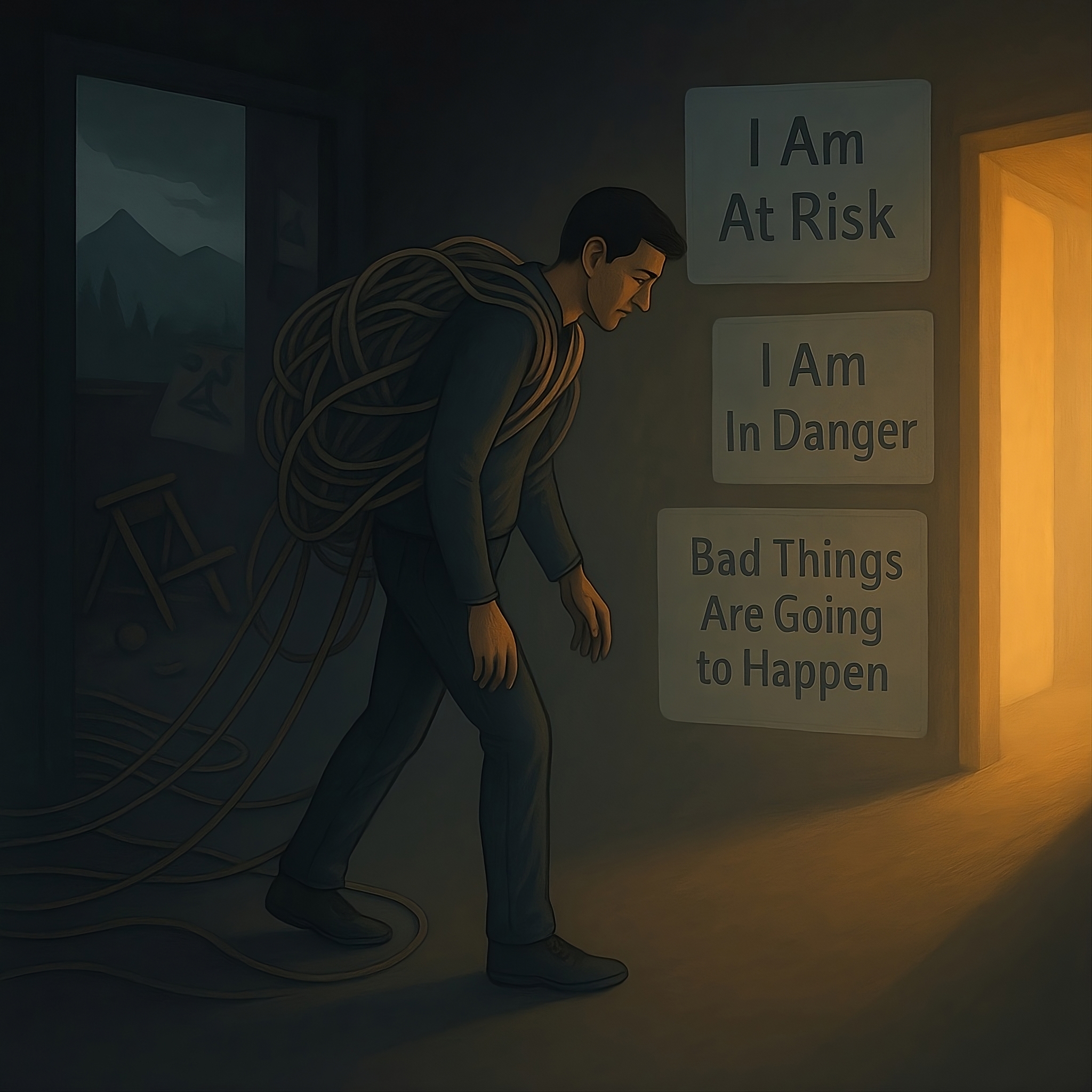
Andrea McTague: Right, and I think that I often see a limiting belief of I am less than or I am inferior. in the realm or I'm powerless. Like those two seem to be very, very linked. And then the third one I see really, really commonly, and we deal with the powerless thing, the I'm at risk thing, which you can think about the types of childhoods or the events that occur where those things are going to be actually real. Like maybe they were really powerless. Maybe there's some, whatever, domestic violence. Maybe there's some abandonment. Maybe there's some addiction or who knows what going on in the early childhood. And that makes things like like I'm at risk, true. So I think on the good side, because we talk about that negative aspect of limiting beliefs often, but on the good side, it means that you have a built-in risk tolerance already. Because you've already handled quite a bit of risk. It's not a good thing. We don't want to do this to people. But you've already handled a bunch of risk. And then the one where we see the powerless one coming up is the dysfunctional need for I'm powerless, of course, is I need to be powerful. So you can see that powerful from a physical manifestation, from a mental manifestation, from a societal success kind of plan, right? Like I got my Bentley, look at me now kind of thing. Or, you know, or I control all these people or I control the field or.
Baldwin Asala: no one's gonna mess with me because I am the guy. I'm the guy everyone's scared of because I can kick everyone's ass here, no problem.
Andrea McTague: 100%. And I think things like I am less than as well is one of the reasons we see so many people that are original founders or high level athletes coming out of poverty environments. Because I'm less than, I'm going to be more than, right?
Baldwin Asala: that it gives you that drive, gives you the, once again, the intentionality, because I know why I'm working this hard.
Andrea McTague: 100 % and I think it's like that built-in risk factor of knowing what the alternative is as well. If you grow up in like a nice and I'm not saying that people that grow up in a beautiful nice well-loved middle-class upbringing don't have it. There's just a different kind of appetite that sometimes turns on the individual as well. So it can be very very helpful in the creation of these like unrelenting striving kind of standards. There's obsessional landscape and like high drive towards goal achievement but that can, when it hits some blocks and bumpy roads, it can really, really be difficult to wrangle. I use the analogy of like a very, very well-trained protection dog, right? You want a well-trained aggressive dog, because otherwise we got some problems. But like, I mean, in my own landscape, I was just having a conversation with my dad, who is like a rags to riches kind of story. And he was talking about how that poverty drive was like put a thing in his head where all of these people looked at me like, I'm not anything, I'm not going to be anything. And he's like, fuck you, I'll show them. And then that's where then it's my father's daughter, But where do you see that kind of coming up?
Baldwin Asala: it's the it's kind of if I'm not good enough, I need to be perfect. Well, as much as I'm saying, we don't mean to have the balance of perfection, but that's the kind of drive you need to do the same, the same move, the same steps thousands and thousands of times. And then not to get not to get complacent with it. You need to be able to like, OK, I was like a millimeter off where I need to be. It didn't feel quite right. I need to make sure I get to the point where it is perfect or it's good. And it's or like when I know like I don't have to think about it because it's going to be in the right spot when I need it.
Andrea McTague: It was interesting. was kind of like the like teaching somebody how to know when to stop, when to rest. Huge one involved in the burnout. I was talking to this one dog trainer about these trained protection dogs and he goes, well, okay, if you got one though, one thing to remember. And I was like, what's that? He's like, with these particular dogs, you got to tell them at the end of the night, go to bed. And I was like, don't they just like lie down and go, I don't know anything about dogs, by the way. And he's like, no, they don't know when to stop. They're working. They'll just keep working all night. And I was like, interesting. That reminds me of some people I know, right? So it's the teaching the off switch rather than on switch, which is kind of interesting. And I think that that's where it's like why it's compulsive drive to success versus choice based. And that's where we want to get people into.
Baldwin Asala: Yeah, I used to think that it would always be easier to have an athlete where I have to tell them to stop. Like you gotta slow down more than like trying to tell someone like, you gotta do more. Now that I've been doing it for a little bit, I'm like, okay, was actually pretty even.
Andrea McTague: Yeah, 100%. And it's kind of an interesting one because it was talking to one of the kind of money guys that we work with with my clients. And he said, look, that's very simple. He's like, there's two kinds of people. There's people that cannot save money. And you're like, okay, well, that's probably common. Then he's like, but there's also people that can't spend money. So it's like whatever they've gotten ingrained in doing, whether it's I'm at risk there or whatnot, you got to teach them. Cause where you really want to hit it is in neither of those categories, right? And that I can't start or that I can't stop. you wanna hit it right in the middle. So I think the regulation of that threat brain and what's creating that threat structure, and it often, like we said, is linked to some childhood stuff that we gotta like rejig a little bit. And then what do you see when you do that though? When you get that regulation between the thinking mind and the threat brain and get that kind of non-nurturing elements stuff out of the way, what does it look like for your
Baldwin Asala: peeps? a little period of like discombobulation because like it's that like, oh, I'm so used to pushing, pushing, pushing, pushing that I don't know how to react without that. But then once they figure it out, it's that, I don't have to think about it.
Andrea McTague: It's it says, it's the. to the disk and population for a minute. so what, tell me a bit more about what that, what that presents like.
Baldwin Asala: It's actually I'll use my I use myself for as an example here where I was always so I was described as a very tight wrestler. I was always trying. I was always trying to like I need to be perfect. Everything I do, every step I'm like, I'm only going to take a shot. I'm only going to be aggressive when it makes perfect sense to be that. Get out if it's not guaranteed, I'm not going to do it, which led to mixed results. Then when I did finally learn how to relax and take a step back, I'm like, hey, you've been doing this long enough. Even if you take a bad shot at wrong time, you know enough to get out of this. Wrestling, trying to compete again without like, with that kind of free feeling. was a bit of an adjustment period. Then once it did click, was like, okay, now I'm not thinking, I'm not reacting. I'm just reacting. I'm just doing what's there.
Andrea McTague: next level unlocked. Right? We talk about that a lot as well. I definitely see it when, especially with my, um, entrepreneurs when we talk about scaling and they're like, yeah scaling because they read all the books on it They're like scalings good blah blah blah and I was like involves delegation and you trusting other people to do stuff I make mistakes and they're like, well hang on. I don't know that I like this game anymore and you're like, You know, we're gonna get you to the point where you do like it though is that like scaling stuff that you want to do not possible, right? so it's just kind of like figuring out how to hold on a little less tight. I was working with a golfer once and he was talking about putting and the thing was he said, well, basically the minute you get on the putting green, if you are holding it too tight, you're screwed up every single time. So he's like, it's that right amount of like, slacks grip, which is an interesting one. Cause that's a lot harder to do.
Baldwin Asala: yeah, it's way easier to go full, all gas, no brakes, no brakes, no all brakes, no gas, than to try and find that balance. Like, okay, when am I going the right speed? And how do I adjust it every time it needs to be adjusted?
Andrea McTague: I think one of the things that it boils down to and across all of those things in terms of like the burnout and the balance and that like unrelenting drive state is it is motivated when it's like uncorraled, when it's the uncontrolled burn by fear of some variety, like whether it's fear of failure or fear of, you know, disappointing people or whatever, whatever, or fear of like being incapable. That's another one we do quite often. And once we make that not motivated by fear and instead motivated by strategy, that's when I think you see like major, major leveling up of your high performers.
Baldwin Asala: That's the big thing of like, I'm playing free. it's that reminder of one of my favorite sayings, of, from a defensive lineman in the Hall of Fame, Warren Sapp, when he'd be analyzing a film and watching players make big mistakes. hey, or again, like, obviously making mistakes due to anxiety. was like, hey, let's just... Reminder here, we're playing, we're getting paid a king's ransom to play a child's game. It is not life and death. Like calm it down, figure it out.
Andrea McTague: Let's put it zoom out, zoom out a little bit, right? Let's close in our last point there. So we've got the high performances of the blocks, of the burnout and bounce while you're in the game, but we also see a good amount of people that are transitioning out of their game, whatever it is, whether it's the game of business, whether it's wrestling, whether it's football, whether it's basketball, whatever. What are our...
Baldwin Asala: problems with that. It's so one of more common ways you get, kind of most people end their athletic careers, especially the ones that are super, super driven. Most of the chances, most of the time, you're not gonna walk out of your sport like on the high end. It's usually like injury over the loss that tells you like, okay, my body just doesn't, I don't quite got it the way I do anymore. Now when you... When you end your career like that, can be, this is when it's really important to have those, those safety guards in place, like the hobbies, the connections outside of sport. Yes. The great psychologist. Yes. Cause when you don't have that, and especially if you lose it, you lose your sport, you lose the thing you love, the thing you've dedicated pretty much to say, let's be nice 90 % of your time too. You lose that. then it's very easy to fall into the resentment, the getting stuck on it, or just keep chasing it even when it's clearly over. You gotta let it go.
Andrea McTague: Thing is like a grief response and that mixed with a lot more anger. And I would say that this, transitioning out piece is one of the places where it's a little bit different between the athletes and the business owners because often you will have people out of the game, like you said, because of some, either breakdown of the body or a specific sudden injury. Like you're like out now because you're not as good. Often I'm transitioning my guys out because they hit greatness. and now it's time to stop. And that's a weird, weird thing. And when we look at the research on, say, founders that sell their businesses or... exit out or you know for the price that they want for like a big what would be um you know success in in all the articles and they get the big awards and now they're philanthropists of the year and whatever and they are so sad for the same thing so on the surface looks very different but the result is the same right like you said they've got to develop all of those other things which were underdeveloped and just the goal was Not that. So I think going back to what you were saying in the beginning of understanding why they're doing it, understanding why they did it is what we're often into. And we get into things like they're actually doing it for the intellectual playground or the love of the game, like the actual competition and the evolution of self kind of stuff that comes with it. They're not actually doing it for what they think is the win, which is like X amount in the bank, X amount of employees, the yacht, whatever.
Baldwin Asala: it can be really tough when the downside of like when you're like, I'm doing this because I need to make money. I need to make this amount of money. The downside is like when you do make that much money and more is losing the drive. And then like, okay, what do I do now? This has been my goal, my drive for so long. I never actually thought I was gonna get here. I mean, I was believed but I never thought it was gonna happen.
Andrea McTague: And now that it's here, yeah. when I get there, I'm going to be happy. When I get there, I'm going to have time off. When I get there, I'm going to spend time with family. you're like, that's not how that works. You trained one kind of behavior. So I think with those ones, I see I'm powerless for sure, especially depending on how they exited. And then I see I'm irrelevant. We do that one. And I need to be relevant because it's like you are the guy or the girl. And now you're like, you know, the person at the coffee shop getting Starbucks and then line with everybody else.
Baldwin Asala: One that I also see a lot is like, I'm not valued.
Andrea McTague: Yes, yes, yes, yeah, yeah. So I'm not valued, I'm worth it. The dysfunctional need on that one is I need to provide value now that you've got nowhere to do that, or I need validation and it's not coming from anywhere. When you walk into the office or you walk onto the field and everybody's like, yeah, good one, good one, you hit that.
Baldwin Asala: That's nowhere, right? So. It's nowhere like now you gotta try and find one you either you're trying to find it somewhere else or you're trying to redo a reframing figure out how do I get by without
Andrea McTague: this? Yeah, and I think that there's often like a... external locus of validation that occurs in people that are high achievers because they do a thing they win and then they're like ah and then they get a lot of validation because we in society we give high achievers a ton of validation so then it's kind of like cocaine users you stop making the dopamine because your body's like you're gonna get it from an outside source i don't need to create this on my own and then when it's gone whether it's the cocaine or the validation uh you have that deficit which messes with mood so the first thing i'm going to do is I'm gonna kill the limiting beliefs around that. And then we're gonna do that, okay, let's get some balance, let's get some other interests, and so on and so on. So that's kind of what we, I think we both do that, right? At the baseline, we're gonna crush some limiting beliefs, realign that, and then push them into the cognitive to create these landscapes of balance and do other stuff. Be bored, it's fine, you're not gonna die from it, et cetera. So, and we could go on about, in this realm for a long time. So there's a ton of other things that we do to kind of achieve more and achieve in a way that's not going to cannibalize our lives. And it basically involves creating that alignment between the cognitive mind and the subconscious and the short-term and long-term value sets, right? Anything in prioritization. So a therapy program like ours is basically focused on that introduction of the balance. between two aspects of the brain so that the cognitive aspect can be accessed to its fullest potential, which for these people includes things like the flow state realm.
Baldwin Asala: challenging, actually taking joy in the growth aspect of things.
Andrea McTague: And it's absolutely amazing for creating that sustainable achievement because it's consistency. I like your one kick a thousand times. It's consistency of practice and purpose that's going to get. to these stratospheric kind of results, especially when you increase the available mental real estate for that strategic game plan. Because I think this is something my darling has been educating me on the game of basketball. He's like, there's people that are talented, and there's people that can speak the game. They understand the game. At any high achievement thing, talent takes you a portion of the way, and then you're into strategy. You need your brain on board to do that. that's the type of thing that we deliver with ours. basically, if you'd like to get into that a little bit more, or you're interested in learning more about how we do that, check us out on our socials or pop over to ShiftGrit.com to grab an appointment or drop the lovely Baldwin a note. And we've got a structured game plan for it, which is actually why a little bit of why I think we see more high performers and athletes and such, because yeah, we're structured game plan people, clearly.
Baldwin Asala: Yes, having a plan matters.
Andrea McTague: Yeah, we're like, where's the goal, right? So beautiful stuff. Baldwin, thank you for joining me today. I can't wait to chat more with you in future and have you back.
Baldwin Asala: Delightful.
Andrea McTague: Have a beautiful rest of your day.
Baldwin Asala: You as well.