ShiftGrit Core Method™
Our structured framework for breaking outdated identity patterns.
Learn MorePTSD isn’t a memory problem — it’s a body problem with a memory trigger. For Calgarians living with PTSD, the past keeps writing the present: flashbacks that arrive unannounced, sleep that won’t stay asleep, an environmental scan that runs in the background of every public space. The symptom inventory varies, but the underlying mechanism is consistent: the nervous system encoded a survival rule, and it’s still running.
Our Mount Royal studio (815 17 Avenue SW) serves clients across Calgary within the Identity-Level Therapy orientation. Our clinicians are trained in the ShiftGrit Core Method™, a structured clinical system that targets the belief loops anchoring the PTSD response in the body. Pacing is calibrated to nervous-system tolerance — the goal is not to re-traumatize you in pursuit of resolution.
In-person and virtual options across Alberta, with same-week appointments typically available.
Want to see who does this work? Meet our PTSD Pattern Therapists in Calgary →
Deep dive
PTSD
Identity-Level Therapy targets the belief patterns trauma installed about safety, trust, and worth — alongside nervous system regulation work — not just trauma memory processing alone.
It’s organized around three pillars:
Our structured framework for breaking outdated identity patterns.
Learn More
Real-world examples of loops like perfectionism, procrastination, and shutdown.
Learn More
Clear definitions that keep the language sharp and the process transparent.
Learn MoreThese identity-level patterns frequently show up for clients seeking post-traumatic stress disorder (ptsd) therapy. Explore the beliefs to learn the “why” and how therapy can help you recondition them.

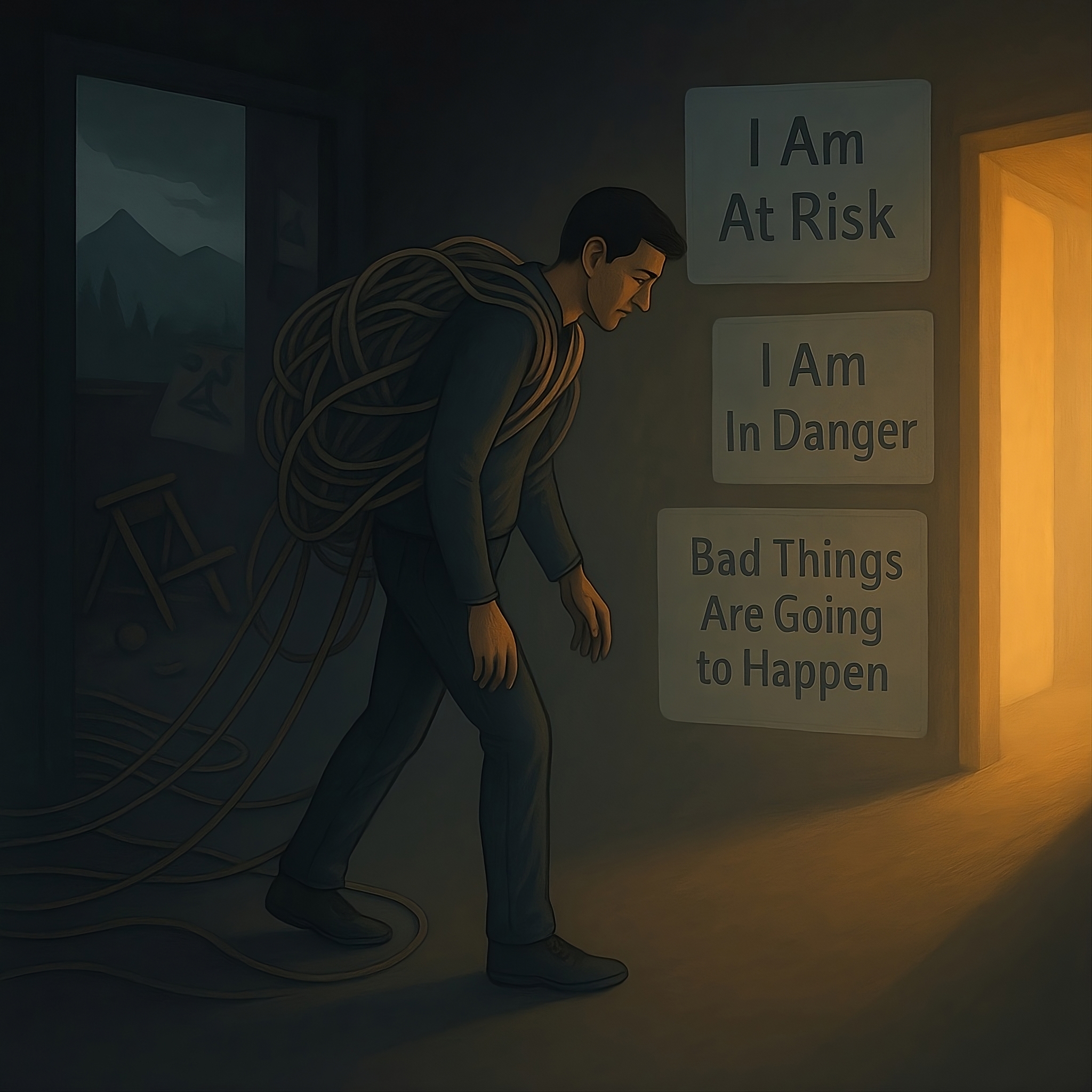
Even when everything’s quiet, your body stays braced. The belief “I Am In Danger” forms in environments where trauma, chaos, or emotional instability made safety feel impossible. It…
Explore this belief
The belief “I Am Powerless” often forms in environments where autonomy was suppressed and safety depended on submission. It creates chronic helplessness, low agency, and difficulty asserting needs…
Explore this belief
“I Am At Risk” is a core belief rooted in environments where safety felt unpredictable. It often drives patterns of anxiety, catastrophic thinking, and compulsive control.
Explore this beliefWant to see how these fit into the bigger pattern map? Explore our full Limiting Belief Library to browse all core beliefs by schema domain and Lifetrap.
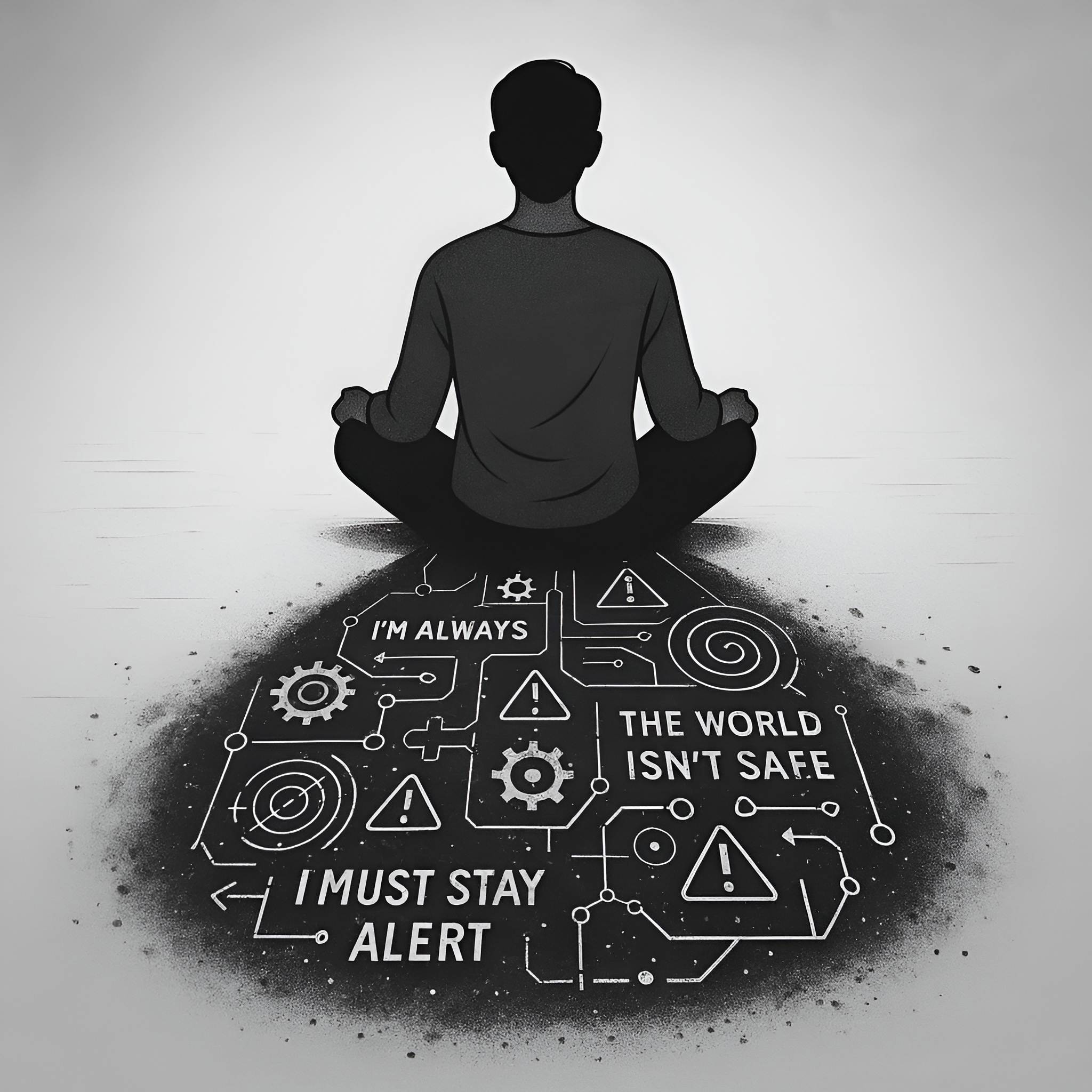
PTSD isn’t being stuck in the past. Calgary PTSD therapy at ShiftGrit treats post-traumatic stress as a nervous system organized around survival — one that learned to stay on high alert to keep you safe and hasn’t yet been shown that it’s safe to stand down. The reactions aren’t failures of coping. They’re learned protection. We work at that level.
Our clinicians are trained in the ShiftGrit Core Method™, a structured clinical system applied within the Identity-Level Therapy orientation. Sessions are paced. The work includes nervous system regulation — recognizing fight, flight, freeze, or shutdown patterns and building grounding tools — alongside structured processing of trauma memories when readiness supports it. We also work at the identity level with the conclusions trauma installed about safety, worth, or trust.
Clients often notice the body recovers from stress more quickly. Emotional responses feel less abrupt and more understandable. Triggers get recognized earlier, before activation peaks. The aim isn’t to erase memory or force “moving on” — it’s to help the system update its threat assessment to the present, so the past loses its grip on how you respond now.
Many of our Calgary clinicians work with post-traumatic stress disorder (ptsd). Browse profiles, watch introduction videos, and book online when you're ready.
Our clinicians hold credentials recognized by the major licensing and professional bodies serving Calgary and across Canada.
ShiftGrit Psychology & Counselling is professionally regulated, certified, and recognized by leading psychology and mental-health organizations across Alberta and Canada. These associations reflect our commitment to ethical practice, clinical standards, and evidence-informed therapy through Identity-Level Therapy and Reconditioning.


Regulated and affiliated across Alberta’s leading psychology, counselling, and mental-health organizations.
Regulated and affiliated across Canada's leading psychology, counselling, and mental-health organizations.
Connect with one of our Calgary therapists. Online booking available — same-week appointments are usually possible.
The clinical category above is one frame. ShiftGrit’s Pattern Library looks at the same territory through identity-level patterns — the loops underneath the surface symptom that therapy can address at the belief layer.
PTSD isn’t weakness or failure to recover — it’s a nervous-system pattern where the threat response stays active long after the danger has passed. The body keeps responding to past…
Read more →Explore all Post-traumatic stress Disorder (PTSD) patterns →
PTSD stands for post-traumatic stress disorder. It is a mental health condition that can occur after a person experiences a traumatic event, such as a natural disaster, car accident, or physical or sexual assault. Symptoms of PTSD may include flashbacks, nightmares, difficulty sleeping, and avoidance of certain people or places.
PTSD is typically treated with a combination of PTSD counselling in Calgary and medication. Cognitive-behavioural therapy (CBT) is a common form of therapy used to treat PTSD. It helps individuals understand and change their thoughts and behaviors related to the traumatic event. Other types of therapy that may be helpful include exposure therapy and mindfulness-based therapy. Medications, such as antidepressants and anti-anxiety medications, can also be helpful in managing symptoms of PTSD.
The length of PTSD therapy can vary depending on the severity of the symptoms and the individual’s response to treatment. Some individuals may benefit from short-term therapy, while others may require longer-term treatment. It is important to work with a therapist to determine the most appropriate length of treatment.
In Canada, PTSD therapy is typically covered by provincial health insurance plans. However, it is always a good idea to check with your specific plan to determine what is covered.
There are several ways to find a PTSD therapist in Calgary. One option is to search online directories of mental health professionals, such as the Alberta College of Social Workers or the Canadian Psychological Association. You can also ask your primary care physician for a referral to a PTSD therapist in your area.
During PTSD therapy, you can expect to talk about your thoughts, feelings, and behaviors related to the traumatic event. You may also be asked to do homework assignments, such as writing about your experiences or practicing relaxation techniques. Your therapist may also use exposure therapy, which involves helping you confront your fears related to the traumatic event in a controlled and safe environment.
It is common for individuals to experience an increase in symptoms during the early stages of PTSD therapy, as they begin to confront and process their traumatic experiences. This is known as “processing” or “working through” the trauma. While this can be difficult, it is a necessary step in the healing process. It is important to talk with your therapist about any concerns or struggles you may be experiencing during treatment.
Yes, it is possible to see a PTSD therapist online. Many mental health professionals offer teletherapy, which allows you to have therapy sessions over the phone or through video chat. This can be a convenient option if you are unable to physically go to a therapist’s office.
It is important to feel comfortable and supported by your therapist. If you don’t feel that your therapist is a good fit for you, it may be helpful to try working with a different therapist. It is also important to remember that therapy is a process, and it may take some time to find a complex ptsd therapist near me.
It is normal to feel overwhelmed during PTSD therapy, as you may be discussing difficult and emotional experiences. It is important to communicate with your therapist about your feelings and to take breaks if you need them. It is also important
Life in Calgary moves fast—tight timelines, high expectations, and constant comparison. These guides explain why emotional patterns often feel louder here, how identity-level beliefs get triggered in high-demand environments, and what structured, evidence-informed therapy can actually change.
Not in Calgary? See Edmonton options.
Authored by
The ShiftGrit Clinical Editorial Team combines the insight of registered psychologists, provisional psychologists, and trained writers to create accessible, evidence-informed therapy resources. All content is clinically reviewed by a Registered Psychologist.
Reviewed by registered psychologists at ShiftGrit, regulated by the College of Alberta Psychologists.

ShiftGrit Psychology & Counselling
Address: 815 17 Avenue SW #210,
Calgary, AB, T2T 0A1, Canada
Phone: (587) 352-6463
ShiftGrit Psychology & Counselling
Address: 10445 124 Street,
Edmonton, AB,T5N 1R7, Canada
Phone: (780) 705-6463
ShiftGrit Psychology & Counselling
Areas served: British Columbia
Phone: +1 888-352-7270
ShiftGrit Psychology & Counselling
Areas served: Ontario
Phone: +1 888-352-7270
© 2014–2025 ShiftGrit. All rights reserved. | Sitemap | Editorial Standards