Virtual Therapy

Self-Esteem Therapy in Vancouver

Published Updated

Does any of this sound like you?

  • Do you check Realtor.ca or Zumper at night and use the listing prices to score yourself against people your age?
  • Do you live in Kitsilano or Yaletown and feel a quiet failure when you compare your apartment, body, or lifestyle to the neighbours you pass on the seawall?
  • Did you walk into a Mount Pleasant or Gastown tech stand-up this month and feel like the only person in the room who shouldn't be there?
  • Did you finish at UBC or SFU and still wait for someone to figure out you don't actually deserve the credential?
  • Do you move between two cultural worlds, your parents' and the one you live in here, and feel not-quite-enough in either one?
  • Do you catch yourself drawing a line between the North Shore version of success and the East Van version, and putting yourself on the losing side of whichever line you drew?

About this service

If you live in Vancouver, low self-esteem rarely shows up as a clean feeling of not-enoughness. It shows up as the Realtor.ca scroll at 11pm, the quiet score you keep against the Kitsilano runners on the seawall, the Mount Pleasant standup where the title says you belong and the inside says otherwise. ShiftGrit Identity-Level Therapy works the belief layer underneath that pattern. Limiting beliefs like “I Am Not Good Enough” and “I Am Less Than” get worked at the install point, not narrated around. Available across British Columbia via secure video.

Types of self esteem we treat

Imposter Syndrome in a Vancouver Tech or Startup Seat

The Mount Pleasant or Yaletown standup where the credential, the title, and the salary all say you belong, and the internal voice says otherwise. The work targets the rule that says competence has to be re-earned every meeting.

Real-Estate Comparison and the Have-Not Spiral

The late-night Zumper scroll, the friend who bought in 2018, the parents who own clear-title, and the running score that says your worth tracks your equity. The work goes after the rule that ties value to net worth.

Pacific-Rim Cultural Value Friction

Sitting between a family lineage that measures success one way and a Vancouver peer group that measures it another, and feeling like neither standard is met. The work names the belief layer underneath the double-standard exhaustion.

UBC and SFU Fraud Feeling

Finishing the degree, landing the job, and still waiting for the day the admissions committee figures out a mistake was made. The work targets the rule about being a fraud that the credential alone never settles.

Kitsilano and Yaletown Lifestyle Pressure

The seawall body, the curated apartment, the wellness routine, the Whistler weekends, all on a scoreboard you didn't choose. The work goes after the rule that says belonging here depends on optics.

People-Pleasing and the Lost Self in a Hybrid-Identity Life

The version of you that shows up at family dinner, the version at work, the version with the partner's circle, and the quiet sense that none of them are the real one. The work targets the rule about being acceptable only when you're useful.

North-Shore-vs-East-Van Self-Comparison

The running internal commentary that ranks you against whichever side of the bridge you weren't raised on, and the small downward drift in self-worth every time the comparison runs. The work names the belief layer that runs the comparison in the first place.

Deep dive

Low Self-Esteem


Identity-Level Therapy for Self Esteem in Vancouver

Identity-Level Therapy is the category of approach that works the belief layer underneath the symptom rather than the symptom on its own. In a Vancouver self-esteem context, that is the rule about worth that runs every Realtor.ca scroll, every Mount Pleasant standup, every comparison along the seawall. ShiftGrit operates inside that category with Pattern Theory™ as the explanatory model and the Core Method™ as the applied protocol. Reconditioning is the technique. The category is bigger than ShiftGrit; the method inside it is what we built.

It’s organized around three pillars:


Limiting Beliefs Commonly Linked with Self Esteem Therapy

These identity-level patterns frequently show up for clients seeking self esteem therapy. Explore the beliefs to learn the “why” and how therapy can help you recondition them.

Visual representation of the belief ‘I’m Not Good Enough’ from the ShiftGrit Pattern Library, used in Identity-Level Therapy to help individuals recondition emotional patterns.

“I Am Not Good Enough”

“I’m Not Good Enough” isn’t just a negative thought — it’s a pattern formed by early experiences like criticism, neglect, or impossible expectations. This belief fuels perfectionism, people-pleasing,…

Explore this belief
“I Am Flawed” belief tile designed in periodic table format with element abbreviation “Fl”

“I Am Flawed”

“There’s something wrong with me.” That’s the voice behind this belief — quiet, persistent, and exhausting. It drives perfectionism, people-pleasing, and chronic self-editing. At ShiftGrit, we help recondition…

Explore this belief

Want to see how these fit into the bigger pattern map? Explore our full Limiting Belief Library to browse all core beliefs by schema domain and Lifetrap.


Program Overview

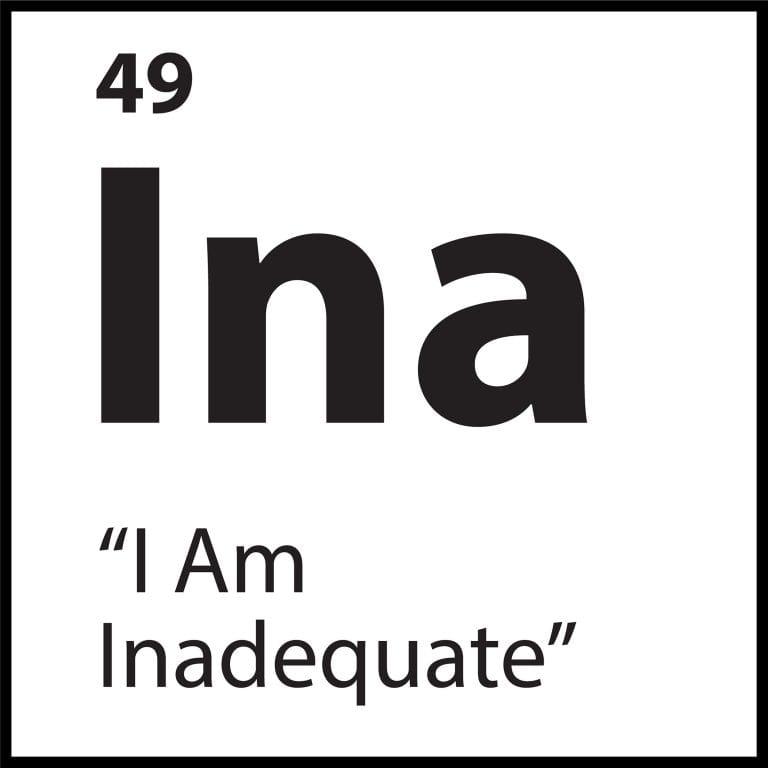
Most self-esteem work in this market trains affirmations, self-compassion practice, or strengths inventory. It helps for a stretch and then plateaus, because the rule underneath the self-critical loop is still installed. The ShiftGrit Core Method™ runs Reconditioning on the limiting beliefs themselves: “I Am Not Good Enough,” “I Don’t Matter,” “I Am Inadequate,” “I Am Less Than.” Eight to sixteen sessions of belief-layer work, not affirmation maintenance. Clients usually notice the comparison reflex quiet first, the internal scoring fade second, the deflection on compliments soften third.

Meet Some of Our Vancouver Therapists

Many of our Vancouver clinicians work with self esteem. Browse profiles, watch introduction videos, and book online when you're ready.


Trusted by Leading Psychology and Mental Health Organizations Serving Vancouver

Our clinicians hold credentials recognized by the major licensing and professional bodies serving Vancouver and across Canada.

  • Canadian Psychological Association (CPA) logo
  • EMDR International Association (EMDRIA) logo
  • Psychology Today logo
  • Theravive logo

Regulated and affiliated across Canada's leading psychology, counselling, and mental-health organizations.

Book a session

Ready to start Self-Esteem Therapy in Vancouver?

Connect with one of our Vancouver therapists. Online booking available — same-week appointments are usually possible.

Patterns We Work With in Self Esteem Therapy

The clinical category above is one frame. ShiftGrit’s Pattern Library looks at the same territory through identity-level patterns — the loops underneath the surface symptom that therapy can address at the belief layer.

Curating Yourself for Approval

This pattern often means you are not just trying to make a good impression; you are managing how much of the real you feels safe to show. You may watch your tone, appearance, effor…

Read more →

Low Self-Esteem

It isn’t lack of confidence or evidence of failure — it’s a pattern where your mind filters every experience through “I’m not enough.” Even positive feedback may feel uncomfortable…

Read more →

People-Pleasing & Boundary Diffusion

People-pleasing isn’t kindness or being “nice” — it’s a connection strategy where approval feels like safety. When harmony, usefulness, or others’ needs feel more important than yo…

Read more →

Explore all Self Esteem patterns →

FAQ

Is self-esteem therapy in Vancouver the same as confidence coaching?

No. Confidence coaching trains a posture, a script, a set of behavioural reps. Self-esteem therapy works the rule underneath the posture. If the limiting belief still reads “I Am Not Good Enough”, the coached confidence runs on willpower and drains. Belief-layer work targets the install point so the posture is not the load-bearing element.

What is the difference between Identity-Level Therapy and CBT for self-esteem?

CBT is the established cognitive-restructuring approach and helps many clients. Identity-Level Therapy is a different category of work that targets the belief layer rather than the thought layer. Both are valid. The right fit depends on whether the loop you are working with sits at the level of thoughts you can catch and challenge, or at the level of a rule about worth that thoughts seem to bounce off.

Do I need a diagnosis to start self-esteem therapy?

No. Self-esteem itself is not a diagnosis. Many clients arrive with no diagnosis and are working on the pattern directly. Some arrive carrying anxiety or depression that overlaps with the self-esteem layer; that is also workable. Diagnosis is a clinical question separate from whether the work is appropriate.

Will my BC extended health insurance cover this?

Most BC extended health plans cover Registered Clinical Counsellor, Canadian Certified Counsellor, or Registered Psychologist services to varying degrees. Coverage varies by plan. We provide receipts that match your plan’s billing requirements. Confirm your specific plan’s allowance and per-session cap before the first session if budget matters.

Can low self-esteem be rooted in childhood?

Often the install point sits earlier than the adult symptoms. A parent’s standard, a teacher’s comment, a sibling comparison, a cultural rule about how children show worth, any of these can install a rule that runs decades later in a Vancouver office or apartment. The work does not require excavating every memory; it works the rule itself.

I am the high-functioning, successful-looking version of low self-esteem. Does that count?

It counts. The CV-versus-internal-experience gap is one of the most common Vancouver presentations: the title, the credential, the seawall apartment, and the private rule that says none of it is enough. The presenting symptom (imposter feeling, deflection, internal scoring) is downstream of the same belief layer.

Is perfectionism a self-esteem problem or a separate thing?

In our framing, perfectionism is often the strategy layer on top of a self-esteem rule. The rule says “I Am Not Good Enough”; the strategy says “be flawless and the rule cannot fire”. The strategy buys peace for a while and then breaks down. Working the rule loosens the need for the strategy.

Can I do this entirely online from anywhere in BC?

Yes. The Vancouver self-esteem service is delivered across British Columbia by secure video. Whether you are in Vancouver, Burnaby, Richmond, Surrey, the North Shore, the Tri-Cities, Victoria, Kelowna, or a smaller community, the service is the same; the delivery is video.

How long does self-esteem therapy take?

Most clients notice shifts inside eight to sixteen sessions, with self-esteem-focused work often landing in the middle of that range. Variables: how layered the rule is, how many strategies were built on top of it, and how consistently the session work is integrated between sessions.

Does self-esteem work overlap with anxiety or depression?

Frequently. A self-esteem rule like “I Don’t Matter” can fuel a depression loop; “I Am Less Than” can fuel social-anxiety patterns. The belief-layer work does not require separating them into different programs; the underlying rule is the same target.

Not in Vancouver? See Toronto options.

Authored by

ShiftGrit Clinical Editorial Team

The ShiftGrit Clinical Editorial Team combines the insight of registered psychologists, provisional psychologists, and trained writers to create accessible, evidence-informed therapy resources. All content is clinically reviewed by a Registered Psychologist.