Welcome to the digital jungle—where screen time is currency, dopamine is king, and the line between reality and virtuality gets blurrier by the scroll. In episode #035 of The Shift Show, hosts Andrea McTague and Alberto Medeiros tackle a topic so universal it’s practically woven into the fabric of modern existence: internet addiction.
This isn’t your standard “put your phone down” lecture. It’s a deep dive into the why behind our scrolling habits, the psychological cost of our digital dependencies, and most importantly—how to find your way out of the endless feed and back into a meaningful life.
Table of Contents
The Dopamine Dilemma: Why We’re Hooked
At the heart of this episode is one fundamental truth: the internet is addictive by design.
Alberto, with clinical calm and a splash of personal history, shares his own past addiction to video games, setting the tone for an episode that’s as introspective as it is analytical. Together, he and Andrea unpack how screen time functions like a neurological drug, releasing spikes of dopamine—our brain’s “feel-good” chemical—without any of the effort that evolution intended.
Andrea cleverly compares this to the difference between eating mangoes and mainlining Mountain Dew. Natural dopamine (like that from conversations or completing goals) comes with fibre—effort, time, and real-life reward. Internet-based dopamine, on the other hand, is processed sugar for the soul: fast, cheap, and destructive when consumed in excess.
Addiction in Disguise: It Doesn’t Look Like You Think
Forget the stereotype of the reclusive gamer in a basement. Internet addiction today wears many masks: endless TikTok scrolling, compulsive email checking, binge-watching Netflix, even online shopping black holes that devour your Sunday afternoon.
And here’s the kicker: most of us don’t even realize we’re addicted.
Andrea calls it “mass psychosis”—a normalization so widespread that we’ve lost the ability to recognize the problem. And Alberto adds a chilling truth: “The worst part is, people don’t even think it’s a problem to begin with.”
Digital Dopamine and the Destruction of Self-Control
One of the most impactful segments of the episode explores how chronic screen use erodes the brain’s ability to regulate itself. Dopamine overload desensitizes the reward system, leading to a tolerance effect—meaning we need more extreme content to feel the same buzz. Sound familiar?
Even scarier is the hit our prefrontal cortex—the part of the brain responsible for planning, focus, and decision-making—takes. Over time, this “executive function” dulls, making it harder to resist compulsive behaviors and easier to fall into mindless scrolling.
It’s a slow-burning self-sabotage.
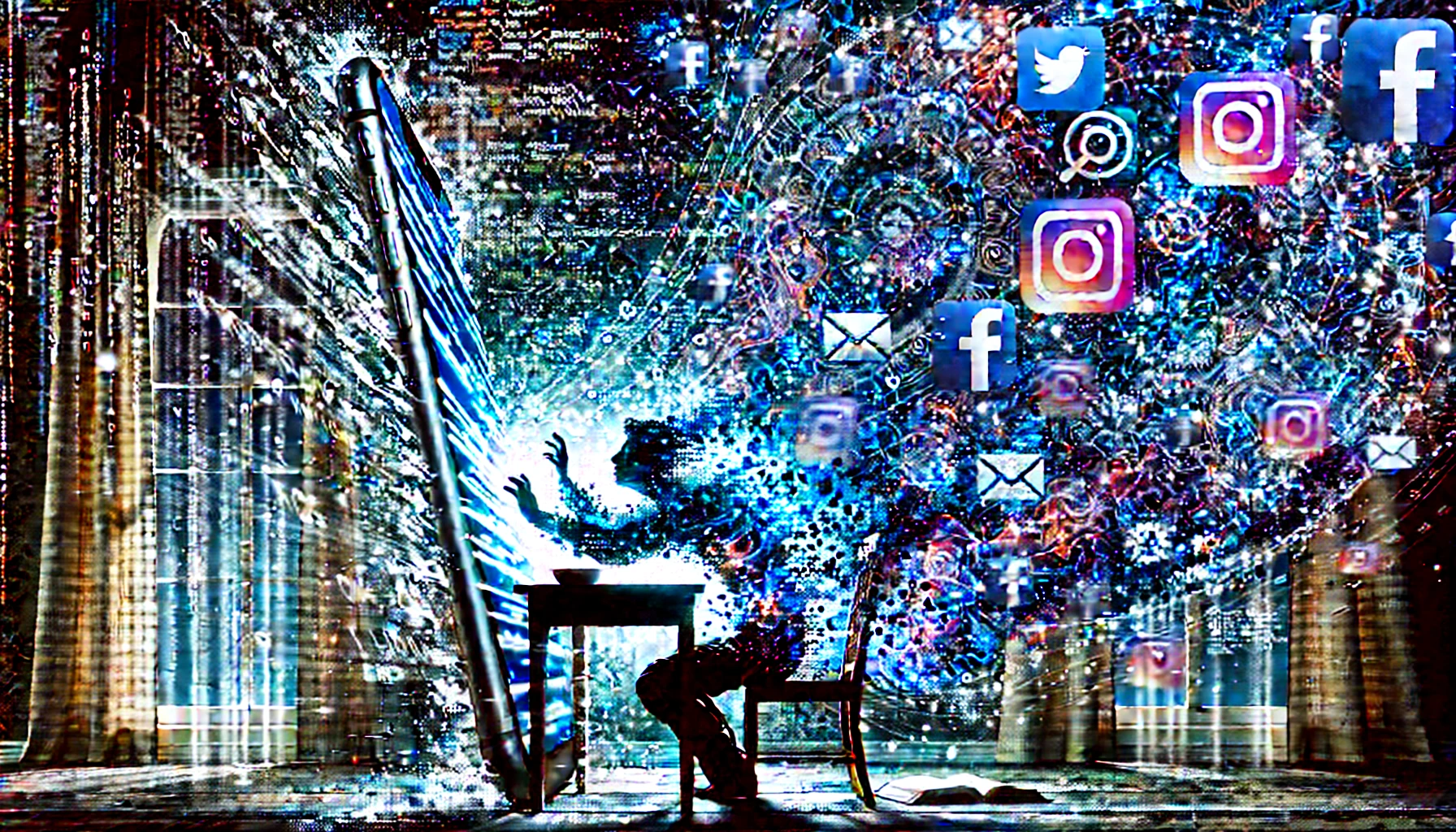
The Emotional Fallout: Avoidance, Anxiety, and the Illusion of Connection
But this episode doesn’t stop at the neurological. Andrea and Alberto dive deep into the emotional mechanics behind our screen habits. One of the show’s standout insights is that many of us use screens to avoid unpleasant emotions—boredom, shame, sadness, even simple discomfort.
By numbing those feelings with dopamine-on-demand, we’re interrupting our brain’s feedback loops—the very system that helps us learn, connect, and grow. It’s not just avoidance; it’s emotional atrophy.
Worse, screen use starts replacing real connection. Andrea shares chilling anecdotes of couples who sit in the same room, staring at phones while their relationship quietly dissolves. No eye contact. No conversation. Just a dopamine drip from curated digital lives.
Social Envy and the Plastic Self
And what about social media?
It turns out the problem isn’t just what we consume—it’s how we present ourselves. Social media fuels a dangerous game of comparison and performance, where people showcase curated, filtered versions of their lives for validation. Likes become a proxy for love. Followers replace friends. And slowly, we trade our authentic self for what Andrea calls “the mask self.”
We’re all starring in our own Truman Show—and no one’s actually watching.
The ADHD Pandemic and Neurodivergence
Alberto coins a powerful phrase: The ADHD Pandemic.
With brains conditioned to seek stimulation every few seconds, people are starting to experience real difficulties with focus, organization, and patience. And while not everyone who experiences these symptoms has ADHD, the digital landscape certainly mimics it.
Andrea and Alberto also touch on how early screen exposure in children can impede the development of crucial social and communication skills—such as reading facial expressions, understanding tone, or learning patience. The implications for long-term mental health are serious and sobering.
What Are We Really Missing?
The episode doesn’t just focus on what’s wrong—it shines a light on what’s lost in the digital haze:
- Opportunity Cost – Every hour spent scrolling is an hour not spent building something, connecting with someone, or achieving a goal.
- Tangibility – Andrea references a study comparing blue- and white-collar workers, finding that physical, tangible task completion leads to lower rates of depression. Translation? Watching someone else bake bread on TikTok doesn’t feel the same as making it yourself.
- The Ability to Dream – Daydreaming, the birthplace of goals and creativity, is being sacrificed for short-form content. We’re so busy consuming that we forget how to imagine.
Escaping the Trap: Strategies that Actually Work
Here’s where the episode turns hopeful.
Andrea and Alberto emphasize that the answer isn’t to reject technology entirely—it’s to use it intentionally. Here are some of their top strategies:
- Mindfulness & Intentionality – Recognize when, how, and why you’re using your devices. Awareness is the first step to change.
- Use Tools for Good – Leverage apps like Headspace or Calm to guide meditation, or listen to podcasts (ahem, like this one!) that help you grow.
- Timebox Your Screen Use – Use techniques like the Pomodoro Method (25 mins work, 5 mins break) to balance productivity and dopamine treats.
- Environment Design – Keep your phone in a different room before bed. Use screen time as a reward—not a default.
- Switch When You Scroll – If you’re going to watch content, choose something tied to action—like a recipe you’ll try or a workout you’ll do. Make it active, not passive.
Andrea also shares a fascinating observation: her clients who are former addicts are often the best at resisting internet addiction. Why? Because they recognize the trap and treat it with the same seriousness they would any substance dependency.
Final Thoughts: Stop Scrolling, Start Living
This episode hits hard—but in the best way. It doesn’t shame or scold. Instead, it holds up a mirror and says, “Look. Do you like what you see?”
It challenges us to reclaim our time, our attention, and our agency—to be more human and less hamster wheel. As Alberto so perfectly puts it:
“We’re getting the dopamine hit—without the production. The train is stuck.”
If you’ve ever wondered where your time goes, why your motivation feels low, or how the heck to connect with your partner again—this episode isn’t just for you. It’s for all of us.
We’re all online. The question is—are we really there?
⬇️ Get the Free Guide: The Ultimate Digital Reset
Want to take what you learned in this episode even further?
We’ve created a free, step-by-step companion resource to help you reclaim your focus and take back your time from endless scrolling.
🌟 The Ultimate Digital Reset Guide: Free Your Mind, Reclaim Your Time & Optimize Your Life
This guide is designed to help you:
- Break free from mindless screen use
- Rewire your dopamine habits
- Rebuild healthy boundaries with tech
- Boost your real-world productivity, sleep, and mood
🔓 Whether you’re looking to unplug for 24 hours or build lifelong digital balance, this guide walks you through every step.
✅ Ready to reset?

Explore this topic
Related concerns we work with at ShiftGrit:
Internet Addiction — clinical overview →More from The Shift Show
Episode transcript
Andrea McTague: Hello and welcome to The Shift Show. Today, I am joined by Alberto Medeiros from our Calgary ShiftGrit Shop, and we're tackling a challenge nearly everyone faces, internet addiction, internet overuse. So whether it's endless scrolling, binge watching, gaming, compulsive email checking, or just feeling trapped by our screens, the digital world is designed to keep us hooked, but we're looking into at what cost. Alberto, welcome.
Alberto Medeiros: Thank you.
Andrea McTague: This is an area of particular passion for both of us, but tell me a little bit about why for you, why the interest in working with people in therapy on this subject?
Alberto Medeiros: Well, for myself, I have been, for the longest time, I was very much addicted to video games, and especially in today's age, I think it's a very important topic for everybody because we spent countless hours looking at our screens. And I think it's a topic that impacts everybody. And one of the greatest qualities that we have as humans is our ability to think critically about things. And I feel like we are getting ever so disconnected from that. So, yeah.
Andrea McTague: I think so. And I think we're seeing more and more and more and more in our practices, at least I am in mine. So when I'm working with people, I see a ton of, there's just a ton of information on this in the research, right? But as I see people, I think I said to you when we were talking off camera, that it was almost like this mass psychosis where we're seeing more and more that these screens are like becoming these little like parasitic things that are invading marriages. They're invading parenting landscapes, they're invading homes, they're interrupting our focus and our ability to do stuff. So seeing a lot of really negative effects. And I think that there's also this stickiness that I'm seeing where people, you know, have a difficulty detaching, like unplugging. It's very, very hard. So I thought it'd be kind of nice to have a little chat about what are some of the consequences, kind of set the context of what's happening with this stuff. What does it look like? And so like the why are they so addictive? And then the impact on that. So like a little bit of the mental health stuff and relationships and productivity and things, some of the limiting beliefs that get involved and, you know, help that kind of stickiness. But then can we'll end on some positive ways to use screens as well. And like not all technology is bad. We're definitely not saying that, but it's how and then we'll get it right into the practical. So that's kind of what we'll do. And, you know, classic us style will be jumping all over the place. So let's play with that a little bit. Internet addiction is not actually like a diagnostic specific thing. So when we talk about it, we're talking about it colloquially. But what is it for you? Like, how would you kind of define that?
Alberto Medeiros: I would define Internet addiction as using technology unintentionally. I think the catch here is unintentionally. And we'll obviously talk a little bit more about that and using it in such a way to shut off the emotional circuitry in your brain and doing it for the purpose of enjoyment. And what I mean by that is that we become neglectful. We become forgetful and we are not attending to our basic needs that we have to attend to as humans, such as socializing, such as talking with people, such as making food. And it gets to a point in which it becomes stressful. That's how I would define it.
Andrea McTague: I think that's a great definition. And while you were talking, I was kind of thinking about how so often I will be working with my clients on like improving sleep. And I'll ask them, like, what is it that you do right before bed? And, you know, you get that look where they're like, I don't tell you, but it's almost even overriding such strong, basic biological urges like sleep. Like people, I don't know if you've ever had the thing where, you know, you're like so tired and then you sit down and all of a sudden you watch like six episodes of something. And you're like, how did that even happen? So we're like, we're really, really overriding a lot of our like basic biological needs, never mind our kind of fancier social need for connection and all of that kind of stuff. So it's getting a bit weird, I think, for a lot of people.
Alberto Medeiros: Absolutely. It's it's such a huge issue and people don't even realize it. They don't even think it's a problem to begin with.
Andrea McTague: I think that's one of the crazy things about it is that you're like, well, that's not, you know, so I think bringing it into the consciousness, which is a bit of the point to this conversation of like talking about like these are the things that it does. Right. This is the impact. But and I think sometimes when people, you know, hear Internet addiction or a specific term like that, they think about that person who is, you know, like gaming and like ordering pizza and like wearing diapers so that they never have to leave for hours and hours. But that's like at one end of the spectrum. And I think that we're just looking at just overuse of screens to the point where it's like not creating your ideal reality.
Alberto Medeiros: Absolutely. One hundred percent. And one interesting thing is that research shows that over the past five years, we have been using our phones in North America on average four hours and 36 minutes. So that's just the average, you know, and I would guarantee a lot of us are using it way more than that. Percent.
Andrea McTague: And I would be really interested to see some data and maybe this is some research we can look into it by age cohort. That would be neat because I think, you know, because that that average includes, you know, my old man dad who like isn't, you know, the most technology that person. But when I'm seeing my like younger clients and then it's not like maybe it's a bit bigger or people that are a little bit more introverted. I think there's different characteristics that make people more susceptible to overuse as well. Yeah.
Alberto Medeiros: So some of the characteristics of people that are more susceptible to technology are people that essentially crave being around people, but crave being around people and basically social introverts. That's the best way I can put it. Right. You're not going to have your very practical people who are extremely extroverted, you know, wanting to be online more often than people who are social introverts. Of course, we are all going to fall under the trap of the trap of technology addiction. There is you cannot escape. It doesn't matter what kind of personality or trait you have. It is inevitable if you're being unintentional about its use. And I think that's the catch here. It's not so much about personality or traits. It's about how you go about using it. Right.
Andrea McTague: Which is kind of interesting because what I have seen is the more people use it, the less intentional they get about it, because what we kind of need a little bit of is we need some mental space to like dream and think and plan and set goals and all of that stuff. And if we're constantly being fed things, you know, then that time gets smaller and smaller. So moving back to that intentionality. But let's talk a little bit about different types of over and Internet overuse, because there's a whole bunch of things. What are you seeing in your practice? What do you see in the world in terms of like, what can this look like? What kind of topics?
Alberto Medeiros: Yeah, for sure. So there's definitely different types of technology addiction. Of course, you have gaming, people who spend countless hours gaming, right? Playing MMORPGs, MOBAs, whatever, any types of genre. Video games. When most people, when they think of gamers like that, they probably think of young teenagers who do that sort of thing. But everybody can succumb to that. Doesn't matter. Right. And then you have people who spend, and that's going to be most people, I would imagine, who are on their phones before they go to bed, who are on their phones every waking moment and second. Maybe you're on the subway, on the train. Doesn't matter. And you're, you know, staring at your phone, looking at your screen. You're probably not even going to consider that, any type of addiction. But you really have to ask yourself, why are you doing it? Why are you engaging? Yeah, sure. There's nothing to do right now because I'm on the subway or whatever. But, you know, possibly you could be taking down notes or thinking about the podcast that you have tomorrow. Right.
Andrea McTague: 100%.
Alberto Medeiros: There's a whole bunch of things that we can do within that timeframe, but we're not being intentional about it. Right. Also, there is pornography use. Right. Which is so rampant when it comes in today's world. And we have become more and more disconnected with ourselves. Right. And then you have to ask yourself, more than likely, people are not asking themselves. They're like, why are you engaging pornography? Right. Is it because it's a lot easier to. Is it because it's a lot easier to. to who have some sort of emotional fulfillment from watching that as opposed to actually going out and trying to find a loved one. Right.
Andrea McTague: So that's a lot more work, right? You have to talk to these people and they have to like me and I have to be charming and I have to be a certain type of person so that people will engage with me. So there's like it's just removing a lot of that. It's like skipping to the good part. Exactly. Skip to the good part.
Alberto Medeiros: It's a lot easier to succumb to do something like that than it is to actually go out of your way, feel the fact that you feel really bad about yourself and you have to work on it because they're more than likely people who, you know, engage in these kinds of addictions. There is something about themselves that they need to work on prior to doing that. Right. So instead of doing that, I'm going to do something else instead.
Andrea McTague: One of the things that somebody because I mentioned that we're going to be having this discussion is the online shopping scrolling. They'll get like down these rabbit holes for hours, just like looking at things, looking at things, looking at things. And then all of a sudden it's an entire day just gone, like the online shopping and that kind of thing. And I think obviously the TV and binge watching movies and things like that is a big one. Super common.
Alberto Medeiros: Absolutely. Absolutely. It's a, it's a huge thing. Um, uh, if it's okay with you, I would like to talk a little bit about, like, how does it happen? You know what I mean? So I think that's sort of important for people to sort of understand. A hundred percent. Um, essentially, right. We all know, I'd like to think most people know what dopamine is, right? Because that's a pretty big topic, right?
Andrea McTague: Um, and what people don't know, what is it?
Alberto Medeiros: Right. So dopamine, essentially what it is, is a feel good messenger. So it's a neurotransmitter, right? A chemical messenger in the brain. And it helps us regulate feelings of pleasure, feelings of reward and motivation. So when you do something pleasurable, right, if we're like, you know, talking here or having a great conversation, you know, uh, talking about very important things that the public would enjoy, right? There's a certain amount of dopamine that's being transmitted in our brain. It's always there. Yes. Right. But it's also, uh, something that's very prevalent when we do something pleasurable, like, you know, cocaine, like pornography, YouTube, Netflix, binge watching, right? Dopamine is released and makes you feel good and it reinforces that behavior.
Andrea McTague: And I think that's the catch because I always kind of like to put dopamine seeking behaviors into two kinds of categories, like where there would be natural dopamine that kind of comes in a quantity that's reasonable. And I make the analogy of like refined sugar versus like sugar from a mango, the sugar from a mango gets, you have to like do a bit of work. You can't get a ton, a ton of it. It comes packaged with fiber and all of these other good things to slow down its absorption. So that's how like nature intended it versus, you know, like, I don't know, Mountain Dew where you're just like mainlining the sugar. And I think when we talk about like cocaine is like the refined sugar, and then you've got things that are like, like having a wonderful conversation, that's kind of more like the fruit sugar packaged with some things, some other things that humans really need to regulate that dopaminergic response. Where would you put screen use in?
Alberto Medeiros: Well, maybe in the good, not in the good kind of sugar.
Andrea McTague: In the refined sugar candy kind of thing.
Alberto Medeiros: Exactly. And I think the reason, well, the reason for that is because unlike, you know, eating that slice of mango or whatever, it overloads your reward system. Right. Because it triggers a massive release of dopamine in the brain. Right. Especially in a region called the nucleus accumbens. It creates a high and euphoric feeling and it makes you feel motivated to repeat that behavior again.
Andrea McTague: And it's like your little, the little walnut brain was like, oh, that was awesome. I found it like the mother load of this stuff. Exactly. I go back to it again.
Alberto Medeiros: And the worst part is, is that over time, as we are watching, you know, engaging in screen news, looking at our phones constantly, right? Whether we like it or not, we are going to build some level of tolerance because we're repeatedly exposing ourselves, our brains, right? It's going to reduce the dopamine production or the number of dopamine receptors. So, essentially, by engaging in the same activity that feels pleasurable, right, we're going to seek more extreme types of content. We're going to watch more shorts. We're going to binge watch, you know, shows on Netflix for longer, right? More volume. More volume. We're going to need higher doses to get the same dopamine rush and reward.
Andrea McTague: So, very similar to that drug addict.
Alberto Medeiros: It is very similar. And people tend to think to themselves, well, I'm not an addict. I'm just looking at my phone on the way to the home. I mean, I'm just, you know, on the train and just staring at it. Really.
Andrea McTague: And I think that's where it gets into this thing with the normalization of it. Because, you know, if I say somebody, if we're talking about cocaine, that's not a socially acceptable thing in many circles and whatnot. Everybody kind of knows you're like, okay, too much of that is bad. But because it doesn't have that negative perspective from society, we're not able to see that. That's not how the brain interprets it, though. We normalize it.
Alberto Medeiros: We think it's okay, right?
Andrea McTague: But your little dopamine reward system, your dopaminergic system doesn't get that part.
Alberto Medeiros: Exactly. The brain does what it does, you know, regardless of whether we agree to it or not, doesn't matter. It's irrelevant. And also, another important topic is that it weakens our self-control. Over time, the frontal lobe, the prefrontal cortex, the part of the brain that's sort of responsible for decision-making, self-control, becomes less effective, right? It makes it harder to resist cravings. It leads to more compulsive behavior where you're just scrolling and watch countless amounts of shorts, you know, within that hour. And then you tend to forget things, you know, oh, I got to do something else with my time instead. I got to go to work. I got to go to sleep or whatever. Right? So, it's very pervasive in that sense and impacts all of us, whether we like it or not, right?
Andrea McTague: Like, it messes with their prioritization structures then probably. Absolutely.
Alberto Medeiros: Absolutely. Absolutely. And that, and we're going to talk a little bit more about that, I'm sure, you know, it leads to ADHD-like symptoms and whatnot, you know, which is...
Andrea McTague: And one... Well, yeah. And we'll definitely have a little chat about that because I think that's a question that we're getting asked a lot. But I think when we look at that dopaminergic system as well, one of the things that I'm always thinking too, whether... And whether we're talking about internet addiction or a cocaine addiction or whatnot, I'm always explaining that when you outsource dopamine, so when it is in this manufactured refined sugar kind of way and you outsource it, that means your body's like, oh, you know what? Dopamine's a lot of work for me to produce. So, I'm just not going to. I'm not going to produce as much. So, that's why we'll get massive mood disturbances and things, anxiety disorders, all of this kind of stuff starts to occur, an inability to regulate our emotions because then we're missing the amount of internal dopamine production that we require in order to keep our like mood balanced and our behaviors motivated.
Alberto Medeiros: Absolutely. Because essentially what we are doing is it is a lot easier, a lot more convenient for me to just shut off that part of my brain, my limbic system, my amygdala that is responsible for all kinds of emotional control and just look at a ton of videos, you know, within that hour, then actually face the fact that I am feeling a particular way about myself, right? And it's a self-fulfilling prophecy given the fact that I'm conditioning myself to engage in that behavior repeatedly over and over and over and over again. And then getting to a point in which I'm depressed about myself and having a whole bunch of problems and eventually coming to therapy. Yeah.
Andrea McTague: Yes. And I think one of the things with that as well is like when you are, you know, dealing with the kind of feeling that you maybe don't love, maybe it's something, I don't know, a coworker said something to you, maybe you tried on a pair of pants and they were too tight, whatever it is. Then now we are creating a landscape in which we never have to attend to that feeling. Right? Absolutely. And what we know in our work, because we do a lot of deep programming of previously encoded patterns is avoidance of things creates more phobic behavior. So the more I avoid it, the worse it gets, right? And that's where we get things like social anxiety and so on versus exposure to that creates extinction. So it will get better if you're able to like touch a bad feeling, feel it, you know, that sort of thing. It starts to create this extinction. So we're seeing the dopamine system be dysregulated and then you're seeing less capacity for distress tolerance and then worse behaviors because we're avoiding them. Absolutely. Are there other things that are coming out of this overuse, this compulsive overuse unintentionally with people? Well, there are tons.
Alberto Medeiros: All right. One important one is the idea that we are missing out on opportunities. Right? So for example, let's say I have finished school, have this wonderful opportunity to join this wonderful organization called Shift Grid. And I've been studying really hard throughout school. And then eventually I get to a point in which I, you know, I'm preparing to become a psychologist. However, this opportunity comes up and I haven't studied at all for this interview because I told myself, you know, I've been studying really hard. I've been working really hard throughout my entire semester. And now I think I owe it to myself to just game for, you know, quite a few hours at a time. I don't think it's that big of a deal or deal on your phone or whatever. It doesn't matter. Right? And then we experience missed opportunities because I have finished school. I haven't done any extracurricular stuff. I have not improved my education beyond that baseline. So how am I ever going to set myself apart? So essentially, as the screen time increases, and once again, it doesn't matter if it's TikTok or video games, pornography, whatever. You know, we're. We're we're. our limbic system. It leads to a lack of emotional awareness because we don't even know, we don't even think we have a problem to begin with, right? And it leads to fewer and fewer opportunities, right?
Andrea McTague: So there's this opportunity cost where we're really not grabbing the things that life could be offering us. And it's ironic because a lot of it is based on this FOMO, this fear of missing out, right?
Alberto Medeiros: Absolutely. Yeah. Because if we are not doing X, Y, and Z, where am I going to be doing otherwise?
Andrea McTague: Well, not to mention, I think that that puts on like, somebody asked me the other day and they were like, what do you think the most common emotion experienced by humans is? And this is an interesting one because I got it wrong. But when I thought about it and what the answer is, is envy. So that envy combined with the FOMO and then we think about, you know, all this social media stuff. Oh, this person's traveled to Bali and she's got this outfit on, or they're doing this great thing, or he makes this much money and has a car. So it creates this like false sense of like, I should be, should be, should be, should be, should be doing all of these things that aren't necessarily connected to you or aligned with your value system or whatnot. And instead of actually picking what is and then going to execute some strategy to get to those things for real, we just will scroll and watch other people achieving as well, which creates another sort of landscape of opportunity cost.
Alberto Medeiros: Absolutely. It's so interesting if you think about it because in society, we have a tendency, just as an example, right, to respect lawyers, doctors, teachers, right? And we all sort of, you know, desire to be good at something, you know, goes back to that enviousness that you're sort of speaking to, right? We all want, want to be proud of ourselves, right? We all long for connection. But what do you think happens if we are shutting off that part of that, of our brains, that's actually responsible to that, you know, to long for self-improvement, to long to, to, for purpose, right? That motivational drive, if you will, right? And, and the issue with technology is that it leads to a fulfillment of that emotional drive, but through technology.
Andrea McTague: So it's like- Without the actual production of anything.
Alberto Medeiros: Production. Exactly. It's like we, we are fulfilling that emotional desire, but we're not moving anywhere. Well, the train is stuck. We're not going anywhere. And we're basically creating, you know, um, um, a society of purposeless people, you know, who, who, who long for something more, who want something more, who are craving for something more. And they're getting it through a very plastic way, you know, a plastic thing. They're not getting the real thing. It's like, it's like, uh, you're not getting the, that new shiny toy. You're only looking at it, staring at it. You can't touch it. You can only look at it.
Andrea McTague: It's like a little magic trick where you feel like you are part of a thing. Maybe you're watching some, I don't know, Tik Toks on somebody baking bread and somebody making this food. And you feel like you're involved in that or that it's good content because it's wholesome or whatever. But you're like, at the end of the day, you go look in your pantry and there ain't no bread there. Like there's nothing that you've created. And I think it was interesting. There was some studies done on white collar workers versus blue collar workers. And they found that the instances of depression and anxiety were much higher in the white collar workers. And the blue collar workers, and they were studying a group of trades, uh, tradesmen. And what they found was they were protected because they usually had a tangible completion of something, right? So, you know, if they're making a, if they're laying bricks to make a wall, they could see at the end of the day, this very concrete thing that they had done, they had achieved, right? You're like, I have put this light fixture in. I have done this, whatever it is. Right. Whereas a lot of us that live in the line of, um, white collar work, it's, you know, it's green and maybe you move this stuff from this spreadsheet to that spreadsheet, or you write this note about this thing. And then it goes off into the ether. There's no tangible product. And I think the, the use of social media and TV watching and all of this stuff is kind of in that same vein. There's no tangible product from it. And it's just occupying our minds. And so at the end, you, you know, you shut off the device and often people will describe feeling a certain kind of emptiness. Because if we went back into like the evolutionary landscape, the reason that we want to get a bit of dopamine from task completion, from a keep us alive perspective is if you and I didn't, we're just sitting around our little campfire. So a little pre like our, my little monkey guy, if we go and we collect all the berries and the doing of that, and we collect a big basket of berries, we'll get a little dopamine reward in the brain. It will be like, there you go. And that is motivational, right? So it motivates us. So we can be motivated on the positive side where we're getting this nice little feeling from doing a thing, whether it's collect berries or record a podcast. But on the other side, if our, if we're bad little monkeys and we're sitting around and we're not doing anything, we're going to start to get this bad feeling called boredom, right? Which is going to be equally motivational because if we're sitting and we're getting bored, I'm like, I don't know, Alberto, what do you want to do? I don't know. It's an uncomfortable feeling and it's meant to motivate us to go get the berries, go get food, go take care of your basic needs, go do the things that you need for our species to propagate and be happy and not die.
Alberto Medeiros: Absolutely. For myself, the way I sort of tend to think of dopamine, this is obviously not rooted in one research or anything. I should preface by saying that. But think about the idea that it's like I have eight units of dopamine and the eight units of dopamine, I'm putting it into effect by talking, engaging in, in something productive, you know, helping out people. And we're having a conversation here, right? But if I were to spend, you know, a certain period of time go to my phone, you know, disconnecting that part of the brain that we've been talking about, that is, that does the thinking that is responsible for the emotional reasoning that we have, right? It's almost as if those eight units are going to be focused solely on that. And if I were to go to work, you know, and do something else with my time, right? It wouldn't feel as fulfilling. It wouldn't feel as fun. And then the following day, I'd be thinking to myself, well, I could have been more productive with my time. Could I not?
Andrea McTague: Well, then that, that hard on yourself, procrastination spiral kind of deal.
Alberto Medeiros: Exactly right. It leads to all sorts of problems. And the interesting thing is, is that we're doing this and we're not being intentional with our time because technology is not entirely bad. There's nothing. Technology is not bad. It's the way we go about using it that we sort of label it as bad, right?
Andrea McTague: And I think one of the analogies in the realm of like diet and eating is there's nothing bad about cake. Like I love a nice, good, perfect slice of cake. This is one little cafe and they make the best cake on the planet. And if I have a slice of cake every week, there's no problem with that. It's not, not an issue, but it's an issue when it becomes the mainstay of my diet, then we have a problem. So, you know, we always talk about like 80, 20, kind of like mostly 80% healthy and then 20% eat whatever, you know, BS is like you, you're craving or whatever. And I think if we were to take more of an orientation to internet and screen use like that, like looking at it as a function of balance over just like, you know, that unconscious, just rote behavior that you're just kind of like hamster wheel, like why are you running on the wheel, Mr. Hamster? And he's like, I don't know, but I'm just running, I'm running, I'm running, right? Like, and I feel like that's the vibe at the moment where people are at.
Alberto Medeiros: It's so saddening if we were to sort of take a step back, you know, and really think about the use of technology in today's age, right? I was sort of talking about a little bit before this, right? It's almost as if we're headed to, you know, everybody's sort of, we're all going to be characters of that WALL-E movie, you know, where everybody's completely detached from themselves, from the present moment, from everybody, and just focused on the screen that's in front of us.
Andrea McTague: Like ready player one reality kind of thing.
Alberto Medeiros: Exactly. It's so saddening, almost sickening in a way.
Andrea McTague: We're like, huh, isn't that- If we were to talk about like, so I was kind of, you know, I like to like read a lot and I was looking into what, what's going on with this? Cause it's almost like this mass psychosis where like everybody is normalized, everybody's doing it. And you're like, what's going on? Like, how is this achieved? So in terms of talking about the why, so we've got the dopamine reward stuff happening. We've got the FOMO, we've got, there's different things of interest, right? So if they capture you via video games, which you like, maybe they capture me with maybe social media, maybe they capture somebody else with the compulsive email checking or whatnot. So there's like these different points of entry, I think, and stickiness, which I don't think is particularly accidental because these things are also products, right? And I remember we were developing a piece of software, ironically, a while ago, and we went to a thing and it was a meeting about, and the topic was, how do you make these things sticky? Sticky meaning like, how do you make it so that people can't put them down? And, you know, whole roomfuls of people that are psychologists and that are social behaviorists and et cetera, et cetera, have designed these things to be that good at doing that. Because if you're selling them as a product, you don't want people to leave them. Like, I want you to stay on Facebook. I want, if I own Facebook, I want you to stay on whatever, right? Yeah.
Alberto Medeiros: Take like Netflix, for example, right? Why is it convenient for us to binge watch countless shows on end? First of all, you don't have to click on the next episode button. You can conveniently, you know, skip the introduction or sort of the opening of whatever show you're watching, right? You have recommendations, you know, carefully optimized. your own taste, right? They have algorithms for that. So there are countless ways in our world in which it has made more convenient, they dub it as convenient for us and more accessible, right? For us to do what we want to do. But you really have to, you know, take a step back and ask yourself, why do you think they're doing that? Is it because they're trying to be nice and wonderful? Or is it because they keep you coming back over and over again and watch all the wonderful shows for countless hours on end, and you're missing out on other things in life?
Andrea McTague: And I think like, if you have an awareness that these things are made for profit for things, your engagement is very important to them. So they want you to leave a thing. So it helps me to understand that so that I can be a little bit more conscious because I don't like people just like, you know, inserting themselves into my brain and controlling it. That's a vibe that I'm very resistant to. And so I think when we become aware of like, why does it just go to the next episode? Why does it just continually feed you things like the things that you shopped for before or that you saw before or whatnot? Why does it give you like an extra video game life when you're just about to die, which would mean you're going to leave, right? You're like, there are things that and they're very clever. And I think that's the thing is it's very clever. So we kind of have to be very clever back in terms of how we're going to address them and play with it. Because once it's a learned behavior, we tend to go to the same thing. Like you said, once you're a human animal or pre-evolutionary brain, we call it the walnut. But once that walnut has figured out, this is a great source of dopamine for me, it likes to go back to that.
Alberto Medeiros: Absolutely. It's so it's so interesting, too, because if I've seen countless people, right, where they have this, you know, they're playing this game, just as an example, right? Actually, I'll use myself as an example. So I've been playing this game called Baldur's Gate. And it's a great game, right? Where you can be whatever you want, you can make your character like godlike, you know, you can just boot up the game. And it can be like a god in that sense. It's so interesting, because what would happen if I were to keep playing that game, right? It leads to sometimes not all the times, but it masks the reality of the world in which you live in, meaning that people may develop identity issues as a result of that, right? Because our drive to I don't know, to connect with others decreases, you know, and we develop identity issues, maybe you might think to yourself, maybe I'm really likable as a person, because look at everybody who's liking me on Facebook or whatever, you know, Instagram, look at all the pictures I'm posting, look at this godly character that I've made at this game, right? And it really warps your reality of, you know, the world that you're currently in, right? And it's so unfortunate that a lot of us don't realize that.
Andrea McTague: Well, 100%. And you're almost talking about the development of the mask self. So I think that there are limiting beliefs that are implicated in all of the overuse stuff. And what you're talking about there, it sounds like if somebody doesn't say, you know, isn't that character in, in their real life, so maybe they feel like they're a little bit inferior, or maybe they're acting in a deficit, or maybe they are, you know, ashamed of certain things, or nervous or scared of certain things. So if we've got limiting beliefs, like, you know, I'm not good enough, or I'm less than, and there are different ways that we can then use live in the digital world, where we don't have to feel those then, right? So it's not uncommon for me to work with people who in their real lives, they don't like themselves, or they are very critical of how they look, or how they behave, or how many friends or the whatever they're doing, but they'll create these social media personas that are, you know, they've got the beauty filters on, and they are doing the most awesome thing. And it's all the selected perfect pictures of their vacation, or, you know, the like, amazing thing that they made, but it's, and it's for this validation seeking. So usually, we're going to tie that to something like, I'm worthless, I need to provide value, and I need validation. And that's what they're getting when they've got, oh, I've got x amount of followers. Well, when did we change the wording from I've got x amount of friends to x amount of followers? You know, that that's demented in itself, right?
Alberto Medeiros: Absolutely. It's like, we've gotten to a point in society, where we want to just appear to everybody, the more likable, the more better side of sides of ourselves, right? You want to be a certain way, we want to, you know, we crave that we need that. And the technology that we have today, the internet has made it more and more accessible, right? And it caves in into those limiting beliefs that you're talking about, and people don't realize it. And it leads to all sorts of problems. Right?
Andrea McTague: Well, and it's interesting. Well, because I think when we get into the use of technology to either deal with the negative feeling that comes from, say, our limiting beliefs activating something in our regular life. So then we go seek the dopamine, we seek that comfort, right? So I'm just going to do this because it makes me feel good. But then also, there's that other layer where it's like, people will sometimes use the internet stuff to create these different things so that they can also meet their dysfunctional needs that way. Right? Because we say for every limiting belief, there's a dysfunctional need. So if I'd say I'm not good enough, I need to be perfect. So then you just create a perfect persona and just like live interface with life through that persona. And and then get the little debt validation metrics via that. But then when that closes off, you're still you, right? Then as you come back into your body, and you're like, Oh, well, I don't really have like friends that know me where it's ever super like, you turn off your phone, and you're not looking at your pictures that you just posted, you got to come back to reality. 100%. And I think the other one where I will see sometimes because I work a lot with entrepreneurs and founders. So they will often have things like I'm irresponsible, I need to be responsible for everything and everyone. So one of the compulsive screen internet use for them is like compulsively checking their email, compulsively checking their work data. And it's making them it makes it worse, because the more they meet the dysfunctional need of like, I need to be responsible for everything all the time, like 110% all the time, it creates that like the need resets, and then they need to do it again, and again, and again, and again, and again, and it becomes this like hamster wheel behavior. And it also explains kind of your point about the intentionality, it explains why there is a lack of intentionality often with it. Because if we're doing it as tied to dysfunctional needs that are related to limiting beliefs about ourselves, well, that's not our conscious intentional mind where that stuff lives.
Alberto Medeiros: It isn't, it isn't at all. Because the wonderful, well, not so wonderful thing I should say, about social media is that it was beautifully crafted, masterfully crafted.
Andrea McTague: Yeah, we have to give them some credit.
Alberto Medeiros: Yeah, we got to do, we do have to give them credit. I mean, they're making money off of it, you know, the big tech companies, right? Because at the end of the day, like, look at it, for example, right? If I don't really like Andrea, you know, and we are online, I can just, you know, F Andrea, I'm just gonna not talk with Andrea again, I can just move on to the next social circle and talk with somebody else.
Andrea McTague: Or you can even shit talk me in the comments, and I can't do anything about it. You can't do anything about it. No response, right? You'd be like, ah, that's a dumb thought, whatever, whatever.
Alberto Medeiros: Absolutely. But if I have to look at Andrea every day, I have to face the reality that, you know, maybe there's something about Andrea in which I don't like, maybe I need to talk with her about it, maybe I need to confront my own feelings about the fact that I don't like Andrea to begin with.
Andrea McTague: Yeah, so there's two sides with that, right? Then there's like, it removes the avoidance, because then you have, like you said, like, I have to talk to Andrea, I have to do a thing, right? So there's, you have to go do the behavior, you can't avoid it. But then also, it brings in the consequential structure. If you come up to me and say the same bad comment that you said to me in social media land, you're going to get something back, right? And that might not be pleasant. So that's one of the things that controls our interactions.
Alberto Medeiros: Yeah, our thought process, how we interact with people, the way we think about things, it creates limiting beliefs, like you have, you know, mentioned, it adds on to the ones that we already have, right, all sorts of different problems. And then we may even get to a point where we might be blaming it on another thing, when in reality, the whole causation of it all is social media itself, right?
Andrea McTague: Do you think, do you think that some, because I think that there is this like bleed from social media into the real world? Do you think that when somebody is able to talk to or send comments and say whatever they want off the top of their head without any fear of reprisal or consequence, do you think doing that in the landscape of the internet affects how then people interact in the real world?
Alberto Medeiros: Yeah, absolutely. Absolutely. Because you have to think to yourself, I'm always bringing it back, and I'm going to say it over again, you have to think because that's what people are not doing. Yeah. You have to think to yourself, if I were to be on social media, engage, you know, with social media for countless hours on end, let's suppose, you know, let's make a scenario. Suppose I'm working online, you know, and I'm working online for many years on end. Oh, COVID, beautiful, even better. That whole thing. Yeah. As far as social interactions go, what do you think would happen to ourselves if we were to just be online 24 seven outside of the limiting beliefs and whatnot, right? There's a whole array of issues because that we're going on. We have to think about the brain. The brain is, the brain doesn't completely turn off, meaning that if we're not engaging, if we're not, you know, practicing our social skills and talking with people outside of the internet, the brain rusts, right? The human body rusts, right? And if we don't use our muscles, you know, they become flabby, right? And, but if you do use them, they become stronger. So the problem with, you know, Netflix, Hulu, whatever, right, is that what we are essentially doing, right? We are telling our frontal lobes, we want you to become weaker. We want you to be weak because you're essentially hijacking the reward secretary in the brain and making us dependent on that to seek, you know, that kind of interaction, that kind of reward, you know, internet as a whole, right? In order to feel good about ourselves. So we are not interacting with people. We are not having discussions with people in which can be meaningful outside of the internet world. And we are getting to a point in which we are missing a lot of opportunities, like I had mentioned before.
Andrea McTague: Well, and I think like that you're saying, I've noticed more and more of my clients are saying things like, well, I don't know what to talk about, or I get bored in conversation. And I keep responding with, well, conversational skills, interaction skills. That is a skill in itself. Exactly. And so you, if you don't do it, if you, you're going to kind of start with this, you know, low level of skill, as we all do. I was trying to chat with my 10 month old daughter. She's not very good at conversation yet, but then we build on it, right? And we build on it. And I think it's kind of like, I like the comparison of running a marathon. I do not run. I'm not just going to go out and do like, you know, 5k. That's probably not something that's realistic. You're going to build it up and build it up. And then inversely, as you're saying, if you don't, and if I sit on the couch and sit on the couch, the ability for me to run gets worse. So I think that we're seeing that as well. And one thing that was kind of an interesting one, as I noticed this thing that was happening of people constantly being worried or scared of being bored. Well, if we take the phones out of the living room, if we take out the TV, well, then what will we do? What will we do? And I keep getting that question, like, what will we do? And you're like, well, we didn't have them before. So you're going to find some stuff to do. But I think one of the things is that people will naturally orient to chatting with each other. They'll naturally orient to connecting because we are a connective species, right?
Alberto Medeiros: We're social beings.
Andrea McTague: And I think I was mentioning to you, one of my friends, one of my friends is a nurse. And she said, you know, pre-pandemic, during the pandemic, she had a baby. So she went away from work. When she came back to work after, she said, it's very weird. And I said, well, what's really weird? She goes, well, I go into the break room. And before, you know, we would be chatting or somebody would bring cookies or we'd be exchanging recipes or whatever it is. And so she'd have all these great friends from work, like all these other nurses. And she goes, when I went back, what happened is everyone sits in their own little corner or they'll sit right at the table and the phone, you know, this. And the phones are out in front of their faces. And she's like, nobody talks. It's really silent. It has a really weird vibe. Like if you were to say something, it's almost like you would be interrupting whatever it is that they're doing. And you can see that social fabric degrading just through those little types of things.
Alberto Medeiros: Yeah, for sure. And I think what's interesting about it is that, like you mentioned, people don't like being bored. Nobody likes being bored. But boredom is a motivating factor in itself, right? For us to do something else. And it's a lot easier for people to do what's easy than what is uncomfortable.
Andrea McTague: A hundred percent. So we've talked a little bit about how limiting beliefs are implicated in it. We've talked, and that's all specific to the individual. We've talked about the stickiness and the design of these things, the mass spread of all the different types of stuff. Why don't we talk a little bit about something that we're seeing come up more and more, which is the relationship with the neurodivergent landscapes, ADHD, autism, and internet use. And you're kind of referring to it when we were talking about like the ADHD pandemic. What are you seeing in that regard? Like what's happening with that?
Alberto Medeiros: Everyone nowadays has ADHD to a certain degree, right? Because essentially what we're telling and doing to ourselves is like, we lack focus as a society in a lot of ways. I think it's easy. It's difficult for us to sit still with ourselves, be present, have a conversation, look at people in the eyes, and just be okay with that. Because essentially what we're telling ourselves is that it's not okay to do that. As a result of not being okay, we need to do something else of our time, which is going to be technology used, like we talked about it. And what happens is that it mimics symptoms of ADHD, right? Because we are overstimulated as a society, right? We cannot, our levels, our threshold of boredom, right, tends to decrease. We used to have a higher threshold of boredom, and we were okay being bored to a certain point. But nowadays, that's not the case any longer, which mimics symptoms of ADHD. And similarly, if we're not interacting with other people, you know, face to face in the actual world, physically present, not online, right? It can also mimic symptoms of autism, because you're lacking the social interactions that are so important for us.
Andrea McTague: We're like not practicing our social skills.
Alberto Medeiros: We're not working on our conversation skills. It's faltering, right? Because if you don't have to look at people in the eye, if you don't have to talk with people a certain way, if you don't have to mimic their behaviors or interactions, you know, and being a functional human in society, right? Of course, it's going to mimic quite a few near developmental conditions here and there. And that's not to say that there aren't people out there that actually have ADHD. But you have to think to yourself, why is there such a huge, you know, pandemic, I like to call it, of ADHD? Is it really because people legitimately have ADHD? Or is it something a little bit more?
Andrea McTague: Well, 100%. And I would imagine the introduction of the screen use earlier and earlier in life probably contributes to that more. Because when, so like I said, I have a little, little person, a little, little person at home, and she is learning how to, what gets a good reaction, what gets a bad reaction, what creates warmth, and those feedback loops are incredibly important. And one of the things where they learn the most from is eye contact and watching faces, right? So babies naturally orient to faces, they naturally orient to eye contact. And if we put a screen in there and say that it's learning, and maybe it is an educational program or whatever, but we've got like high, like lots of light, lots of color changes. And more importantly, the opportunity cost for people that are developing, whether they're 10 months old, or five years old, is that they're not learning the physical language of humans. And we know that we're dominant in our communication through body language, over voice. So we're going to have those deficits impact and impact. And I think that's perhaps why we're seeing so much dysfunction in the younger crowd. Like there's some interesting research on the impact of social media and stuff like that on, on ADHD, on autism, on self harm, on anxiety, and it seems to be just ramping up and up and up.
Alberto Medeiros: And a lot of research hasn't even come out because simply we don't know, right? Because you and I both know there are critical periods in which if language is not learned, if language is not developed, and we don't work on those social interactions that we're supposed to have with people, which is very important for our survival, right? What happens down the line? What kind of things are the kid who's going to miss out on, right? What kind of problems may they have at school, right? No wonder it mimics symptoms of, of ADHD, right? Well, 100%. And this sort of reminds me of, I remember watching this video, I don't remember exactly. And there were these two guys, and they were like visiting this island, and they were going to stay over with this family. And there was this girl, she was like around five or six years old. And they were amazed by how well she was able to just sit still, have a conversation with them. It's not like she's playing with a toy and some sort of secondary stimuli in order to keep herself focused or anything like that. She's just sitting down, looking at them in the eye, and holding a conversation. And they were talking about the fact that, do you know what Google is? They were asking her, and she's like, what is Google? How do you do it? You know, and it's so remarkable to look at something like that, because it really paints a pretty clear picture of where we are headed, headed as a society, right? Because we can learn, we can do things. We were not always like this, right? It is not just everybody has ADHD, right? Things to think about.
Andrea McTague: I think the mind is very neuroplastic. And so my husband and I are pretty big foodies, and we really, really like dining experiences. And so one of the things I really wanted was to train the little one to be really good in restaurants. And so we delved down, like, of course, like a psych research land, right? So I was going to go into all the research, like, how do you do this? Because it's not just about, you know, like, oh, here's a little fork, and here's whatever. You have to be able to train them to do what that five-year-old girl did, where you train them on a low-stimulation environment. So there aren't iPads, and there aren't phones, and all of that sort of thing. But there's also not a ton of toys around at home, because then when you take them into a higher stimulation environment, And I will also look for that. Bye-bye. maybe that's a restaurant, maybe that's school, whenever, then they are more alert. They're like, oh, look at all this stuff going on. And we're very similar to that as well. If it's like too much input, too much stuff going on, our brain just starts to not pay attention as a coping strategy. And that will present a lot like ADHD stuff.
Alberto Medeiros: Absolutely. It's so interesting. It reminds me of the psychiatrist. And he's sort of giving the example where he's sort of talking about his kids. And he's like, he has two kids. They're watching TV and he wants to get them to stop watching TV. And then he's like, how are you guys doing right now? Are you guys liking the TV? Are you guys liking the show that you're in? They're like, yeah, of course. We love it. And then he asked 30 minutes later. He's like, yeah, I still like it. I still love it. And then he says something along the lines of in about an hour, we're going to go to the park and we have to go. Okay. If we go to the park and you tell me you don't like it, we can come back. Deal. And they're like, sure. And the funny thing is, is that eventually when they left, you know, not willingly, say the least, and they got to the park, he was sort of telling the story that they actually liked the park even more than watching TV, which is so interesting. If you stop to think about a little bit, why are we just connected to our devices, our phones and whatnot, even though we know full well, or maybe we don't, I don't know that, you know, there's something even more intrinsically fun and enjoyable and pleasurable out there than what we're doing right now. Yeah.
Andrea McTague: About like, like real play, like real things that we can do. Exactly. I enjoy this. And I often say that it's like an art gallery. You know, you can better appreciate a piece of art if there's a white wall behind it with a lot of space, because that's the kind of space for us to think. Right. And one of the things, you know, and sometimes when we're treating ADHD, there's some good research on externalizing self-talk can be helpful, right? Like, oh, okay, I have to pack my lunch. I'm going to go grab, you know, the milk and I'm going to put it by the door, blah, blah, blah, blah, blah. But because basically what you're doing is you're like voicing the intentionality of your thoughts. So if that, and I'd say that that's a strategy for like anybody doing complex things or trying to stay on track or whatnot, right? We've all run upstairs being like, okay, pack the, pack the thing, pack the thing. Don't forget the thing. Right. And so when we have noise in our head from an external source, it means that it also quiets our helpful thoughts. And I think sometimes we use screens and stuff like that to try to quiet our unhelpful feelings and thoughts, but it also shuts off the good stuff where you're like, oh, maybe I would like to take a painting class. I would like to do watercolors on that or whatever the thing is. Right. So, or just opportunities, right? A hundred percent. Or I really hate hanging out with so-and-so or, but I love whatever doing this with Alberto. So I think that dreaming thing, because I think the other thing that it was talked about a lot as daydreaming and, you know, that's when you're kind of like, just like fantasizing about things that could happen or things you might want. And it's almost like we're killing our daydreaming capacity and that's super sad, but we could get it back. So it's kind of an interesting thing to think about, like doing some daydreaming, some like musing, some generation of thought in your mind as, as a reframe of boredom.
Alberto Medeiros: Absolutely. Because that's how we basically build our will and drive to do something. Right. It's not like we're just machines roaming through the world. And then we just wake up one day when you're like, I want to become a psychologist. Yeah. May happen to some people, but I haven't heard of it yet. So it's important for us to, you know, think about like, what's out there? What's the possibility of what I can be, what I can do, you know, because that leads to ideas, that leads to innovation, that leads to an array of different things. Right. And if we're just, you know, always connected and unfocused, I'd like to call it, right. By engaging technology use, right. What is being missed out? What are you losing as a reward? You know, you wouldn't know. That's the, that's the saddest part first because you want to know.
Andrea McTague: It's like the thinking in your mind first, and then going ahead and generating and developing those thoughts, building them out more through conversation or through the doing of something. Right. So it might be like, I find a bread recipe, I make the bread and I'm like, Oh, next time I would do X and Y and Z. And then maybe we have a conversation about baking bread and what you think about it and what your ingredients are. And you start to like get better at things via that as well. So I think it's an interesting one. So the reframing of boredom is huge because I think if you just stop it, like, okay, we're bored. That's terrible. You're like, no, no, we're bored. We're going to be motivated. We're bored. We're going to dream. We're bored. We're going to encode things. We're going to problem solve and all of those sorts of things. And then it pulls it into what is often referred to as being mindful.
Alberto Medeiros: Exactly. And another motivating factor to that is that the fact that boredom, you know, all kinds of emotions that we like to label as, you know, negative emotions, like shame, sadness, you know, regret, we label them as negative or positive. That's something we love to label things, right? Everybody loves to label things, right? And my perspective on it is that they're neither bad or good. Yes, I agree. They're just a thing that's basically signaling to you, right? There's something that you ought to do. For example, what would happen if, I don't know, I'm in school and I am not feeling anxious about the fact that I have a test coming up. I'm not studying. I'm watching TV all day or whatever. And you have to think about it. What would anxiety do in this situation? Because the experience of negative feelings actually push us to do more, right? But we've become so adapted and so accustomed to the idea of, you know, filtering that part of our brain or turning it off that part of our brain that is responsible for that, that we don't even give us an opportunity to actually feel them to begin with.
Andrea McTague: Yeah. It's literally like interrupting our feedback loops because emotions are basically like our feedback loop, right? If I say something in a certain way and you laugh and smile, I'm like, okay, feedback loop loop is this is a good thing to do. This creates like interest and likability versus if I say something in a different way to you or, you know, take half your sandwich and eat it, you know, and you might have a displeased look and that's our feedback like, okay, this is how I interact with people or this is how I do things best in the world. And I think if we look at this excessive kind of mindless screen use, we're wrecking our feedback loops and I'm seeing them get really destroyed quite concretely. Like it is quite often in practice, I'll be working with a client and they'll be talking about how they come home and their husband's just got the phone out and they're sitting in the room with the phone out and they start to get very mad because the client's feeling very, very ignored, right? But the husband in this case is not even clocking that that's happening. So not even clocking that she's getting mad or that she wants to connect or is wanting to make eye contact to attend, et cetera. So we're seeing all of these catastrophic effects on marriages, on families, et cetera, because you need the time to do the thing and you need the feedback loop from the other person in order to make connections.
Alberto Medeiros: Exactly. And to me, that sounds very similar to other types of addiction, right? Cocaine, alcohol use, right? If you think about it, what do you think would happen if you were to tell somebody who has been drinking themselves to sleep every single night that they have a problem that they should work on? Would that work?
Andrea McTague: Well, I was joking once because I was like, it's literally easier. Like if I say to a client that has like, I don't know, a heroin addiction, I noticed that it's easier to talk to them about maybe we should stop doing that. Let's put some strategies in place. They're more motivated to get rid of it than if I say to somebody like, why don't we just like get rid of the phone for a week? A heroin addict client will be less attached to the drug than my phone addicted clients, which is crazy interesting from that perspective. And I think that that's why it's the normalization, but also creates this dependency because the minute I say something like that, which is not homework that I actually give people an application. But when you say it, there's this like, fierce structure that like, no, no, no, no, no, no, no, no. Can't do that. Can't do that. Which I think that's usually a good indication of the level of dependence.
Alberto Medeiros: Absolutely. Yeah, for sure.
Andrea McTague: But I did see something kind of interesting. I noticed something across my caseload over the last, maybe, I don't know, four years. There's a particular type of client who doesn't seem to be very susceptible to this internet addiction problem. And do you want to take a guess at what kind of client?
Alberto Medeiros: Uh, tell me.
Andrea McTague: Okay. Because I was looking across the cases and I was like, okay, what did, what do all of these people have in common? Because they use technology. They're not like living in the woods off grid. They use technology, but it's not impeding their life. It's not dominant. I was like, what's going on? And when I did the mapping of it, they were all former addicts who had overcome an addiction to either alcohol or drugs. And so I sat down and was chatting with him. I was like, well, what's, what's the thing with that? Yeah. And he told me a little story of like one day, and we've all been in this situation, you're driving to work and you're like, oh, shoot, I forgot my phone. And he said, often people with an addiction will describe kind of like a fiendy feeling, like a panic feeling when the supply is not there. Like if they don't know where they're going to get their next fix from, et cetera. And he's like, and I got that feeling. And so I was like, nope, I'm out, not doing this, et cetera. So it's interesting because that comparison between, and they're just more aware of that dependence. And I think needing to set up environments for success, which is one of the things that we'll kind of get into. So it's an interesting little thing. So we've talked a lot about the challenges and the effects of the screen thing. I mean, probably go on forever about that. But tell me a little bit about how then can we take it from, you know, not an off grid cabin in the woods kind of scenario? What's the in between? How do we use screens to enhance life? And how do we balance them?
Alberto Medeiros: I think the first thing is, is to understand, as I would hope people who are listening to this are doing right, the impact it has, and begin to realize that there is an issue, right? Because we want to be intentional. So with that intentionality in mind, what can we do about it, right? So if we find ourselves being bored and going to sleep late, because our phones are off and on, what can we do instead? Would it be advisable to keep the phone in a different room, right? Would be advisable to do something, you know, fulfilling before you go to bed, right? So some people from, from what I know, they tend to work out, they work out, you know, they like working out late, and then they go to bed right afterwards, because they feel really tired, the body, you know, feels really tired. So it doesn't even create that dependency on of looking at your phone to begin with, right? So it's about the recognition that there's a problem, and something needs to be worked on to begin with, right? Some other things that people can actually work on, right, is practice mindfulness. It's a, it's a word that's often thrown around, you know, here and there, and, but I'd like to think that, you know, maybe not everybody understands what it is, right?
Andrea McTague: But essentially, what it is, is just you attuning your attention to the present moment.
Alberto Medeiros: If you're looking at your phone, are you actually attuning your, your attention to the present moment? Not really, right? So it's basically just sitting with the feeling of whatever is going on in your body, and just processing that, because you're being mindful of what's going on. Now, obviously, this is all easier said than done, right? And it always starts with intentionality, because if you don't think you have a problem to begin with, more than likely, you're not going to work on. Similarly, like, if you're telling an addict to do X, Y, and Z, they're not going to do it, right? They're going to want to do something else. But that should signal something to you, that there is something more to it, that the very, very least, there's something more to it. And hopefully, people will become a little bit more mindful to work on some of those things.
Andrea McTague: And I think that there's positive uses of screens as well, right? Like, you're talking about mindfulness, I know that a lot of my clients, they're into the Headspace app, or Calm, or whatever, different things, or maybe playing some music or audiobooks, which is going to promote kind of a calm state. So they're using it to kind of coach them through the doing of something. So coaching them through the doing of a yoga thing, or the doing of a meditation, or a mindfulness practice. So like things that help us do something better in the real world, I think. And that's usually where we're looking at, like, the most positive use out of sight of that slice of cake kind of treat, because every once in a while, we can have those slices of cake. So figuring out what the balance is, I think, in terms of proportion of time that you are online and time that you're in the real world. And to your point, becoming conscious of that, because I think a lot of times people don't even recognize, like, how insipid the problem has become. Yeah.
Alberto Medeiros: And the interesting thing is, is that I don't think it is actually feasible in today's age for people to just completely disconnect from technology entirely and just live off the grid, you know? Because we need technology in some way to do our jobs, to work, to, you know, to a degree even and keep connected with people, right? But I think it's important to look into ways that we can abstain from technology intentionally, right? While also recognizing that there is a purpose to it. There's a reason to it. You could even time yourself as you're looking at shorts or whatever, you know, I'm going to give myself 15, 20 minutes of watching whatever. And when the 20 minutes are up, I'm going to be doing something else. There's an interesting strategy that's often advocated for people that have trouble concentrating, procrastination, ADHD. It's called a Pomodoro. I don't know if you've heard of it, but essentially what it is, is 20 minutes of you doing something fun, right? And then you spend about an hour of doing something that you ought to do. Now I say something fun. The other thing could also be fun in that sense, right? So you're sort of breaking down the patterns of, you know, that, that addiction because you're doing something, you know, that you ought to do, but you know that at the end of that, you're going to be doing something else. You're going to be playing a game. You're going to be watching a movie, TV, whatever it is. And then at the end of the entire activity, the entire activity, you take a longer break.
Andrea McTague: You take a longer break because you're basically- You're kind of like spacing it out. Exactly. There's tolerance windows.
Alberto Medeiros: Yeah, exactly. You know when to devote enough time for you to feel like, you know, you want to do something else as opposed to just binge watching something, right?
Andrea McTague: Yes. One of the things I tell my clients as a strategy for, because they'll often say like, I wanted to only be on it for 30 minutes or whatnot, but then I couldn't get off it. And I want to check on the socials or check on this. And I was like, well, why don't you change the time perhaps that you put it? So instead of watching that stuff before bed, which kind of has no concrete ending, right? You could watch it for the half an hour before you have to pick the kids up from school. So like something, or before you go to your yoga class or before you leave for work, something that has a more concrete ending. So like being conscious of when you do the thing so that there can be a start and stop that's managed a little bit better.
Alberto Medeiros: I'm curious to hear what happens beforehand with a client like that. Like what are you doing? What are you thinking? What is coming up for you beforehand? Before you actually, you know, look at your phone and whatnot, because just a hundred percent.
Andrea McTague: Well, just in the same way that we ask often as like before somebody who's addicted to a substance, it's like what we're, what was happening before. And often what I'm seeing is they either, there's one of, these are the common ones. One is I'm tired and I'm like, okay, but you know that sleep is the remedy for tired, right? And so they're like, okay. So I was like, is it tired or is it bored or unsatisfied? And so they'll often report feeling unsatisfied. Like I need something for me. Like I need a treat is very similar to when I'm talking to people that have a binge eating issue or an overeating issue, like the way they describe like wanting some chocolate at night or some treat, they feel under satisfied, lacking that. And so then we go backwards and we go, okay, well, what has happened in your life that there's low, the satisfaction value is too low. Maybe they're not having enough fun. Maybe they're not doing enough social connection. Maybe there's too much on their plate, et cetera. So then we'll go and we'll trace what limiting beliefs are the things that are creating that. So it is an underlying fix to the problem. So I'd say the lack of satisfaction and the other one I find, and this one's kind of interesting because it's almost silly easy. And I tell them a little story about like, if you're going to do a healthy eating thing and you're like, okay, I want to eat really, really, really clean this week. Probably what would not be helpful is getting a giant clear cookie jar, filling it with your favorite cookies, and then putting it right on the counter in a prominent spot so that every time you walk by it, you see, oh, those are my favorite cookies. Oh, but I'm going to eat clean this week. Oh, those are my favorite cookies. Because what it does is we get whatever we consume in our minds, right? So in the same way, I find most people who are trying to do a bit of a social media diet or a screens diet, they've got their screens in the easiest, the most accessible places, right? So they're right beside the comfy couch or the screen comes to the dinner table with them, or it's right, easily accessed in their bag. Like if we make the environment, if we set up the environment for success, it is much more likely to happen, right? So it's not that the cookies can't be there, but don't put them in the prominent place. Make it harder to do the thing. If your phone, if you're lying on your bed trying to go to sleep and your phone is over in the next room, well, now you got to like get out of the cozy bed.
Alberto Medeiros: It's a little bit more difficult to do something like that.
Andrea McTague: A hundred percent. Exactly. So like thinking about the environment that we set up probably helps a lot. Like I know one thing when we were moving into our house, the way we designed it was that there's, there's no TV or anything on the main floor. So if I want one, I could go get one, but I have to like carry a TV upstairs and put it there. Like it's just harder. So just not. Yeah.
Alberto Medeiros: You got to make it difficult for yourself for sure. And the other piece, I think it's sort of important to, to talk about is it's not easy. You know, we were talking about all these things, but it's not easy, right? Because there's something called post-acute withdrawal system. So essentially what it is, is that we have a tolerance, right? To adaptations at all kinds of different levels, the actual level, cellular level, psychological level, the ego level, right? And a lot of these adaptations that we have created for ourselves have been built on addiction, right? And there's a need for that, for that, those adaptations to be recalibrated, which is very difficult, right? And as people are sort of withdrawing, it is very hard, right? Because you're working through all of these dormant emotions that sort of coming up for you, right? And like you mentioned, I may feel a particular way, so I want to get the phone, but it's too hard. It's in a different room. So, and people tend to think to themselves at times that, you know, maybe it's going to be like this forever. So I'm just going to, you know, go back to square one and just look at my phone once again. I'm just going to go back to square one and, you know, watch pornography or whatever, right? But it's not like this. It's not going to be like this forever. Yeah.
Andrea McTague: It's like going through withdrawals.
Alberto Medeiros: Exactly.
Andrea McTague: And then they'll be done.
Alberto Medeiros: Yeah, exactly. It takes time. It takes on average, right, for the body to completely reset or completely reset takes three to six months. It does take time. It does take time. It is not easy. But addiction is not just built upon, you know, the addiction itself. It's addiction plus environment, right? You cannot just focus on yourself and not focus on the environment. You have to do both because at the end of the day, if you're not sleeping or eating healthy or whatever, right, or you are in an abusive relationship or if your friends are jerks or whatever, and all of that negativity is going to pile up and it's not going to make it easy for you to overcome your addictive habits, your tendencies.
Andrea McTague: No, and that's the stuff that I think when we're working with people in therapy land, that's what we're realigning. It's like, okay, well, let's make sure we can get you some friends, some friends that you like. Let's get some things that you want to do. And so the buildup of all of those. So whenever I'm working with anybody on this type of thing, which is a lot of people, we're looking at kind of doing stacking of incremental changes. So we start with a little tiny one in the same way to use your drug analogy that if you are on SSRI antidepressants and you go into your doctor and go, okay, I want to get off these. They're not just going to yank them. They're going to titrate them down, right? So like get less and less and less and less. And we kind of do a titration of things down by, okay, we're going to launch like no phones at the dinner table and we're going to just remove this. And then we're going to swap one TV watching night for a yoga class or whatever. And then you start to like build these things on until the switch is pretty significant. But I think it comes from having a very specific plan and then some accountability. So sometimes I'm like somebody's accountability partner is my role in therapy. But even underlying that, if we get rid of the limiting beliefs that are causing the heightened activation, that's much easier to do then, right?
Alberto Medeiros: So the interesting thing, which is something that comes up, it's inevitable as you're trying to quit a habit, something you've been doing for a long time. And you've acknowledged, you've come to terms that it's something that needs to be worked on in therapy or not, right? Oftentimes what happens is a part of our brain is like, ah, I'm just going to do this thing just one time. I'm just going to look at my shorts or whatever, take talk before I go to bed. I've earned this, just this one time. I'm not going to do it anymore, right? But the way I like to think about it is that if you're trying to outsmart your own addiction, it's not going to work. You essentially have to think to yourself as you are weak. Your addiction is weak. You are powerless. You don't have control because as soon as you start to think that you have control over it, right? You're going to make yourself a pass and that doesn't work, right? You may have the urge to do, to watch TikTok or whatever, or you might be going to a party and people are drinking, you know, and you find yourself, you know, having a sip or two or whatever, right? So you have to think to yourself that this part of my brain doesn't work. The addiction part doesn't work.
Andrea McTague: It hasn't been trained.
Alberto Medeiros: It hasn't been trained. So it's a lot more freeing and humbling, I find, if you think that, you know, that part of your brain is stupid. Because if you think about it, the smarter you are and the more logic you're trying to put into the arguments that you're arguing for yourself, the excuses you're making of why you should engage in that addictive behavior or not, the worse it will be. Because the addiction will turn your own brain against you because we all have a tendency to lie to ourselves. I haven't found- 100%.
Andrea McTague: I haven't- The cognitive and the walnut, right?
Alberto Medeiros: Absolutely. And I haven't found an addict that doesn't lie to themselves. Not yet. Well- They all do, right?
Andrea McTague: And I think we all do, too, because we want to do things that bolster the ego, right? Or, you know, our- my walnut brain might be telling me, like, oh, you know what? You had a really hard day. Just- let's just, like, spend a little bit of time on scrolling TikTok or whatever other stuff, and you deserve it. And usually that is, like, related to the, like, I do not deserve limiting belief, which then creates this functional need of I deserve it. And so I think it's also important to kind of orient to strategies of switching instead of denial. Because whenever we get into a path of, like, you cannot have this, you cannot have this, you cannot do that, then it will create more thoughts about wanting that thing. Because it's like the don't touch the red button kind of phenomenon versus, you know, let's switch it for something else. So if somebody is having trouble, say, not being on screens right before bed, I'm much more a fan of giving them something else to do. Okay, so, like, listen to a book, pull out the audiobook, play a puzzle, do whatever. Have another thing. So the walnut brain, which is kind of our not-bright brain, it's our pre-evolutionary brain. So we should be able to trick that guy. Absolutely. We should be able to get in there and be like, oh, you want to go on the phone? Okay, yeah, but we're just going to do this puzzle right now. Or we're just going to have this conversation right now. And if we've set up an environment which reminds us and cues us and makes that easy, that's a much easier switch versus, like, we're not going to go on the phone and now we're not going to do anything. And you're going to just think about the fact that you really want to be scrolling TikTok right now. So I think creating those pathways to alternative behaviors, especially if the alternative behaviors are things that you like or you really start to like.
Alberto Medeiros: Or you liked at some point and now you've come to not like it as much because you're, you know, addicted to something else.
Andrea McTague: To your point, like some things that you go to that you used to like, but now you do and you're like kind of blah. Some of that is the effects of the withdrawal, right? Because if you've disorganized your dopamine system, you have to continue to do the thing that you're like more blah about now until that withdrawal has gone. And you're able to create an appropriate level of dopamine endogenously. So that would be. You're rewiring your brain essentially, right?
Alberto Medeiros: Yeah.
Andrea McTague: And you have to like train it back up. And I like that analogy of, well, you were just sitting on your ass on the couch. So of course you can't run the 5k that you used to run. So you need to get out and like run a little bit and a little bit and a little bit more, right? You don't have to go straight for the gold, but you are going to go nowhere. If you continue to sit on the couch because like, oh, it's hard, it's hard, you're like, you might not like it, but just a little bit, a little bit and do it until it's an inachievable structure. And I think that's one thing that we should mention is like the doing a digital reset is an incredibly achievable thing. Can be done. Takes, to your point, some consciousness, some effort, a plan. And because I don't think this is something that we can do without thinking about it typically.
Alberto Medeiros: No, not at all, because what you're essentially talking about is that we are engaging in purposeful emotional replacement. That's essentially what it is. If you want to be reductionist about it, right, you have to think to yourself, if people are listening to this, why are you listening to this? What are you getting out of it? How do you feel emotionally as you're, you know, doing that? And if similarly, as we're like on our phones, video game work and whatnot, how do you feel as a result of that?
Andrea McTague: Yes, and I think that's a huge one. Not what you think, but how do you feel. Because you're attending to then the other side of the brain as well, or your limbic system or whatever you want to call it. When you go into the like, what, how do you feel? I was having a conversation the other day with somebody and they were mentioning that they were watching this like particularly gory, violent sort of scenario. Made her feel like very anxious and whatever. I was like, okay, well, think about that. So she's like switching out the content or switching out the behavior. And so I think it goes even further than how do you feel, right? So before you do the thing, how do you feel after you do the thing? And then is there something that can be done to address those feelings, right? So we're attending to them. So choosing, I'd say some, if we're going to kind of play with the strategy kind of things, is like choosing the content mindfully. And then the other piece I'm always asking people to consider is, is there an application to the real world for what you're doing on screens? Right? Like, are we just like scrolling or we're just like looking at stuff or we're like, think we're doing a thing, but it's like, do you take it? And do you, does what you consume cause you to action something in the actual world?
Alberto Medeiros: Right. Because you're bringing it back to the present moment. That's the mindfulness piece, right? That we were talking about.
Andrea McTague: Exactly. And if you've chosen your content mindfully, so you've picked something that you want to do, a recipe you want to make, a book you want to read, and then you like go and you acquire that and you read the book or you make the recipe or you do the workout or whatever it is. So you're picking connections between the land of screen land and reality land, right? And when there's a convergence there that's frequent and conscious, that's when I think we can start to see like more adaptive use of it. But the other piece, I think, and I don't know if you do this with your clients, but I'm big on it, is like dead zones. Where it's like, okay, there's either no physical thing in this space or there's a time when it's just like, no. And maybe we start with like the dinner table. Maybe we go to like, I have a thing in our house, in our household. If there's another person in the room, then there's not a phone in your face. And that's the rule. And you're more than welcome to continue to keep the phone in your face, but you have to go to a different room. You have to leave.
Alberto Medeiros: I love that.
Andrea McTague: Right? Because it's, yeah, it's an asocial behavior. So it's like, fine, if you want to do that, but get out. And then the, you can phone drop off points or TVs that are just removed from rooms or whatever people need to do to set up that environment for some screen free time, for sure. And then making the alternatives. What are some of the strategies that you kind of like for getting the screens managed?
Alberto Medeiros: I find that one of the best ways to quit something, whatever. It is to think of somebody, look at somebody, search somebody who has done it, because there are plenty of people out there, I'm telling you, who have quite phone use. And it's almost like you are engaging in the spiritual realm a little bit, because you really have to think about the grand picture. What is at stake? It's a mind over matter. It's something you have to think about the fact that you got to do it for something bigger, bigger than yourself. My strategy is essentially like, if people are listening to this and they're thinking to themselves, wow, they're telling us about all sorts of different things about technology use, the good, the bad, the ugly, and everything. I don't want people to listen to this and be like, we can be the motivating factor for people to change, but we cannot be the factor of why people are wanting to change. People think of something bigger, I'm doing it because I want to spend more time with my kids. I'm doing it because I want to be emotionally connected with the people in which I care about. So it needs to be something greater than just wanting to quit no screen use, because that's probably not going to last.
Andrea McTague: Okay, I got a question for you. You had said in the past, you played in the realm of video game addiction yourself. So what was the thing? And what was the thing? What was the greater motivation for you?
Alberto Medeiros: For me, it was finding out that there is a level of enjoyment, the level of fun and pleasure that I get from helping people. You know, and I found out that, you know, it's way more interesting, way more fun doing something like this. Yeah. Than it is playing a video game or whatever, right?
Andrea McTague: So the drive to be of service kind of thing.
Alberto Medeiros: Yeah, exactly. The drive of being needed, the drive of wanting to help, you know, and it may be altruistic or not, doesn't matter. Yeah, it doesn't matter. We still have a sense of purpose. And I think that's what people need to find. They need to find their own purpose, right? Yeah.
Andrea McTague: And for me, it was kind of a couple of them. Like, I want to be awake in order to see the beauty in the world. So that even if it's just like, you know, you're standing outside, you look at the sun, sunrise, sunset, whatever, or like the trees, like just being awake and present to recognize like, that we live in a place where there's like, you know, a sounding beauty. So you can kind of appreciate it. Yeah, the touching the feeling of awe or wonder, you're like, Oh, neat. So like that. And I think the other one is a really, some of mine are, they don't only have to be positive sort of frames, because one of mine is that I really do not like my mind being caged or controlled. So when the the resistance to having an external body entity factor, whatever, feed my thoughts, and occupy my thoughts and take the power away from myself to create a reality that I want to live in or understand more or the raising of consciousness, all of that stuff, I was like, no, not willing to give that up. Thanks. So it creates this like very defiant boundary philosophical in that sense.
Alberto Medeiros: Yeah, very, very cool. For sure. Yeah, you're thinking about the world. And like, there's something bigger than yourself out there. What am I missing out on? What if I were to just stop and like, look outside and be like, wow? Yeah, isn't it crazy?
Andrea McTague: Well, that's the thing is, I think if you tie it to the feelings of like, wonder, and awe, and that curiosity, and we often see this with children, right? You know, they'll like pick up a leaf and they look at it like, have you seen this thing? Like, have you seen a leaf? And I want that because I think when we live in that, it's a beautiful feeling and you don't have to know all the answers. You don't have to be anything other than what you are. You can just be the wonderer and that's fine. You can just be the one that is like looking at things with awe or questions or whatnot. And I think it's a very, very satisfying place to exist for a good amount of that time.
Alberto Medeiros: It's very freeing, I find, right? Nobody ever stops and questions the fact that, you know, a kid that's like learning how to walk, you know, is like falling nonstop. Nobody laughs at them or anything like that, you know? But when it comes to ourselves and like how we sort of see the world in terms of like our inabilities that we put on ourselves of being able to quit something that's taking so much control over our lives, right? We put all these kinds of limitations, you know, we ought to do this, but what if you were to just stop?
Andrea McTague: And like, we don't have to be so obsessed with the end product. Like we don't have to be like, there is no report card anymore. It's not like you get an A or a C or a D. It's like you just wake up and be like, okay, I'm going to attempt to learn things today that I didn't know yesterday. I'm going to try to see things that I didn't see yesterday. So it can be the kind of that orientation of the learner or the student. And I think that alleviates a lot, right? Yeah, from the world. I hope we will publish a digital reset how to guide on the website. So if you're like, where do I start with all of this stuff? Because obviously, there's a lot of places to go. And now I hope you've got a bit of information about what the problem is, why it's hard to credit. And we'll get into some how to break free in that. So if you would like a little help with that, I would say go to shiftgrid.com. There'll be a link in the bio for that guide and can start shaping that. But if you're wanting to transcend some of the patterns or habits that you've got around your internet use, or overuse, or whatever you want to call it, we're definitely people that help with that. And not just us, but our entire, entire Shift Grid team. But Alberto is definitely who you want to see in terms of internet and all things internet and screen stuff. So his profile is available on the website as well. So if you want to get a hold of Alberto, that is how you can do it. If you found value in this, please give us a like, a subscribe, share it with the friend that you think maybe needs to get a little bit off their phone, or husband or wife, if that's a thing. Careful, you might start a bit about it. But yeah, and definitely shoot us a review. It helps us spread the word. And if you have a topic that you would love for us to yammer about in the world of psychology, or sociology, or whatnot, we would love to hear about it. I'm always wanting to kind of curate some stuff. So Alberto, thank you for joining us today. I am already excited for the next time.
Alberto Medeiros: As good as ever. Thank you.
Andrea McTague: Happy living. Bye.
