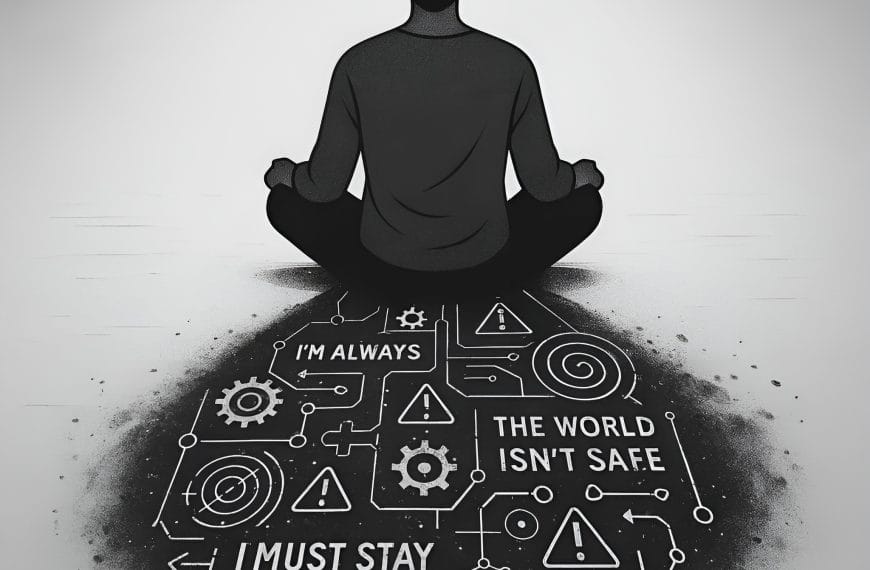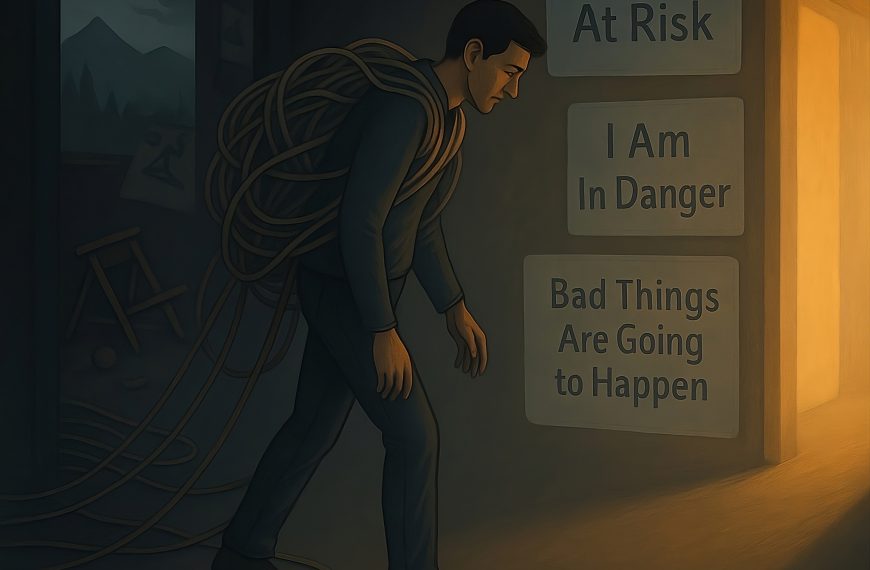
If feedback feels disproportionately painful, it does not automatically mean you are weak, dramatic, or “too sensitive.” In adult ADHD, the stronger research base points first to emotional dysregulation: a 2020 meta-analysis of 13 studies with 2,535 participants found significantly higher overall emotional dysregulation in adults with ADHD than in controls, with emotional lability showing the largest effect. A 2023 systematic review of 22 adult studies also found that emotional dysregulation in adult ADHD was associated with symptom severity, executive functioning, psychiatric comorbidities, and functional outcomes.
That matters because what many people describe as “rejection sensitivity” or “criticism sensitivity” often does not start with rejection alone. It starts with a nervous system and interpretation style that can react quickly, intensely, and personally to cues that other people might brush off. In newer research focused more directly on rejection sensitivity, ADHD symptoms were positively associated with rejection sensitivity in a 2024 study of 304 Hungarian college students, and that relationship was partly shaped by wellbeing, self-regulation, resilience, and related mental-wellbeing factors.
Why this can happen in ADHD
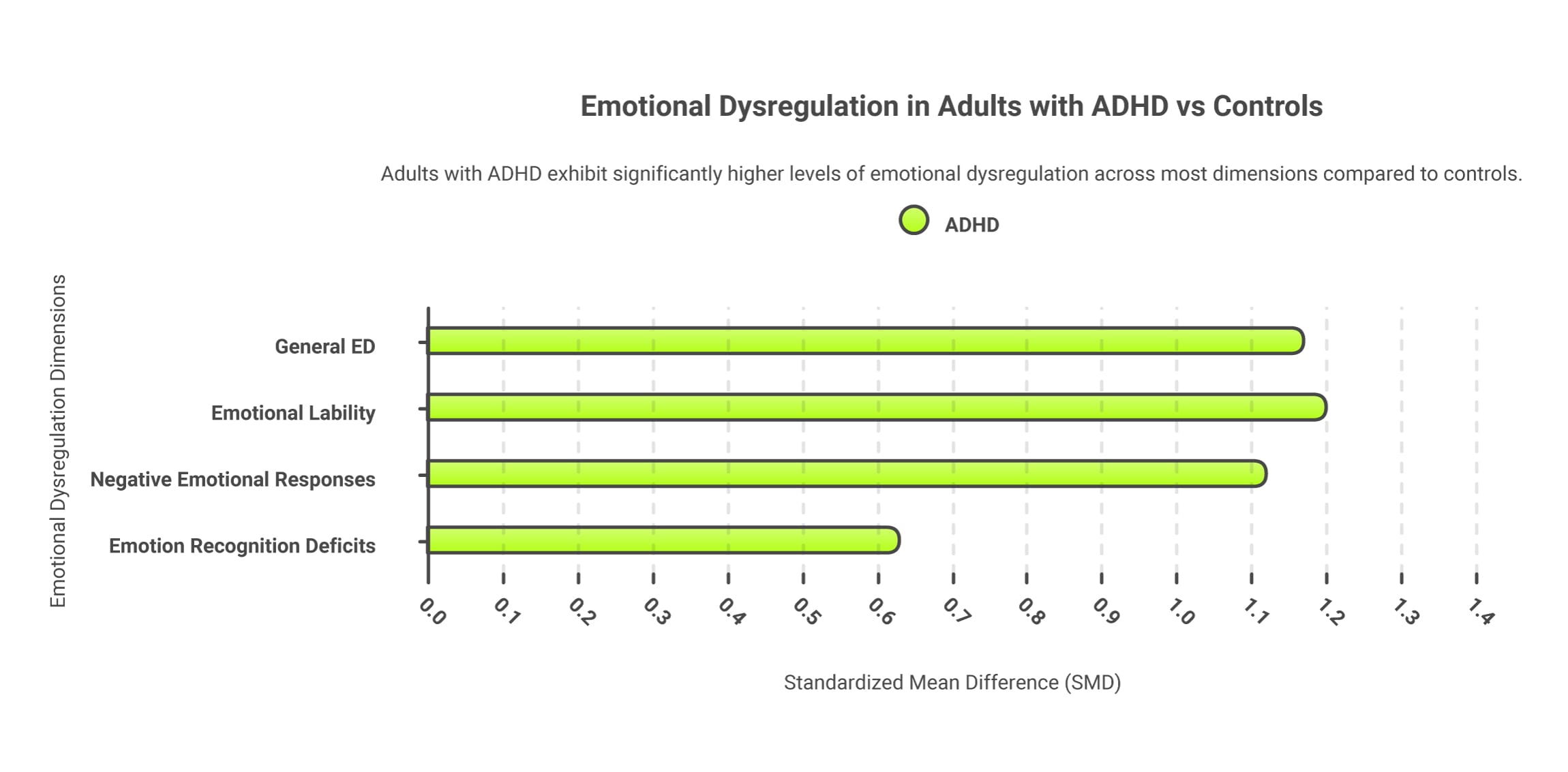
The adult ADHD literature does not reduce the issue to “being bad with emotions.” The more precise finding is that adults with ADHD, on average, show meaningfully higher emotional dysregulation than control groups. In the Beheshti meta-analysis, general emotional dysregulation showed a large effect size of Hedges’ g = 1.17, emotional lability showed Hedges’ g = 1.20, and negative emotional responses showed Hedges’ g = 1.12. The same paper also found ADHD symptom severity was significantly correlated with general emotional dysregulation.
The broader review literature points in the same direction, while staying appropriately cautious. The 2023 systematic review concluded that emotional dysregulation is clearly present in adult ADHD and is linked with greater symptom severity, executive-function problems, and poorer functioning, even though the authors also noted that emotional dysregulation is not unique to ADHD and should not be treated as exclusive to it. That balance is useful: the pattern is real, important, and clinically relevant, but it is not the whole story.
Why criticism can feel bigger than it “should”
One reason this topic deserves its own article is that the criticism research in ADHD is unusually clear. In a 2020 cross-sectional study of 1,203 adults, 46% of whom reported an ADHD diagnosis, adults with ADHD reported significantly lower self-compassion and higher perceived criticism than adults without ADHD. Perceived criticism also partly explained the link between ADHD diagnosis and lower self-compassion, even after accounting for mood-disorder history.
The same paper found that participants with an ADHD diagnosis reported higher average perceived criticism than participants without ADHD, and higher perceived criticism was associated with greater odds of being in the high-ADHD-traits group. In plain language, the more criticism a person felt was “getting through,” the more likely they were to fall into the higher-ADHD-traits group in that study.
A 2022 qualitative study then adds texture that numbers alone cannot. In written responses from 162 adults with ADHD or high ADHD traits, researchers identified five major themes around criticism. They found criticism was often tied to organization, focus, forgetfulness, and time management, and reported that these inattention-related behaviours made up 90% of the criticized behaviours discussed in the first theme. Participants also described criticism being perceived through judgment, comparison, rejection, jokes, and other people’s emotional reactions, not just through direct verbal correction.
That helps explain why one offhand comment can land so hard. In the same study, participants described particularly strong reactions to criticism, sensing criticism even without direct evidence, lower self-worth after repeated criticism, and coping by avoidance, hiding parts of themselves, or withdrawing from situations likely to evoke judgment. The authors noted that these coping patterns could come with costs to well-being, achievement, and energy.
What this pattern can look like in real life
When this loop is active, the problem is not always obvious from the outside. It can look like replaying a comment for days, reading a neutral email as loaded, overexplaining small mistakes, procrastinating on work that might be judged, hiding unfinished tasks, or swinging between people-pleasing and shutdown. Those patterns line up with the criticism themes found in the 2022 ADHD study and the newer qualitative rejection-sensitivity work published in 2026.
The 2026 qualitative study is small, but it is still useful because it describes the experience from the inside. In focus groups with five undergraduates with formal ADHD diagnoses, the primary themes were withdrawal, masking, and bodily sensations. Participants described rejection sensitivity as painful and overwhelming, often lasting from hours to weeks, and said the expectation of rejection could feel worse than the rejection itself. They also linked the pattern to loneliness, reduced social functioning, impaired daily life, and missed work or university opportunities.
That “expectation is worse than the event” piece matters. It suggests that by the time feedback arrives, the nervous system may already be braced for danger. The comment itself is only one part of the reaction. The anticipation, scanning, and preloaded self-judgement may already be doing most of the work.
A simple way to recognize the loop
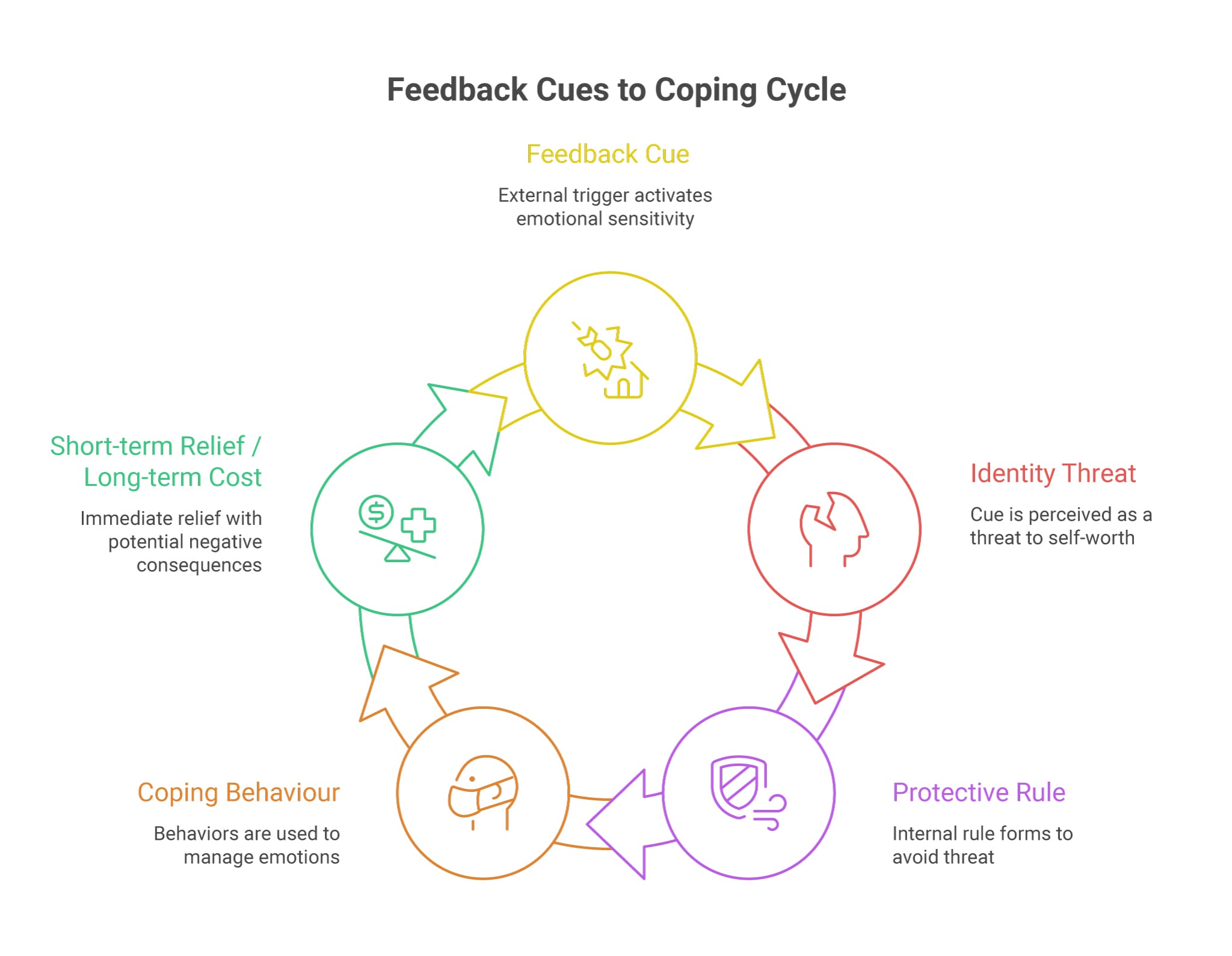
A common criticism-sensitivity loop in ADHD can look like this:
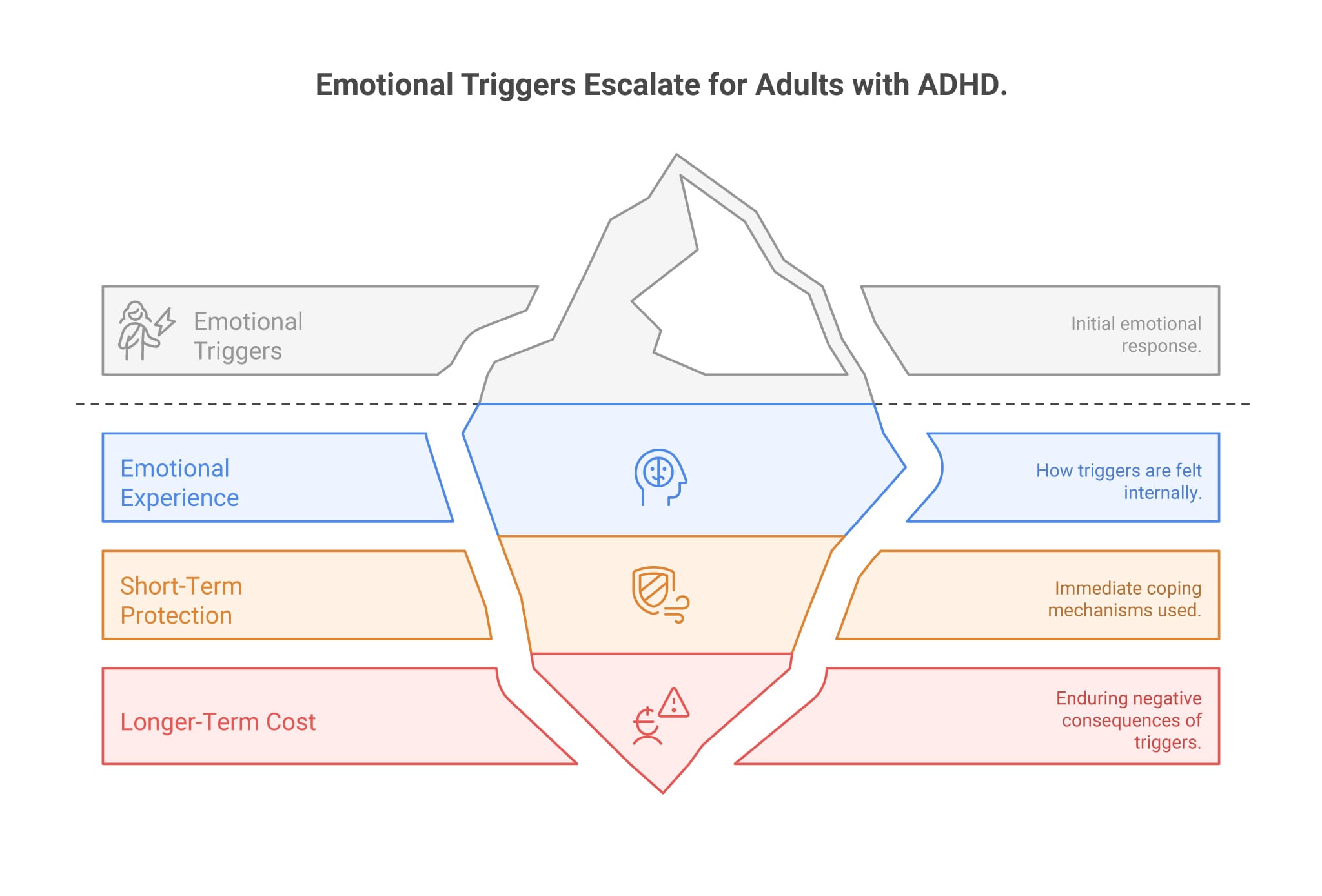
A cue shows up — a delayed reply, a change in someone’s tone, a small correction, a performance review, a joke, or an unanswered text. That cue gets interpreted as a negative evaluation. The body reacts quickly. Shame, panic, anger, embarrassment, or collapse follows. Then the protective behaviours kick in: overexplaining, masking, going silent, withdrawing, perfectionistic overcorrection, reassurance-seeking, or avoiding the next vulnerable step altogether. In the short term, those strategies may feel protective. In the longer term, they can reinforce fear, isolation, and self-doubt.
How ShiftGrit would map this pattern
This next section is the ShiftGrit lens on the pattern, not a claim that the research studies above use the same model.
At ShiftGrit, Identity-Level Therapy is described as targeting the belief patterns and emotional loops driving automatic reactions, while Pattern Theory™ is the framework used to understand how those loops form and repeat. The ShiftGrit Core Method™ then combines that mapping process with Reconditioning, which ShiftGrit describes as the structured process for interrupting limiting belief loops and revising outdated internal responses.
From that lens, the feedback is rarely the whole problem. The feedback lands on top of an identity-level belief. For one person, that belief may sound like “I am not good enough”. For another, I am a failure, I don’t belong, or I’m disappointing people. Once that deeper belief is activated, the nervous system does not experience the moment as mere information. It experiences it as a threat.
That threat then tends to create a protective rule or need: I need to be perfect, I need to avoid letting people down, I need to make sure nobody is upset with me, or I need to stay beyond criticism. From there, the protective behaviours make sense. Overexplaining, people-pleasing, withdrawal, procrastination, emotional shutdown, reassurance-seeking, and masking are not random. They are attempts to reduce the pain of the underlying belief being confirmed.
That is also why insight alone often does not fully solve the issue. A person can know the feedback was minor and still feel flattened by it. ShiftGrit’s own description of Pattern Reconditioning is that it aims to work on the automatic loop itself, not just the conscious explanation of it.
Identity-Level Therapy for ADHD in Calgary
Identity-Level Therapy targets the belief patterns and emotional loops driving automatic reactions—not just the surface symptoms. By working at the identity layer, clients shift how they interpret safety, regulate threat, and relate to themselves and others. The result: reconditioning at the root of shame, self-sabotage, reactivity, and overwhelm.
It’s organized around three pillars:

ShiftGrit Core Method™
Our structured framework for breaking outdated identity patterns.
Learn more
The Pattern Library
Real-world examples of loops like perfectionism, procrastination, and shutdown.
Learn more
The Glossary
Clear definitions that keep the language sharp and the process transparent.
Learn moreLimiting Beliefs Commonly Linked with ADHD Therapy
These identity-level patterns frequently show up for clients seeking adhd therapy. Explore the beliefs to learn the “why” and how therapy can help you recondition them.

“I Am Not in Control”
When “I Am Not In Control” is running the show, everything feels like too much. You either grip harder—rigid routines, hypervigilance—or give up entirely. Underneath it all is…
Explore this belief
“I Am A Failure”
“I Am A Failure” isn’t about isolated mistakes — it’s a deeply patterned belief that tells you nothing you do is good enough. It drives procrastination, perfectionism, and…
Explore this belief
“I Am Not Good Enough”
“I’m Not Good Enough” isn’t just a negative thought — it’s a pattern formed by early experiences like criticism, neglect, or impossible expectations. This belief fuels perfectionism, people-pleasing,…
Explore this beliefWant to see how these fit into the bigger pattern map? Explore our full Limiting Belief Library to browse all core beliefs by schema domain and Lifetrap.
What support may focus on
The research does support taking emotional difficulty in adult ADHD seriously. The 2023 systematic review notes that emotional dysregulation in adult ADHD is linked with functioning and suggests that behavioural therapies, along with psychopharmacological treatment where relevant, may be useful tools for improving emotional difficulties. That does not mean every intense reaction equals rejection sensitivity, and it does not mean every person needs the same solution. It does mean this is not a trivial add-on to ADHD.
In practical terms, support may focus on a few different layers: reducing misread threat cues, changing how criticism is interpreted, improving emotional regulation under stress, and weakening the protective behaviours that keep the loop alive. In a ShiftGrit frame, that would also include mapping the deeper belief pattern that makes a small cue feel identity-threatening in the first place.
When it may be worth reaching out
If this pattern is affecting your work, your relationships, your willingness to submit, apply, ask, speak, date, or be seen honestly, it is worth taking seriously. The more recent qualitative research on rejection sensitivity in ADHD directly describes withdrawal from relationships, university life, and job opportunities, while the criticism literature links repeated criticism with lower self-worth, avoidance, and reduced well-being.
You do not need to wait until the issue becomes a crisis to get support. Sometimes the better threshold is simpler: if feedback keeps hitting harder than the situation seems to justify, and the pattern is shaping your behaviour more than you want it to, that is enough reason to look at it properly.
Calgary support
If you are looking for ADHD therapy Calgary, ShiftGrit’s ADHD therapy pages frame the work through Identity-Level Therapy, the ShiftGrit Core Method™, and related pattern work around emotional loops, shame, reactivity, and overwhelm.
FAQ About ADHD and Rejection Sensitivity
Is rejection sensitivity a real symptom of ADHD?
Why does criticism sometimes feel overwhelming for people with ADHD?
Is rejection sensitivity the same as emotional dysregulation?
Can therapy help with rejection sensitivity in ADHD?
When should someone seek help for rejection sensitivity related to ADHD?
Sources for the article
Beheshti A, Chavanon M-L, Christiansen H. Emotion dysregulation in adults with attention deficit hyperactivity disorder: a meta-analysis. BMC Psychiatry. 2020.
Soler-Gutiérrez A-M, Pérez-González J-C, Mayas J. Evidence of emotion dysregulation as a core symptom of adult ADHD: A systematic review. PLOS ONE. 2023.
Beaton DM, Sirois F, Milne E. Self-compassion and Perceived Criticism in Adults with Attention Deficit Hyperactivity Disorder (ADHD). Mindfulness. 2020.
Beaton DM, Sirois F, Milne E. Experiences of criticism in adults with ADHD: A qualitative study. PLOS ONE. 2022.
Müller V, Mellor D, Pikó BF. Associations Between ADHD Symptoms and Rejection Sensitivity in College Students: Exploring a Path Model With Indicators of Mental Well-Being. Learning Disabilities Research & Practice. 2024.
Rowney-Smith A, Sutton B, Quadt L, Eccles JA. The lived experience of rejection sensitivity in ADHD – A qualitative exploration. PLOS ONE. 2026.