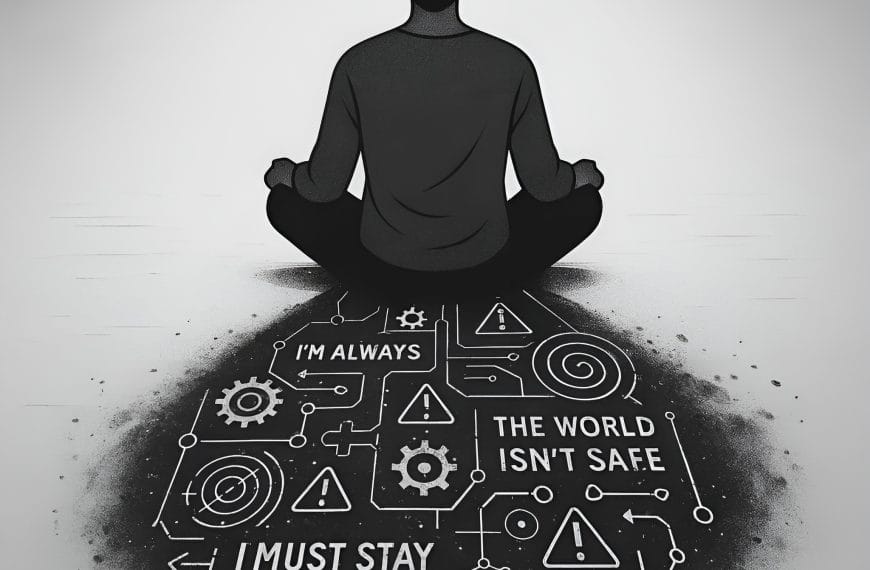
Calgary is full of high performers—professionals, leaders, entrepreneurs, and ambitious people who push hard, stay late, and carry the mental load long after the workday ends.
But many describe the same quiet internal pattern:
- “My brain never turns off.”
- “Even when I’m not working, I’m working.”
- “I can’t fully relax, even when things are going well.”
- “I feel pressure, even when no one’s pressuring me.”
This isn’t a personality flaw or poor work–life balance.
It’s a pattern.
A nervous-system loop.
Something your brain learned over years of pressure, striving, urgency, and expectation.
We call this High-Performer Anxiety—a form of persistent stress that feels productive, looks successful on the outside, but causes exhaustion, reactivity, emotional shutdown, and burnout underneath.
And in Calgary, this loop has a unique flavour.
Many high performers in Calgary describe a pattern of overworking, overthinking, and never feeling “done enough.” This loop is closely tied to perfectionism — a pattern we break down in depth in our guide on why mistakes feel dangerous for high-functioning people.
The Calgary Stress Loop: Why Pressure Feels Different Here
Calgary is built on ambition.
A city shaped by resilience, grit, innovation, and economic swings that reward people who stay sharp and stay moving.
The result?
A cultural norm of:
- high achievement
- long hours
- personal responsibility
- self-reliance
- productivity guilt
- “always on” nervous systems
Calgary professionals often operate with:
- chronic anticipation
- rapid decision cycles
- unpredictable workloads
- pressure to perform
- difficulty shutting down
This creates a stress loop—your nervous system learns that staying activated equals staying safe, capable, and successful.
Even when you try to rest, your brain scans for the next problem.
Your body has learned the pattern of pressure, and it keeps running it.
What High-Performer Anxiety Looks Like
High-performer anxiety doesn’t usually look like panic attacks or dramatic symptoms.
It looks like:
- Holding your breath without noticing
- Constant mental rehearsal or planning
- Feeling behind—even when on track
- Over-functioning (fixing, solving, juggling)
- Under-resting (difficulty relaxing, guilt resting)
- Emotional numbness or shutdown
- Perfectionism that feels “practical”
- Workload resistance → followed by pressure → followed by pushing harder
- Difficulty being present with family
- “Productive worry” that never ends
From the outside, you look capable.
Inside, you’re exhausted.
This is what happens when your nervous system believes that slowing down means losing control.
Related guide: Perfectionism & Calgary High Achievers
Many high performers experience perfectionism as a constant sense of urgency or fear of letting others down. Explore how perfectionism wires itself into the nervous system — and how therapy helps unwind it.
Why High-Performer Anxiety Isn’t Fixed with Coping Tools
Many high performers in Calgary try:
- meditation
- routines
- time blocking
- weekends off
- gym resets
- vacations
But the pressure comes back immediately.
That’s because coping tools target symptoms, not the underlying internal pattern.
Your threat system—trained to stay alert—doesn’t relax just because you want it to.
True change comes from recalibrating the pattern, not fighting each symptom.
Identity-Level Therapy for Performance Psychology in Calgary
Identity-Level Therapy targets the belief patterns and emotional loops driving automatic reactions—not just the surface symptoms. By working at the identity layer, clients shift how they interpret safety, regulate threat, and relate to themselves and others. The result: reconditioning at the root of shame, self-sabotage, reactivity, and overwhelm.
It’s organized around three pillars:

ShiftGrit Core Method™
Our structured framework for breaking outdated identity patterns.
Learn more
The Pattern Library
Real-world examples of loops like perfectionism, procrastination, and shutdown.
Learn more
The Glossary
Clear definitions that keep the language sharp and the process transparent.
Learn moreLimiting Beliefs Commonly Linked with Performance Psychology Therapy
These identity-level patterns frequently show up for clients seeking performance psychology therapy. Explore the beliefs to learn the “why” and how therapy can help you recondition them.

“I Am Not Good Enough”
“I’m Not Good Enough” isn’t just a negative thought — it’s a pattern formed by early experiences like criticism, neglect, or impossible expectations. This belief fuels perfectionism, people-pleasing,…
Explore this belief
“I Am A Failure”
“I Am A Failure” isn’t about isolated mistakes — it’s a deeply patterned belief that tells you nothing you do is good enough. It drives procrastination, perfectionism, and…
Explore this belief
“I Cannot Succeed”
You don’t just fear failure—you expect it. The belief “I Cannot Succeed” keeps you playing small, stuck in overthinking, or quitting before you even begin. You second-guess your…
Explore this beliefWant to see how these fit into the bigger pattern map? Explore our full Limiting Belief Library to browse all core beliefs by schema domain and Lifetrap.
Why This Happens: Pattern Theory™ & the Identity-Level Loop
At ShiftGrit, we use Pattern Theory™ to map how high achievers develop identity-level loops that drive anxiety.
These loops typically involve:
1. The Limiting Belief (LB)
“I Am Not Good Enough“
“I Am A Failure“
“I Cannot Succeed“
“I Am Falling Behind“
These beliefs also show up in perfectionism loops — where the pressure to perform or “never slip up” becomes tied to fear instead of motivation.
2. The Dysfunctional Need™ (DN)
Striving
Over-functioning
Hyper-responsibility
People-pleasing
Perfectionism
3. The Opt-Out Behaviour (OOB)
Avoiding rest
Overworking
Numbing out
Shutdown
Procrastination
Overplanning
This loop reinforces a single internal message:
“If I slow down, everything collapses.”
Reconditioning breaks this pattern by dissolving the belief–threat connection your nervous system has been running on autopilot.
The Signs You’re Breaking the Loop
High performers rarely notice progress at first.
It feels subtle:
- You pause before reacting.
- Pressure feels lighter.
- You choose differently in small moments.
- Your emotional “hangover” after stress disappears faster.
- Problems don’t feel like emergencies.
- Calm feels more possible—and more familiar.
These early micro-changes are the nervous system shifting from reactivity to intentionality.
That’s therapy working.
Featured in the Calgary Chamber
The Calgary Chamber recently highlighted ShiftGrit’s approach to helping Calgary’s high performers break the anxiety loop, regulate pressure, and return to a more sustainable mindset.
👉 Read the full article
https://calgarychamber.com/whats-new/why-calgary-professionals-stay-stressed-and-how-to-break-the-anxiety-loop/
This page expands on the ideas shared there—specifically, how Pattern Theory™ explains the Calgary stress loop and what real change looks like.
How Identity-Level Therapy Helps High Performers
Our therapy model breaks the loop by targeting:
- threat reactivity
- emotional shutdown
- productivity anxiety
- perfectionism
- overwhelm
- stress cycling
- belief-level drivers of chronic pressure
This creates neurological reconditioning—the automatic shift from:
“I must keep going.”
to
“I can choose differently.”
High performers don’t need more coping tools.
They need a recalibrated nervous system.
These pressure cycles often overlap with perfectionism — especially when old beliefs like “I must get everything right” or “falling behind means failing” drive the stress response.
When to Talk to a Therapist
You don’t need to be in crisis.
High-performer anxiety often shows up like this:
- You’re successful but exhausted
- You’re productive but unhappy
- You can’t stop thinking
- You’re always planning
- You can’t shut down after work
- You crash emotionally on weekends
- Rest makes you uncomfortable
- You feel pressure even when things are stable
If your system feels stuck in “go mode,” therapy helps you step out of survival and into intentional living.
Find a High-Performer Anxiety Therapist in Calgary
- Performance Psychology Calgary
- Calgary Anxiety Counselling
- Calgary Burnout Therapy
- Therapy in Calgary – What to Expect
- Identity-Level Therapy
- Find a Therapist Calgary