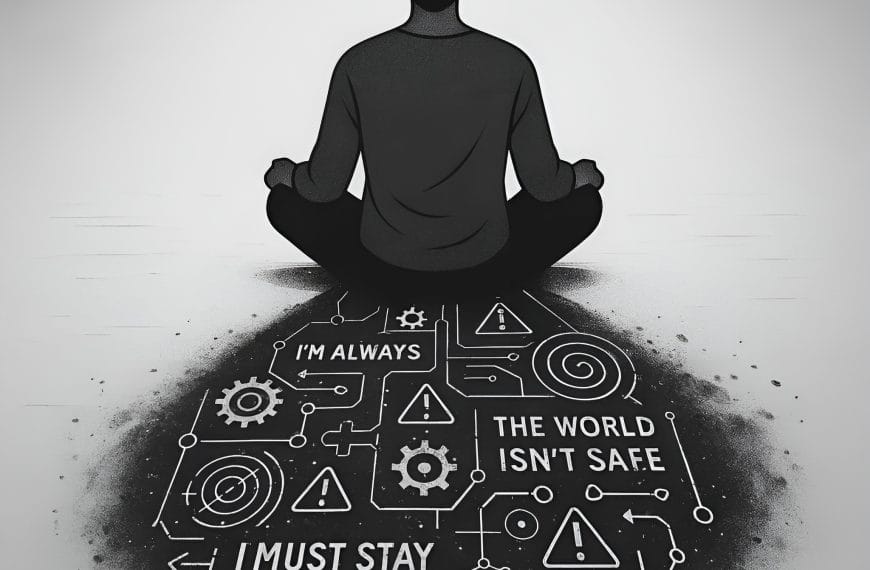
Most people start therapy blind. You book a session, sit on a couch, and… hope for the best.
That’s where therapy often breaks down. The first few sessions can feel like vague conversations, a friendly ear but no clear plan. You leave wondering if you just burned 50 minutes and a chunk of change.
The most common complaints about therapy?
- No transparency — clients don’t know what the therapist is actually doing.
- No clear agenda — you just “talk” with no direction.
- Slow pacing — months go by before you feel movement.
- Surface-level work — symptoms are discussed but never traced to their root.
- Fit is everything — if you don’t click with your therapist, the progress stops.
We built ShiftGrit’s Calgary program to solve those frustrations.
From day one, therapy is structured. Each of your first three sessions has a clear purpose. By the end of Session 3, you’ll know what’s driving your reactions, how those patterns spread across your life, and what the structured game plan looks like to change them.
Here’s how it works.
If you’re looking for a therapist in Calgary, you can explore our Calgary therapy clinic on 17th Ave for fees, availability, and local services.
A Quick Note on Therapy in Calgary
If you’re looking for therapy in Calgary, the city offers a wide range of approaches — from CBT and EMDR to Identity-Level Therapy, Calgary’s well-known model for changing the patterns that drive emotional difficulty. ShiftGrit provides evidence-based therapy with a structured plan, licensed Calgary psychologists, and local support across anxiety, depression, trauma, burnout, relationship patterns, and more. Here’s what your first sessions actually look like when starting therapy in Calgary.
Types of Therapy Available in Calgary
Most people searching for therapy in Calgary want to understand what approaches are available. Common evidence-based modalities offered across the city include:
- Cognitive Behavioural Therapy (CBT) — focuses on changing unhelpful thought–behaviour cycles.
- Dialectical Behaviour Therapy (DBT) — helps with emotional regulation and distress tolerance.
- EMDR Therapy — highly effective for trauma and intrusive memories.
- Schema Therapy — works with deeper, long-term belief patterns.
- Identity-Level Therapy — Calgary’s pattern-based model that targets the core beliefs and loops driving recurring emotional and behavioural reactions.
ShiftGrit integrates these approaches within the ShiftGrit Core Method™, giving clients a structured, predictable path for change.
Therapy Costs & Insurance in Calgary
Most therapy in Calgary is covered by extended health benefits for Registered Psychologists, Clinical Counsellors, or Social Workers. ShiftGrit sessions are eligible for insurance reimbursement, and pricing is transparent across psychologists and counsellors.
👉 For a full breakdown of fees, receipts, and coverage info, see our Calgary Therapy Fees Guide.
Session 1: The Detective Work
Your first session is more than small talk. Think of it like hiring an accountant. You don’t walk in to “chat about money.” You hand them the books so they can find the leaks.
That’s what we do in Session 1 — we call it the Enriched Intake.
- We gather background and context fast.
- We ask targeted questions: When do you feel most reactive? When did that pattern start showing up?
- We identify non-nurturing elements™ — the repeating conditions that shaped your lens on the world.
Instead of guessing, we map.
You walk out knowing: this isn’t going to be random. There’s already a plan forming.
Session 2: The Pattern Map
Now the detective becomes a teacher.
Session 2 is where we introduce Pattern Theory™ — our framework for why limiting beliefs form, how they drive behaviour, and why they keep looping.
Most people describe it as a “lightbulb moment.”
We show you the wiring diagram of your own reactions. You’ll finally see:
- Why you blow up at small things.
- Why you pull back in conflict.
- Why the same loops show up again and again.
It’s like spotting the bug in a line of code. Once you see it, you can’t unsee it. And once you see it, you can start to change it.
See who does this work in Calgary
Browse Pattern Therapists trained in our structured method for common concerns.
Session 3: Connecting the Dots
This is where things click.
In Session 3, we widen the lens and show you how your patterns generalise.
That fear of failure? It doesn’t just live at work — it bleeds into relationships, health, and decisions.
That “I am not good enough” belief? It fuels both perfectionism and procrastination.
We connect the dots so you can see the global nature of your limiting beliefs. It’s not ten different problems — it’s one root system showing up everywhere.
That’s why chasing symptoms never works. You have to map the root.
When Does Change Work Start?
From Session 4 onward.
The first three sessions build the map. Starting Session 4, we shift into Reconditioning: a five-step counter-conditioning technique that re-trains the “walnut brain” — the threat-response system.
Instead of reacting on autopilot, you start responding from your logical mind.
Reconditioning doesn’t live in worksheets or willpower. It lives in the part of your brain that runs your patterns. That’s why it sticks.
What If the Therapist Doesn’t Feel Like a Fit?
Therapist fit matters — but here’s the advantage of a structured model: you don’t lose progress if you switch.
Every ShiftGrit therapist in Calgary is trained in the same method. Your map follows you. Another therapist can pick up exactly where you left off.
That’s the power of structure.

If you’re still deciding how to choose the right therapist before starting, our guide on Questions Nobody Asks When Finding a Therapist in Calgary is a must-read companion piece.
For in-person or online sessions, visit our Calgary Therapy location page.
FAQs
What happens in Session 1?
Why map patterns before changing them?
When does change work start?
What if I feel worse before I feel better?
How many sessions before I know if it’s working?
Can I switch therapists without starting over?
ShiftGrit Psychology & Counselling is included in the Calgary Chamber Toolkit Resources for Mental Health, serving the Calgary Zone through Identity-Level Therapy and Pattern Reconditioning.
What You’ll Walk Away With
By the end of your first three sessions in Calgary, you’ll know:
- What’s actually driving your reactions?
- How those patterns connect across your life.
- What the structured reconditioning plan looks like.
No more wandering in the dark. No more “just talking.”
Clarity. Structure. A roadmap for change.
👉 Check Calgary availability here