


































Where this belief fits
Schema Domain: Impaired Autonomy & Performance
Lifetrap: Enmeshment / Undeveloped Self
Non-Nurturing Elements™ (Precursors):
How this belief keeps repeating:
Evidence Pile
When this belief is active, the mind tracks signs of struggle, sensitivity, or limitation and interprets them as evidence of personal weakness rather than context, load, or adaptation.
Show common “proof” items
- Feeling overwhelmed, emotional, or exhausted more easily than others
- Needing support, rest, reassurance, or extra time to cope
- Avoiding conflict, pressure, or high-demand situations
- Not pushing through difficulty in the way you believe you "should"
- Comparing your capacity to others who appear more resilient or unaffected
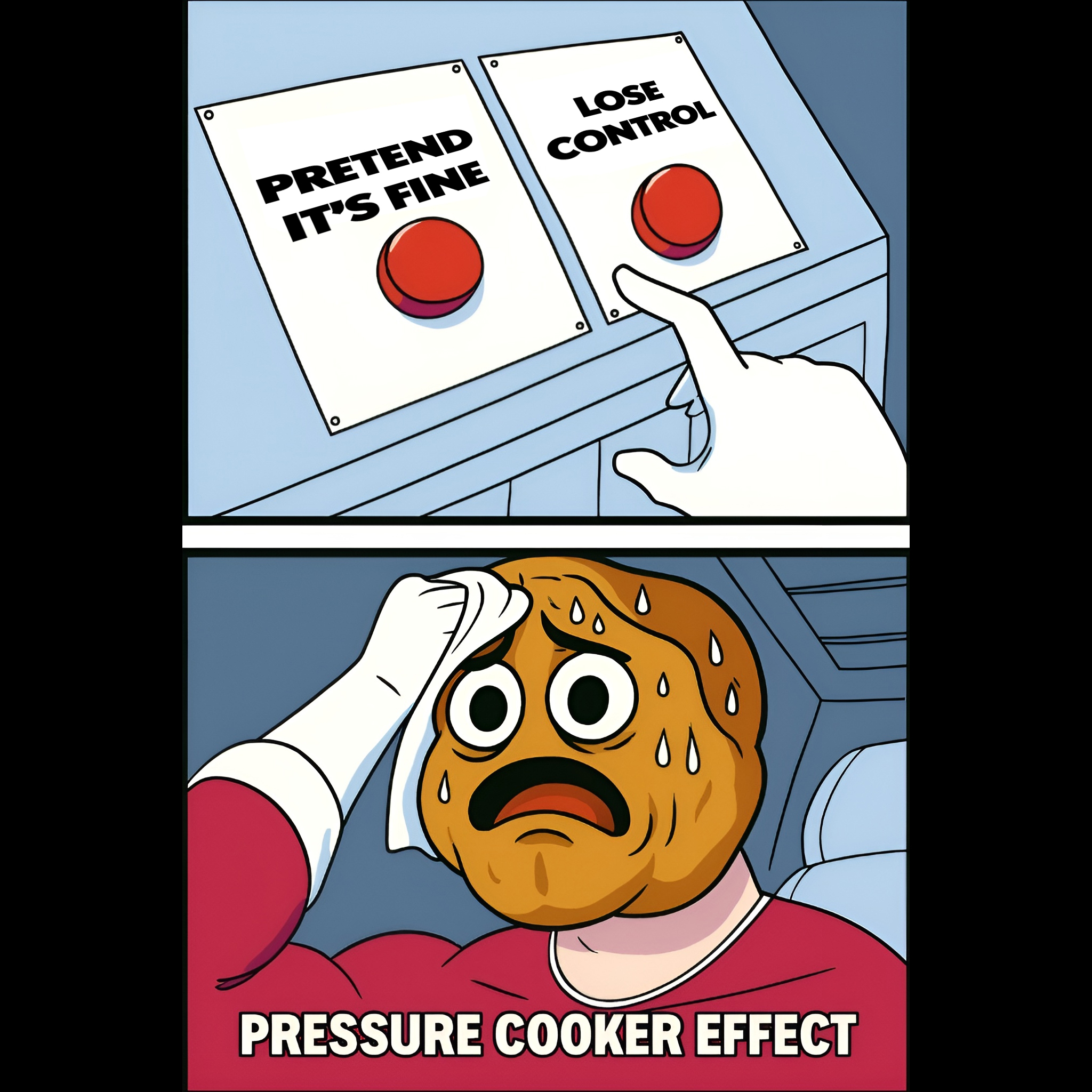
When weakness feels dangerous, pressure builds as the system works to suppress vulnerability, push through limits, and prove strength at all costs.
Show common signals
- Pushing through exhaustion, pain, or emotional strain
- Difficulty asking for help or admitting struggle
- Harsh self-talk around rest, sensitivity, or limits
- Feeling tense when emotions arise or when support is offered
- A constant sense of needing to "handle it" alone
When maintaining strength becomes unsustainable, the system releases pressure either by collapsing into helplessness—or by disconnecting from feeling altogether.
Show Opt-Out patterns
- Emotional numbness or shutting down
- Avoiding situations that might expose vulnerability
- Sudden burnout, illness, or withdrawal after long pushing
- Self-criticism or shame spirals after moments of struggle
- Letting things fall apart to confirm "I can’t handle this anyway"
Some people feel the need to hold it all together all the time — and when they can’t, they assume it means something is wrong with them. The belief I Am Weak doesn’t always look like falling apart. It often shows up in people who appear strong, capable, or even high-achieving — but who carry a quiet fear that if they let their guard down, they’ll be exposed as inadequate. This belief isn’t about actual ability. It’s about a learned association between vulnerability and failure.
What It Sounds Like Internally:
- “If I break down, I won’t come back from it.”
- “I can’t afford to show weakness — people count on me.”
- “Others handle things better than I do.”
- “I’m too emotional — I need to keep it together.”
- “If I ask for help, I’ll look like I can’t cope.”
Where It Shows Up:
- Overfunctioning during crises or emotional events
- Avoiding situations where help or support is needed
- Struggling to rest, be cared for, or admit limits
- Refusing to share emotional experiences, even with close others
- Viewing self-care as indulgent, or needing downtime as a flaw
- Downplaying physical or psychological pain
What It Can Lead To:
- High-functioning anxiety masked by stoicism
- Emotional numbness, shutdown, or burnout
- Isolation due to fear of being seen as fragile
- Shame triggered by natural emotions like grief or fear
- Imposter syndrome or perfectionism as compensation
- Difficulty receiving support or trusting others
Want to Dive Deeper into the “I Am Weak” Pattern?
Discover related beliefs, emotional triggers, and how therapy can help you recondition this deep-rooted belief for real change.
What Therapy Targets:
The goal isn’t to teach someone to “be stronger.” It’s to rewire the internal meaning of strength. Therapy helps identify where the belief I Am Weak was formed — often in moments where sensitivity or vulnerability was met with punishment, ridicule, or neglect. Through pattern reconditioning, individuals learn that emotional presence is not a liability — and that strength includes the capacity to feel, to ask for help, and to recover. We replace the shame loop with one rooted in self-trust, emotional regulation, and authentic resilience.
👉 Explore the Therapy Approach →
👉 See the Full Pattern Breakdown →