

































































Where this belief fits
Schema Domain: Disconnection & Rejection
Lifetrap: Defectiveness / Shame
Non-Nurturing Elements™ (Precursors):
How this belief keeps repeating:
Evidence Pile
When this belief is active, the mind interprets certain traits, needs, emotions, or reactions as signs of something fundamentally wrong that must be hidden, corrected, or managed to be acceptable.
Show common “proof” items
- Having emotional reactions that feel intense, inconvenient, or different from others
- Being told—directly or indirectly—that parts of you are “too much,” “not enough,” or problematic
- Struggling with the same sensitivities, needs, or patterns despite effort to change
- Feeling exposed, ashamed, or self-conscious when truly seen by others
- Comparing your inner experience to others’ outward composure or ease
The nervous system monitors social feedback, closeness, and exposure for signs that something inherent will be discovered and rejected if fully seen.
Show common signals
- Chronic sense of being “off,” different, or not quite right
- Hypervigilance to others’ reactions, tone, or withdrawal
- Strong discomfort with being known deeply or seen up close
- Interpreting neutral feedback as confirmation of being fundamentally wrong
- Feeling exposed, ashamed, or unsafe when attention turns inward
Relief comes from hiding the perceived defect—either by masking, over-adapting, or withdrawing before rejection can occur.
Show Opt-Out patterns
- People-pleasing, shape-shifting, or mirroring to avoid standing out
- Emotional withdrawal or guardedness in close relationships
- Preemptive rejection ("They won’t accept me anyway")
- Over-explaining, apologizing, or minimizing oneself
- Avoidance of intimacy, visibility, or situations that invite evaluation
Some beliefs don’t shout. They hum. Quiet, ever-present, and self-eroding.
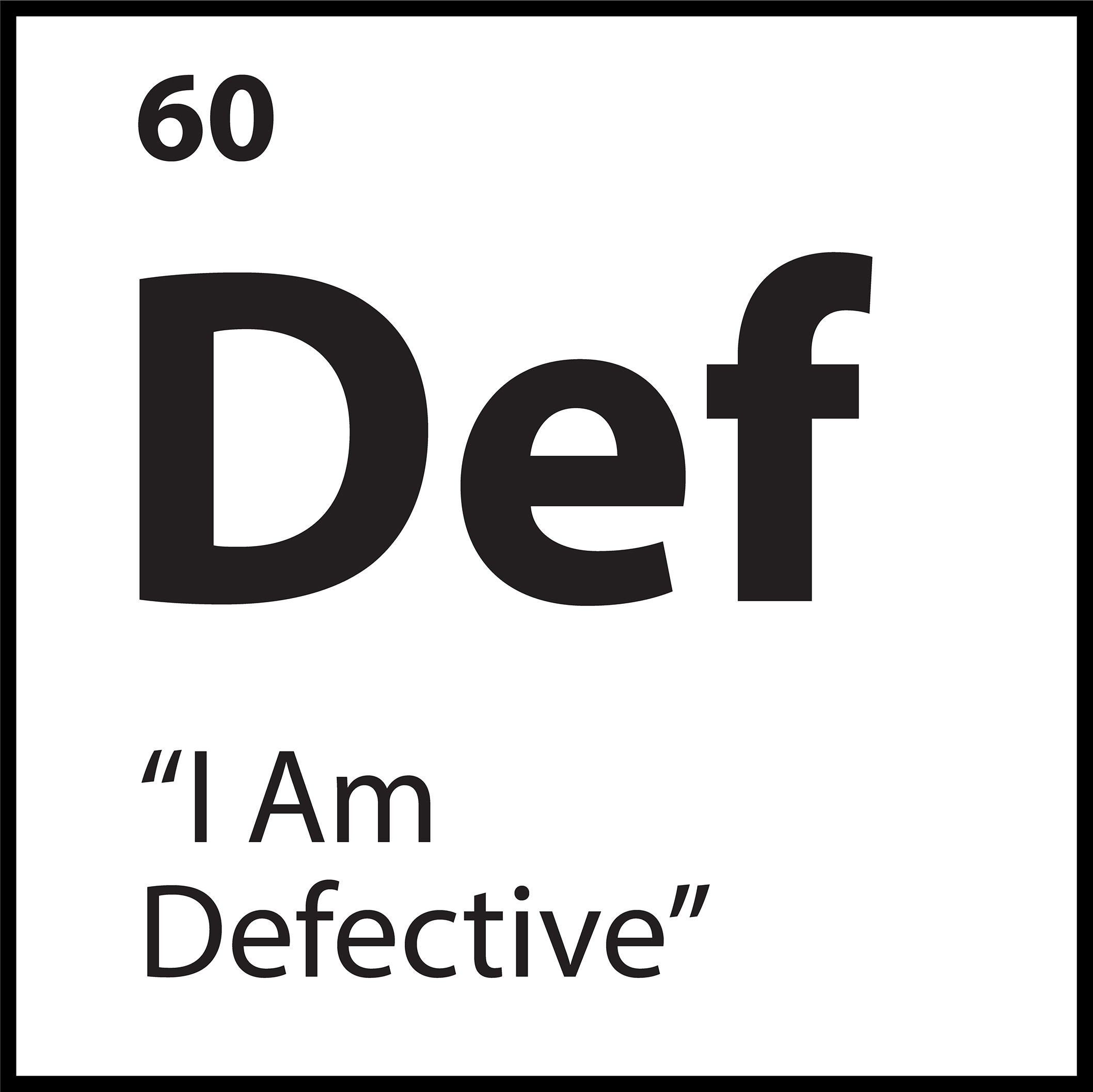
“I Am Defective” is one of those. It doesn’t scream in moments of panic—it just quietly undercuts every good thing you try to build. If you’ve ever felt like there’s something fundamentally wrong with you—something you have to hide or compensate for—this belief might be running the show underneath.
What It Sounds Like Internally:
- “If people really knew me, they’d walk away.”
- “There’s something broken in me—I don’t know what, but it’s there.”
- “I always end up ruining things. I’m the common denominator.”
- “I need to earn love, and even then, I’m not sure I deserve it.”
- “I’m not lovable. I’m just… not okay.”
The tone here isn’t just negative—it’s identity-deep. This isn’t about behaviour. It’s about being. People carrying this belief don’t just think they make mistakes—they think they are a mistake.
Where It Shows Up:
- In relationships: You may hide parts of yourself, over-give, or test people to prove they’ll leave.
- In career settings: Imposter syndrome, perfectionism, and overworking to compensate are common.
- In emotional life: You might numb out, stay disconnected, or feel a general emotional flatness—because shame is blocking access to full emotional expression.
- In your self-talk: You judge your needs, reactions, or even your body as proof that you’re “not enough.”
Over time, this belief makes authentic connection feel dangerous. If people get too close, you worry they’ll see the truth—and leave.
Common Emotional Triggers:
This belief doesn’t just hurt your self-image; it actively convinces you of your inherent unworthiness.
- Criticism or Feedback. Even gentle suggestions trigger intense shame.
- Comparison to Others. Seeing peers succeed amplifies your sense of personal inadequacy.
- Mistakes and Failures. Minor errors spiral into confirmation of fundamental defectiveness.
- Being Vulnerable or Authentic. Fear that revealing your true self will expose deep flaws.
- Rejection or Abandonment. Any sense of social distancing confirms fears of your inner defect.
What It Can Lead To:
Unchecked, this belief often evolves into:
- Persistent shame and guilt
- Self-esteem struggles
- Avoidant or anxious attachment styles
- Emotional suppression or numbness
- Difficulty receiving love or compliments
- Depression and identity confusion
- Cycles of overachieving followed by self-sabotage
This belief quietly sets the thermostat of your life: no matter how much external success you achieve, it keeps pulling you back to a default of unworthiness.
What Therapy Targets:
We don’t try to convince your mind that you’re not defective.
Instead, we help your nervous system stop treating your own identity as a threat.
With Pattern Reconditioning, we work directly at the level where this belief lives—inside emotional memory networks that still hold old shame, rejection, or misattuned responses.
The goal?
Not to become perfect—but to feel safe being real.
To stop living like you’re broken.
And to start experiencing relationships, success, and stillness without needing to earn your right to exist.
👉 Explore the Therapy Approach →
👉 See the Full Pattern Breakdown →
ShiftGrit Glossary



Find the pattern behind what's been feeling hard
A few simple questions to help surface the concerns that may fit best.
Find Your Pattern
