

























































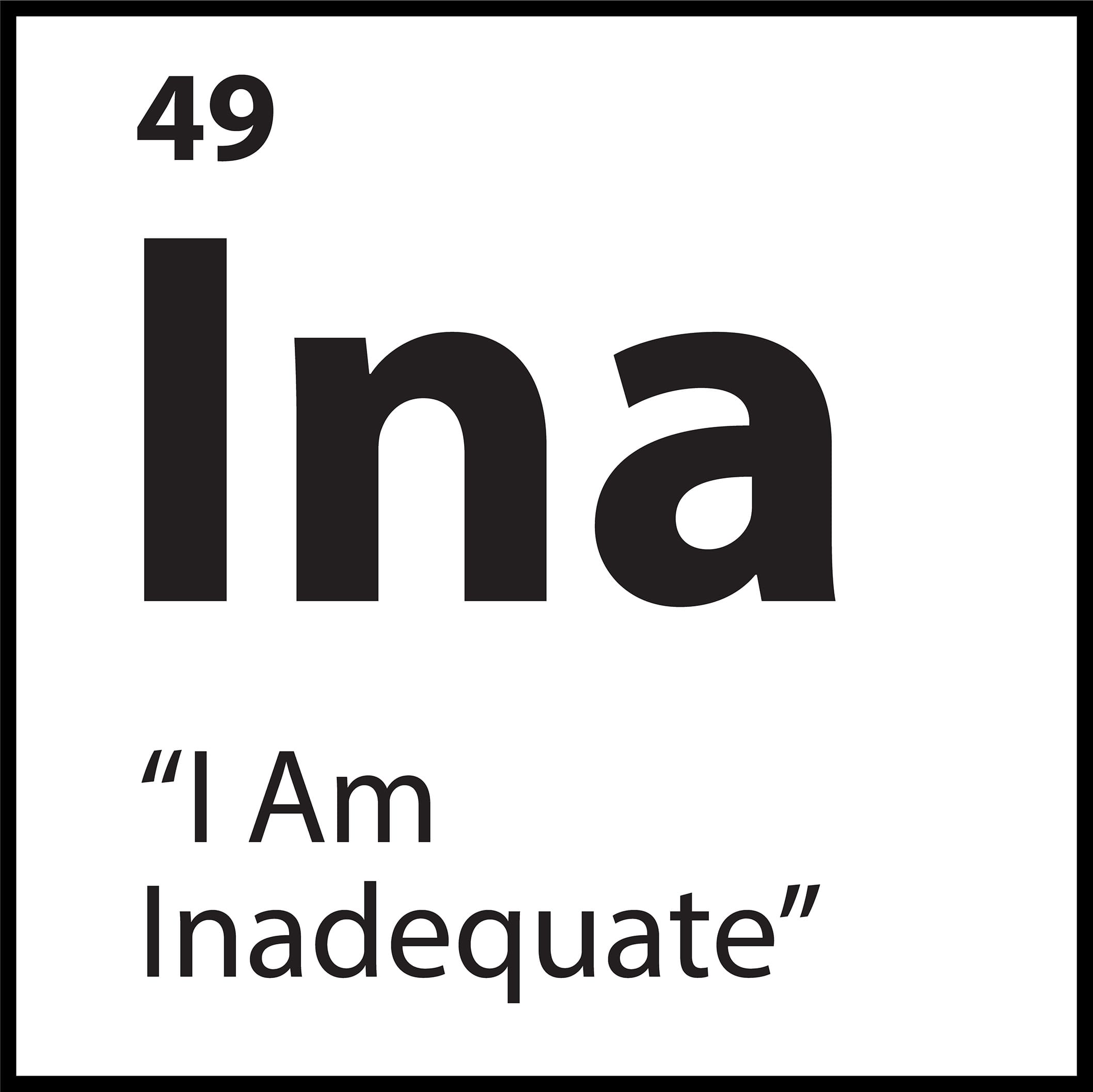
Where this belief fits
Schema Domain: Impaired Autonomy & Performance
Lifetrap: Failure
Non-Nurturing Elements™ (Precursors):
How this belief keeps repeating:
Evidence Pile
When this belief is active, the mind scans for moments where demands feel higher than capacity and interprets struggle, learning curves, or effort as evidence of being fundamentally insufficient.
Show common “proof” items
- Tasks taking longer or requiring more effort than expected
- Needing guidance, clarification, or support
- Comparing one’s abilities to people who appear more competent or confident
- Feeling overwhelmed by expectations or responsibility
- Feedback that highlights gaps, growth areas, or missed details
As evidence of not measuring up accumulates, internal pressure builds around anxiety, self-doubt, and the fear of being exposed as incapable.
Show common signals
- Performance anxiety
- Persistent self-doubt
- Mental over-preparation or checking
- Fear of evaluation or feedback
- Shame about struggling
To reduce the risk of being revealed as inadequate, the system shifts toward avoidance, overcompensation, or self-limitation.
Show Opt-Out patterns
- Procrastination or avoidance of challenging tasks
- Overworking or perfectionism
- Staying in familiar roles or comfort zones
- Declining opportunities for growth
- Seeking excessive reassurance
This belief shows up with pressure. Pressure to be more. Do more. Get it right.
And when you don’t? It feels like proof. That you’re not enough. Not qualified. Not capable.
What It Sounds Like Internally:
- “I’m probably not the right person for this.”
- “Someone else could do it better.”
- “What if they find out I don’t know what I’m doing?”
Where It Shows Up:
- Impostor syndrome, even with evidence of success
- Avoiding new challenges unless you feel 100% prepared
- Overcompensating through perfectionism or people-pleasing
- Fear of asking for help or admitting gaps in knowledge
Common Emotional Triggers:
This limiting belief does not just create self-doubt; it activates chronic pressure and internal collapse.
- Setbacks and mistakes. These are interpreted as proof of failure rather than an opportunity to grow.
- Watching peers succeed. Seeing peers excel triggers shame, not inspiration.
- Unstructured situations. New or unstructured situations feel overwhelming, not energizing.
- Receiving compliments. Compliments may feel confusing or undeserved, as though people just do not see how behind you really are.
- Minor errors. Even small errors can spiral into full-blown self-rejection.
What It Can Lead To:
Unchecked, this belief often evolves into:
- “If I try, I’ll just prove I’m not enough.”
- “It’s safer to not even try.”
- “Eventually they’ll see I’m a fraud.”
What Therapy Targets:
We don’t just offer reassurance.
We teach your nervous system how to stop registering high standards, constructive feedback, or unmet expectations as personal threats.
With Pattern Reconditioning, you can experience growth — without shame.
👉 Explore the Therapy Approach →
👉 See the Full Pattern Breakdown →