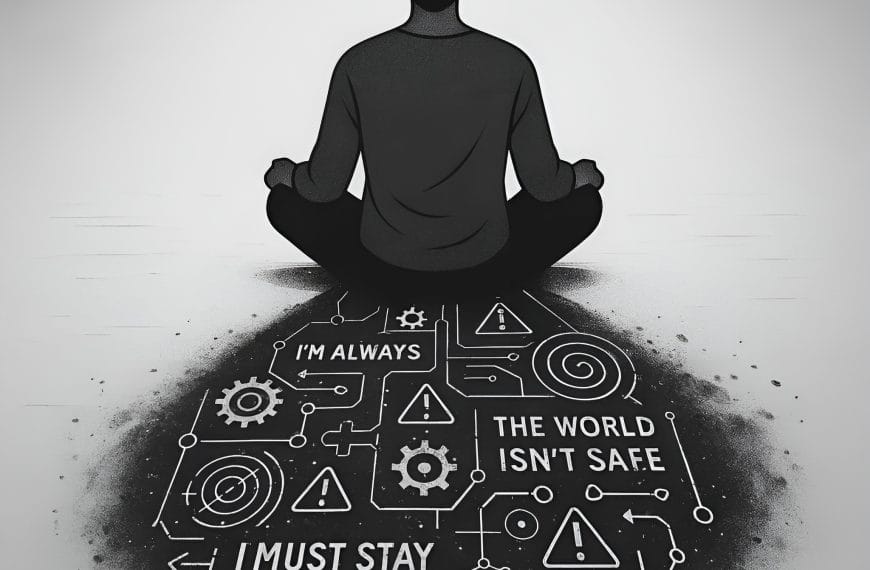
Money stress isn’t really about money.
It’s about beliefs—identity-level beliefs—running the show underneath.
In this episode, Andrea McTague sits down with Jenae White (Registered Provisional Psychologist at our Calgary studio) and Crystal Taylor (Licensed Financial Advisor and She-EO of Holden + Taylor Advisory Group) to break down why Calgarians get stuck in cycles of overspending, shutting down, avoidance, guilt, shame, and never feeling “ahead.”
They uncover the beliefs that quietly drive financial anxiety and the nervous-system patterns that keep people looping—no matter how much they earn.
If you’re in Calgary and this episode hits close to home, especially around stress, pressure, or money anxiety. You can explore how structured, evidence-based therapy works at the identity level here:
👉 Calgary Therapy: What Most People Don’t Know When Choosing a Psychologist
This is our main Calgary guide that breaks down what to look for, what actually matters, and why most people don’t get the clarity they deserve before starting therapy.
🎧 Episode Summary
Whether you’re a white-knuckle budgeter, an avoidance spender, or someone who freezes the moment your banking app opens, this episode reframes money stress in a way most people never hear.
Yes — discipline matters.
And yes — financial literacy matters.
But conscious knowledge can’t override unconscious threat responses.
You can know exactly what you “should” be doing.
You can be smart, capable, and logically aware that your strategy makes sense.
And still:
- overspend
- avoid statements
- panic-plan
- shut down
- over-give
- or cling to money like a life raft
Why?
Because those behaviours aren’t driven by logic — they’re driven by identity-level beliefs:
When those beliefs activate, the walnut brain takes over.
And the walnut brain doesn’t care about your spreadsheet, your plan, or your intentions.
Discipline works best after the identity layer is regulated.
Otherwise, you’re white-knuckling your way through a threat response.
Limiting Beliefs Commonly Linked with Anxiety Therapy
These identity-level patterns frequently show up for clients seeking anxiety therapy. Explore the beliefs to learn the “why” and how therapy can help you recondition them.

“I Am At Risk”
“I Am At Risk” is a core belief rooted in environments where safety felt unpredictable. It often drives patterns of anxiety, catastrophic thinking, and compulsive control.
Explore this belief
“I Am Not in Control”
When “I Am Not In Control” is running the show, everything feels like too much. You either grip harder—rigid routines, hypervigilance—or give up entirely. Underneath it all is…
Explore this belief
“I Am Falling Behind”
The belief “I Am Falling Behind” shows up as anxiety around progress, panic over timelines, and shame when comparing yourself to others. Therapy addresses the internal pressure and…
Explore this beliefWant to see how these fit into the bigger pattern map? Explore our full Limiting Belief Library to browse all core beliefs by schema domain and Lifetrap.
🎙 What We Cover in This Episode
1. The psychology behind financial overwhelm
Stress responses like freeze, fawn, or over-functioning show up easily around money — especially when identity beliefs are activated.
2. Why Calgarians feel “behind” even when they’re not
Calgary’s achievement-heavy, comparison-driven culture fuels timelines, pressure, and unrealistic standards.
3. Identity-level beliefs that drive money behaviours
Beliefs like “I am not in control” or “I am falling behind” quietly shape reactions more than any budgeting method ever will.
4. How avoidance keeps the nervous system stuck
Avoidance gives temporary relief — but compounds long-term stress, shame, and disconnection from goals.
5. How therapy + financial planning work together
Why functional change requires both emotional regulation and practical strategy.
💬 Key Quotes from the Episode
“People think they have money problems. They actually have threat system problems.” — Andrea
“The belief ‘I am falling behind’ is the engine of so many financial decisions.” — Jenae
“You can’t budget your way out of a belief.” — Crystal
Identity-Level Therapy for Money Stress
At ShiftGrit, we don’t treat “money issues”; we treat the belief patterns driving your emotional reactions to money.
Identity-Level Therapy helps clients:
- Regulate the nervous system before making decisions
- Recondition beliefs like “I am not in control.”
- Reduce shame, guilt, and avoidance
- Build confidence in long-term decision-making
You don’t need more willpower.
You need a new identity pattern.
Identity-Level Therapy for Anxiety
Identity-Level Therapy targets the belief patterns and emotional loops driving automatic reactions—not just the surface symptoms. By working at the identity layer, clients shift how they interpret safety, regulate threat, and relate to themselves and others. The result: reconditioning at the root of shame, self-sabotage, reactivity, and overwhelm.
It’s organized around three pillars:

ShiftGrit Core Method™
Our structured framework for breaking outdated identity patterns.
Learn more
The Pattern Library
Real-world examples of loops like perfectionism, procrastination, and shutdown.
Learn more
The Glossary
Clear definitions that keep the language sharp and the process transparent.
Learn moreIf You’re in Calgary
Explore how structured, transparent therapy works at the identity level:
👉 Calgary Therapy: What Most People Don’t Know When Choosing a Psychologist
Jenae White, R. Provisional Psychologist – ShiftGrit Calgary
Profile: https://shiftgrit.com/therapists/jenae-white/
Crystal Taylor – Holden & Taylor Advisory Group
Website: https://holdentaylorfinancial.ca/about/
Instagram: @taylord_advisor