This guide builds on our deeper breakdown in “Progress in Therapy: The Subtle Signs of Real Change,” where we explain exactly why these shifts happen.
It’s not just about feeling better—it’s about reacting differently.
Therapy progress rarely announces itself with a trumpet fanfare. More often, it’s quiet. Subtle. It shows up in the spaces between moments—when you pause before reacting, when something that used to knock you flat just… doesn’t anymore.
That’s what we call Identity-Level change—when therapy shifts how you interpret and respond to the world, not just how you talk about it.
At ShiftGrit Psychology & Counselling, our model is built around that deeper shift. Through Pattern Theory™ and Reconditioning, therapy targets the automatic patterns that drive emotions, thoughts, and behaviours—so that your growth shows up naturally, even when you’re not thinking about it.
Why Therapy Progress Isn’t Always Obvious
Most people expect progress to feel like constant improvement—less anxiety, more motivation, better days in a straight line upward. But therapy doesn’t follow a simple graph. It’s a recalibration process inside your nervous system and mind.
When your threat brain (the reactive system designed to keep you safe) learns that certain triggers are no longer dangerous, it starts handing the steering wheel back to your cognitive mind—the part that plans, decides, and creates.
At first, that shift can feel uneven. You might notice yourself:
- Getting triggered but recovering faster.
- Having strong emotions but understanding why without spinning out.
- Feeling a little bored in session because there’s less chaos to untangle.
Those are good signs. It means your system is relearning safety and predictability. In Pattern Theory, this is the moment when a client starts moving from reactivity to intentionality.
The Everyday Signs That Therapy Is Working
Here’s how clients often describe the real indicators of progress:
- You pause before reacting. There’s a small gap where you can choose differently.
- “I should” turns into “I could.” The internal critic quiets; flexibility grows.
- The emotional hangover fades faster. After stress, you reset instead of ruminating.
- Triggers feel informative, not threatening. You can analyze them instead of avoiding them.
- Your goals feel clearer—and achievable. Decisions come from alignment, not fear.
These aren’t lucky streaks. They are signs that your Reconditioning work is integrating.
You’re no longer forcing behaviour change; it’s emerging naturally as your brain updates its internal “safety file.”
Why These Shifts Happen: Pattern Theory™ in Practice
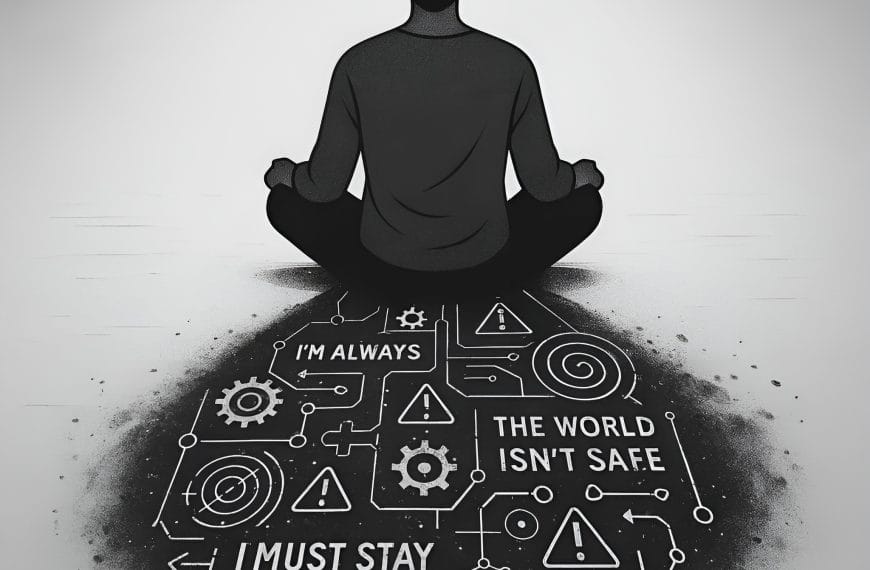
Every person builds mental patterns early on—beliefs about themselves and the world that shape their reactions. In Pattern Theory™, we call these Limiting Beliefs (LBs) and Dysfunctional Needs™ (DNs).
They form a loop:
- The Limiting Belief (“I’m not safe unless I’m perfect”).
- The Dysfunctional Need™ (striving, people-pleasing, overwork).
- The Opt-Out Behaviour (avoidance, numbing, withdrawal).
Over time, that loop reinforces itself—even when life circumstances change.
Through Reconditioning, we use imaginal exposure to dissolve the old association between threat and belief. The result? Your reactions start aligning with your actual values, not old programming.
That’s why true progress doesn’t always feel like “learning something new.” It feels like returning to your natural baseline.
How to Notice and Track Progress
You don’t need data charts or long journals to see change—just simple awareness. Try these micro-reflections:
- When did I choose differently this week?
- Which situations no longer carry the same charge?
- What feels easier, even slightly?
Small questions like these make progress visible. They keep your cognitive mind engaged as you observe the new pattern your emotional system is building.
If you want a deeper dive into how this works, explore our guide on Pattern Theory™ or Reconditioning.
When to Talk to Your Therapist About Progress
Progress is a dialogue.
If you’re unsure whether you’re “doing it right,” bring it into the session.
Sometimes clients expect dramatic relief before recognizing that stability, predictability, and calm are actually the wins they were chasing.
Your therapist’s role is to help you notice what your nervous system might be too close to see. Together, you’ll calibrate the pace, celebrate quiet victories, and spot any blind spots where limiting patterns still sneak in.
The Shift Mindset
True progress isn’t the absence of struggle—it’s the absence of the old interference.
When you notice more space between thought and action, when old emotional loops start breaking before they spiral, when life feels a bit less crowded by “shoulds”—that’s therapy working.
At ShiftGrit, we call that living from the regulated mind—where insight meets calm, and change finally sticks.
The ideas in this guide were recently highlighted by the Calgary Chamber in a piece on how high-performing professionals can break out of the anxiety loop and move toward a more regulated, sustainable way of working.
Read the full feature here:
Why Calgary professionals stay stressed — and how to break the anxiety loop
References & Community Resources
We believe in transparent, evidence-informed care.
Below are open-access resources that complement the work we do in session:
- MyHealth Alberta: Tips for Finding a Counsellor or Therapist
- Alberta Health Services – Help in Tough Times: Addiction & Mental Health Supports
- BounceBack Alberta: Free guided self-help program for people 15+ experiencing mild to moderate anxiety or depression.
- Research Reference: Horvath A. O., Luborsky L. (1993). The role of the therapeutic alliance in psychotherapy. J. Consult. Clin. Psychol., 61, 561–573.
If you need immediate mental-health support in Alberta, dial 211 or visit Help in Tough Times.