








































Where this belief fits
Schema Domain: Impaired Autonomy & Performance
Lifetrap: Failure
Non-Nurturing Elements™ (Precursors):
How this belief keeps repeating:
Evidence Pile
When this belief is active, the mind scans for uncertainty, difficulty, or past setbacks and interprets them as proof that future efforts will inevitably end in failure.
Show common “proof” items
- Remembered past failures, mistakes, or unfinished goals
- Feeling unsure, anxious, or unconfident before starting something
- Tasks that feel complex, unfamiliar, or high-stakes
- Early friction, slow progress, or initial setbacks
- Seeing others succeed more smoothly or confidently
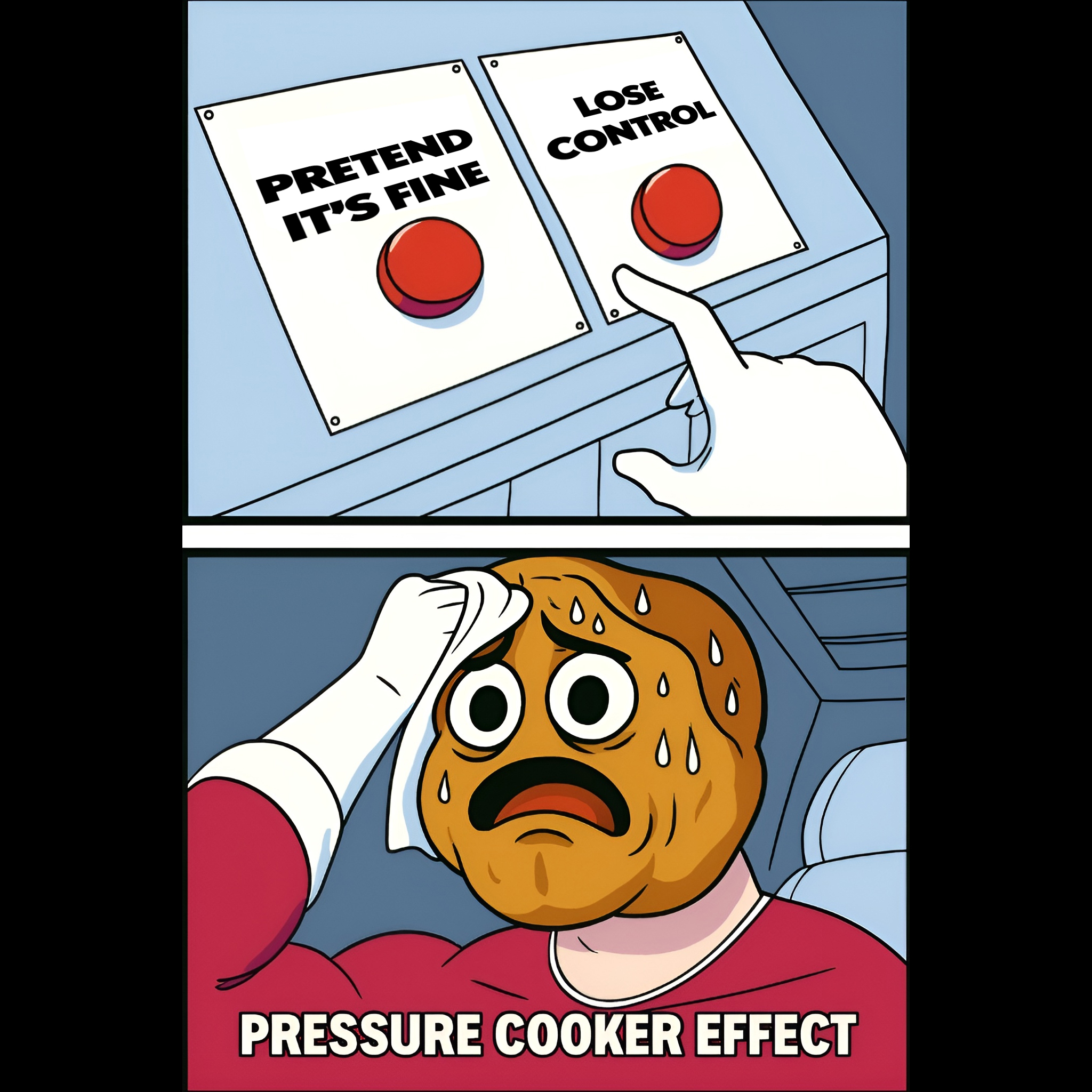
As evidence of inevitable failure accumulates, internal pressure builds around dread, anticipatory shame, and the urge to avoid confirming the feared outcome.
Show common signals
- Strong anxiety before starting
- Mental rehearsal of failure scenarios
- Loss of motivation or confidence
- Shame in advance of outcomes
- Sense of doom or inevitability
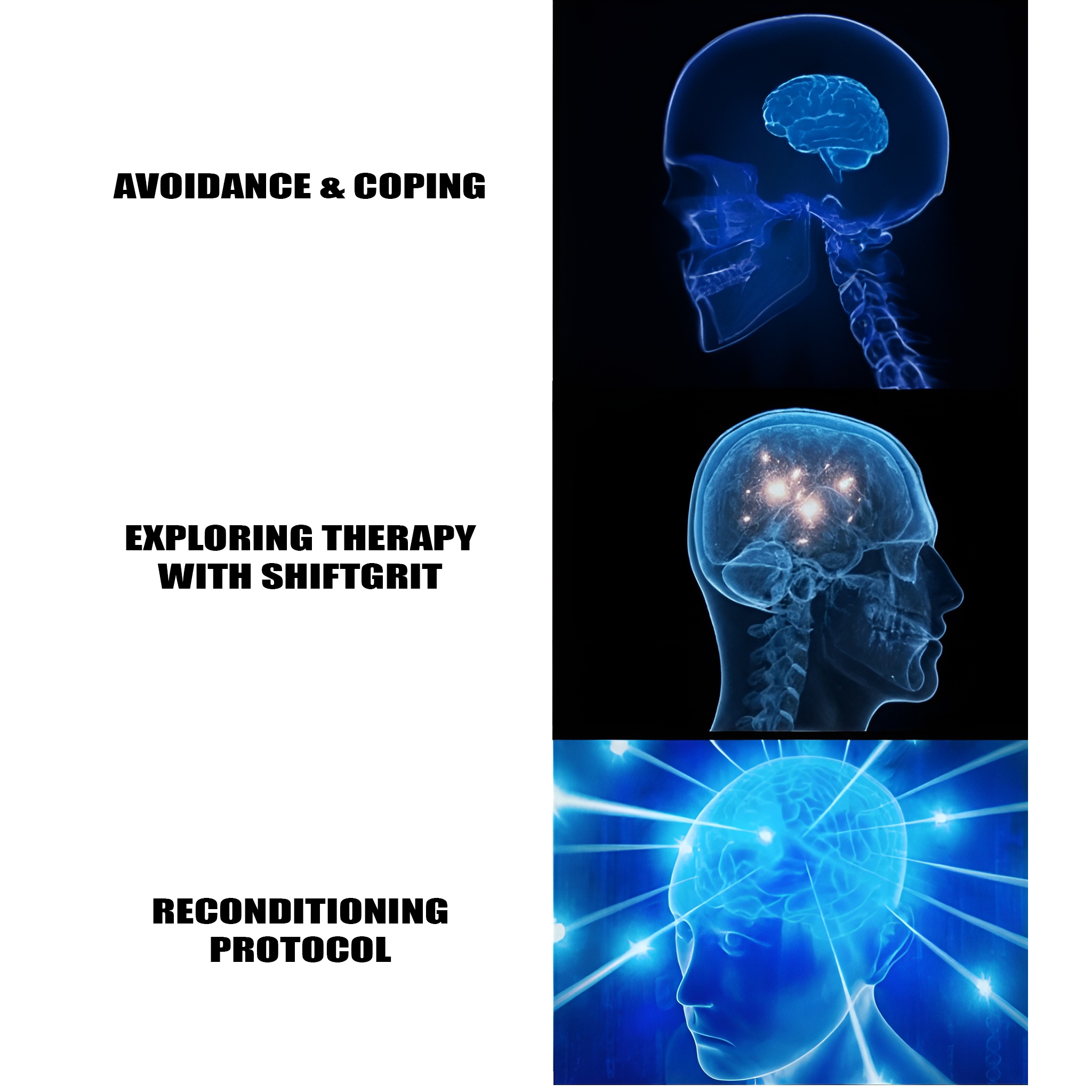
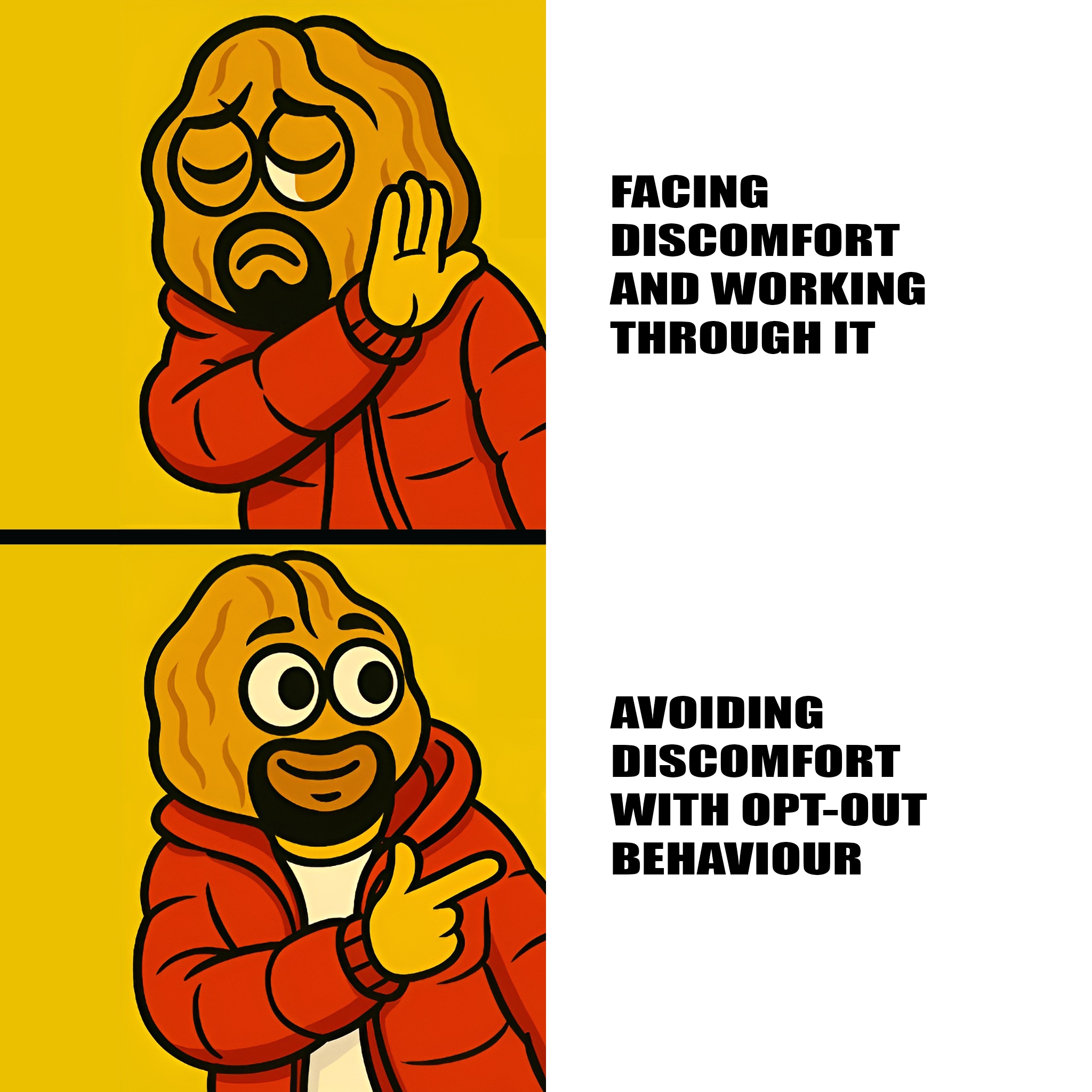
To reduce the pain of anticipated failure, the system shifts toward avoidance, delay, or disengagement.
Show Opt-Out patterns
- Procrastination or not starting at all
- Quitting early “before it gets worse”
- Lowering goals or expectations
- Staying in familiar, low-risk roles
- Self-sabotage that makes failure feel controlled
“I Will Fail” isn’t always loud or obvious. It hides behind hesitation, procrastination, and perfectionism. Even high-achievers can carry this pattern — secretly terrified that their next move will expose them as inadequate or incapable. And when that fear gets wired into identity, it shapes how you act, what you attempt, and what you avoid. This page breaks down how the belief develops, how it hides, and what it takes to recondition the loop for good.
What It Sounds Like Internally:
- “I just know I’m going to mess this up.”
- “Even if I try, it probably won’t work out.”
- “Why bother? I’ll just disappoint everyone again.”
- “Success feels like a fluke—I’m waiting to be exposed.”
- “I procrastinate because starting makes the failure real.”
Where It Shows Up:
- Work and school: avoiding high-pressure opportunities, underachieving despite capability, freezing in performance settings.
- Projects and goals: abandoning efforts mid-way, overthinking minor details, rarely finishing what’s started.
- Relationships: avoiding vulnerability, fearing that personal flaws will ‘ruin it,’ withdrawing instead of confronting problems.
- Self-perception: deep fear of judgement, constant second-guessing, and identity-level doubt in one’s competence or worth.
What It Can Lead To:
Unchecked, this belief often evolves into:
- Chronic procrastination and self-sabotage
- Perfectionism or overfunctioning to “outrun” failure
- Inability to celebrate wins (they don’t feel “real”)
- General burnout, imposter syndrome, or withdrawal
- A rigid inner critic that blocks risk or spontaneity
Want to Dive Deeper into the “I Will Fail” Pattern?
Discover related beliefs, emotional triggers, and how therapy can help you recondition this deep-rooted belief for real change.
What Therapy Targets:
Our therapy doesn’t just challenge the thought “I’ll fail.” It targets the belief that failure confirms something permanent and shameful about who you are.
By tracing the origin of this pattern and reconditioning the emotional memory attached to it, we’re able to disrupt the failure loop at the identity level. When the belief no longer lives in the body, you’re able to take risks, act before you’re ready, and tolerate imperfection—without fear that it defines you.
👉 Explore the Therapy Approach →
👉 See the Full Pattern Breakdown →