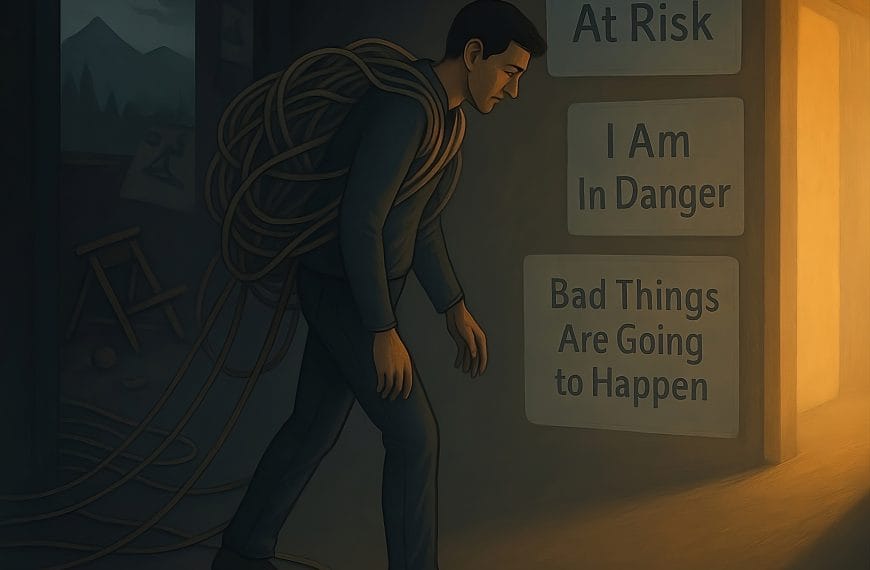
Instead of relying only on surface-level strategies, our therapists address the core beliefs most often linked with depression. Patterns like ‘I Am A Failure,’‘I Am Unwanted,’ or ‘I Am Powerless’ aren’t just passing thoughts — they’re identity-level rules wired into your emotional response system. These beliefs fuel cycles of hopelessness, self-criticism, and disconnection that keep depression in place. Explore the Pattern Library to see how these beliefs operate — and how our therapists help recondition them for lasting change.
❓ How is ShiftGrit’s depression therapy different from traditional talk therapy?
Unlike approaches that only manage symptoms, our Edmonton depression therapists target the identity-level Core Beliefs (like “I Am A Failure” or “I Am Unwanted”) that keep depressive loops active. By using Pattern Reconditioning, we help clients rewire these beliefs so lasting change feels automatic, not forced.
❓ What Core Beliefs are most often linked with depression?
In our Pattern Library, depression patterns frequently tie back to beliefs such as “I Am A Failure,” “I Am Powerless,” and “I Don’t Matter.” These aren’t just negative thoughts — they’re identity-level rules that shape how you feel, act, and relate to others. Therapy at ShiftGrit focuses on reconditioning these patterns at their source.
❓ Can therapy really change feelings of hopelessness or worthlessness?
Yes. Depression isn’t a permanent flaw — it’s a patterned loop between beliefs, emotions, and behaviours. Through our structured method, we guide your nervous system to release the emotional charge behind beliefs like “I Am Nothing” or “I Am Unworthy.” This makes hope, self-trust, and connection possible again.
❓ Who benefits most from depression pattern therapy?
We often work with adults and professionals who “look fine” on the outside but feel stuck in cycles of exhaustion, shame, or disconnection inside. If you’ve tried therapy before and still feel like your system is wired for hopelessness, our depression-focused Pattern Reconditioning can help you shift the underlying identity rules that keep you stuck.
Explore how our Edmonton-based therapy team helps rewire the identity-level patterns that drive hopelessness, self-criticism, and beliefs like ‘I Am A Failure’ or ‘I Am Unwanted.’
Living and working in Edmonton often means navigating responsibility, resilience, and long winters. These guides examine how emotional patterns develop in demanding environments, how identity-level beliefs shape reactions, and how structured therapeutic work supports meaningful change over time.