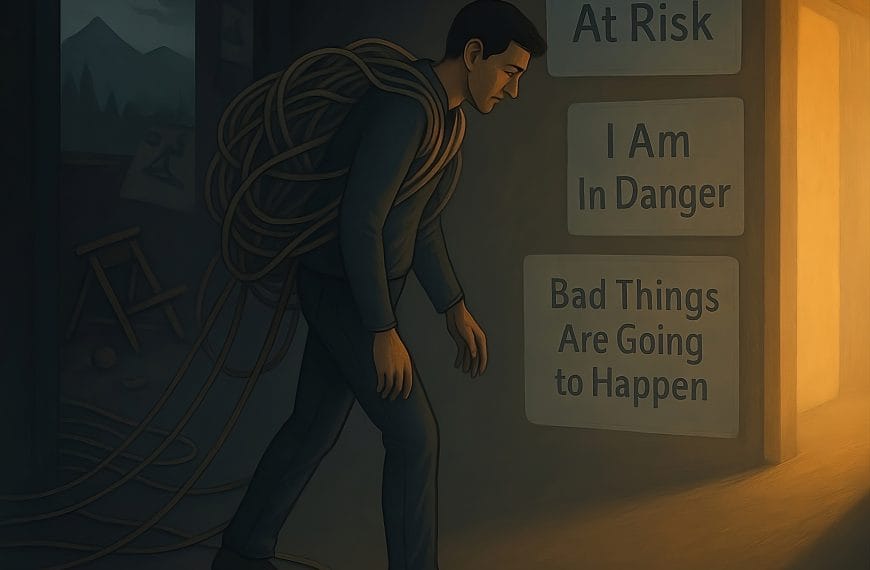
Every winter, Edmontonians experience a shift that’s far more intense than a simple dip in mood. Seasonal Affective Disorder (SAD) hits our city differently. The geographical, climatic, and cultural pressures of Edmonton — Canada’s most northerly large city — combine to create a pattern of emotional strain that becomes predictable, measurable, and extremely common among high performers, parents, students, and professionals across the city. But the real problem is this: most people try to manage SAD with surface-level coping strategies that never touch the underlying identity-level patterns being activated.
This article explains why winter affects Edmonton so strongly, why the usual coping suggestions rarely create real change, and how Identity-Level Therapy helps people break the emotional loops winter tends to expose.
Table of Contents
Why Edmonton’s Winter Magnifies Seasonal Affective Symptoms
Edmonton is not an average winter city. As Canada’s most northerly large urban centre at 53.5°N latitude, the combination of environmental severity, prolonged darkness, and cultural pressure creates a unique psychological load. Below are the four factors that make Edmonton a hotspot for Seasonal Affective Disorder patterns.
1. Daylight Loss Is Steeper and More Sustained Than Most Canadians Experience
By December, Edmonton receives barely 7 hours and 27 minutes of daylight on the shortest day — among the lowest in Canada outside the territories. Sunrise lingers past 8:50 AM and sunset arrives before 4:20 PM. The body’s circadian rhythm — built on bright morning light and clear day/night contrast — gets confused. The result isn’t just feeling sleepy; it’s a persistent low-arousal state where motivation, focus, and mood feel chemically muted for months at a time. This isn’t a weakness. It’s a biological response to a real change in environmental input. But the pattern doesn’t stop with the body; it activates the deeper meaning the brain assigns to that low-arousal state.
2. Cold Settles In and Stays — Without Chinook Relief
Unlike Calgary, Edmonton doesn’t benefit from chinook winds breaking through the cold. Stretches of −25°C to −35°C can persist for weeks at a time, and the ground stays frozen for nearly half the year. Outdoor activities that anchored summer routines disappear: River Valley walking, biking, lake weekends, patio evenings. The body adjusts to less movement, less daylight exposure, and less unscheduled time outside — a triple-loss the nervous system reads as a sustained constraint, not a temporary inconvenience.
3. Edmonton’s High-Output Culture Collides With Winter’s Pace
Edmonton runs on government, oil and gas, energy services, and a growing tech corridor — sectors that don’t pause for winter. Deadlines, performance reviews, salary negotiations, and project cycles continue at the same pace through November to March. People feel the seasonal pull to slow down (because their bodies are saying so) but the cultural environment still expects normal output. That collision creates a guilt loop: “I should be performing the same as in summer, but I can’t, so something must be wrong with me.” The guilt itself amplifies the dysregulation.
4. Isolation Patterns Intensify in a City Built for Long Drives Between People
Edmonton’s geography stretches across more than 150 km² of low-density development. Visiting friends, attending social events, and commuting to optional gatherings all involve cold drives, blowing snow, and frostbite-risk conditions for nearly six months a year. Most people unconsciously narrow their social world from October to April. For anyone with patterns around connection, worth, or visibility, this contraction reads internally as confirmation: “People don’t really want to see me.” Even when, objectively, the issue is just the −30°C windchill.
Why Standard Coping Strategies Don’t Work
Most Edmonton SAD advice focuses on surface tools: light boxes, vitamin D, exercise, “just push through.” These help — but rarely produce lasting change. Here’s why.
Coping Is a Surface Strategy for a Structural Problem
- Light therapy helps mood, but it doesn’t change the belief that you’re “broken” for needing help to feel okay.
- Exercise boosts energy, but it doesn’t treat the pattern of self-criticism that activates whenever your output drops.
- Journaling helps clarity, but it doesn’t dissolve the inner loop that interprets seasonal slowness as personal failure.
- Supplements support physiology, but they don’t shift the meaning your brain attaches to the dark months.
The reason coping plateaus is that SAD isn’t only a chemistry problem. It’s a chemistry problem layered onto a pattern problem — and only one of those gets addressed by tools.
Identity-Level Patterns Behind Winter Struggles
When Edmonton clients seek therapy for seasonal symptoms, three identity-level patterns surface most consistently. Each is a deep, automatic interpretation the brain runs in response to winter’s external pressure.
Pattern 1: “I’m not in control.”
For people whose self-concept is tied to predictability and high agency, eight months of weather, daylight, and physical conditions outside their control activates a deep threat response. The body braces. The mind narrows. The mood dips not because of the cold itself, but because of what the cold means about being in control.
Pattern 2: “Something bad is going to happen.”
A long, dark, cold season can feel pre-traumatic — like a slow build toward something the brain can’t quite name. For clients with hypervigilance patterns, winter scans every day for the next disruption, the next shoe to drop, the next sign that things are getting worse.
Pattern 3: “I should be handling this better.”
The most common Edmonton pattern. Capable, high-functioning people watching themselves struggle through what feels like a routine seasonal change. The internal critic gets louder every week. By February, the secondary suffering — about how you’re suffering — outweighs the original symptoms.
How Identity-Level Therapy Helps
Identity-Level Therapy doesn’t try to make winter shorter or warmer. It works on the layer underneath the symptoms — the patterns that determine how your nervous system interprets and responds to the season’s pressure.
1. Mapping the Pattern
We start by identifying which specific identity-level beliefs winter activates for you. Not generic ones — the ones that show up in your specific reactions, your specific spirals, your specific avoidance. Most clients can name two or three within the first session.
2. Identifying the Origin
Each pattern has a learning history. We trace where it formed — usually somewhere outside the seasonal context — and identify why it now gets activated by winter’s conditions specifically.
3. Reconditioning the Pattern
Then we directly work on the pattern itself, using the ShiftGrit Core Method™. The goal isn’t insight (you probably already have insight). The goal is automatic, structural change at the level where the pattern lives.
Identity-Level Therapy for Seasonal Affective Disorder in Edmonton
Identity-Level Therapy targets the belief patterns and emotional loops driving automatic reactions—not just the surface symptoms. By working at the identity layer, clients shift how they interpret safety, regulate threat, and relate to themselves and others. The result: reconditioning at the root of shame, self-sabotage, reactivity, and overwhelm.
It’s organized around three pillars:
ShiftGrit Core Method™
Our structured framework for breaking outdated identity patterns.
Learn More
The Pattern Library
Real-world examples of loops like perfectionism, procrastination, and shutdown.
Learn More
The Glossary
Clear definitions that keep the language sharp and the process transparent.
Learn MoreWhen the Pattern Changes, Winter Stops Feeling Like a Threat
Winter doesn’t get easier because the days get longer or the snow melts. It gets easier because the same external conditions stop activating the same internal storm. Clients often describe their second post-therapy winter as “noticeably less heavy” — even when the weather and workload are the same.
If Edmonton Winters Hit You Hard, There’s a Reason — And It’s Not Weakness
Edmonton’s geography, light cycle, and culture create real conditions that amplify identity-level patterns most people carry quietly through the rest of the year. The pattern is not your fault — but it can be rewired. If you’d like to work on the patterns that winter is exposing for you, our Edmonton therapists and Edmonton anxiety counsellors are trained in the ShiftGrit Core Method™ and can guide you through structured, identity-level work.
SAD frequently overlaps with longer-running depression patterns. If the low-mood layers feel year-round rather than seasonal, our Edmonton depression therapy team handles both seasonal and persistent presentations.