Find an Obsessive- Compulsive (OCD) Therapist in Edmonton
Learn about Obsessive- Compulsive (OCD) therapyBrowse licensed clinicians for obsessive- compulsive (ocd) in Edmonton. Sessions available online or in-person.
Finding obsessive- compulsive (ocd) support in Edmonton doesn’t have to feel like guesswork.
On this page you’ll see licensed clinicians available for in-person or virtual sessions in Edmonton.
We outline the plan up front, teach the “why”, and keep sessions focused on specific changes that matter to you.
Why Your Mind Reacts Before You Can Think — and How We Rewire That
You have two minds that shape every moment: the one that thinks and the one that reacts. When something triggers old fear or shame, your reactive mind jumps in first — just like how you’d flinch at a spider before realizing it’s harmless. The ShiftGrit approach helps you retrain that automatic system so your reactions finally line up with what you know to be true — calm, confident, and in control.
Why clients feel confident starting here
- A structured plan for managing obsessive thoughts and compulsive actions
- Education that builds understanding and control
- Support that’s collaborative and paced for safety
Live in Edmonton? Connect with an Obsessive- Compulsive (OCD) therapist in-person or online.
Licensed Alberta clinicians on MST (unless noted). Start with a clear plan, practical tools, and sessions focused on what matters to you.
Identity-Level Therapy for Obsessive- Compulsive (OCD) in Edmonton
Identity-Level Therapy targets the belief patterns and emotional loops driving automatic reactions—not just the surface symptoms. By working at the identity layer, clients shift how they interpret safety, regulate threat, and relate to themselves and others. The result: reconditioning at the root of shame, self-sabotage, reactivity, and overwhelm.
It’s organized around three pillars:


ShiftGrit Core Method™
Our structured framework for breaking outdated identity patterns.
Learn more

The Pattern Library
Real-world examples of loops like perfectionism, procrastination, and shutdown.
Learn more

The Glossary
Clear definitions that keep the language sharp and the process transparent.
Learn moreLimiting Beliefs Commonly Linked with Obsessive- Compulsive (OCD) Therapy
These identity-level patterns frequently show up for clients seeking obsessive- compulsive (ocd) therapy. Explore the beliefs to learn the “why” and how therapy can help you recondition them.


“I Am Powerless” — A Core Limiting Belief
The belief “I Am Powerless” often forms in environments where autonomy was suppressed and safety depended on submission. It creates chronic helplessness, low agency, and difficulty asserting needs…
Explore this belief

“I Am Responsible” — A Core Limiting Belief
When you believe you're responsible for everyone, you don’t just lend a hand—you take on the full weight of others’ wellbeing. You anticipate needs before they’re spoken, fix…
Explore this belief

“I Am Not in Control” — A Core Limiting Belief
When “I Am Not In Control” is running the show, everything feels like too much. You either grip harder—rigid routines, hypervigilance—or give up entirely. Underneath it all is…
Explore this beliefFrequently asked questions
What is OCD and how does it affect daily life?
OCD involves persistent, intrusive thoughts (obsessions) that create anxiety — often followed by repetitive behaviours or mental rituals (compulsions) that temporarily reduce that discomfort. Over time, this cycle can take over your mental energy and make everyday tasks harder. Therapy helps you understand why the cycle happens and teaches you how to retrain your brain’s threat response so you can live with more freedom and calm.
How does ShiftGrit’s approach to OCD therapy work?
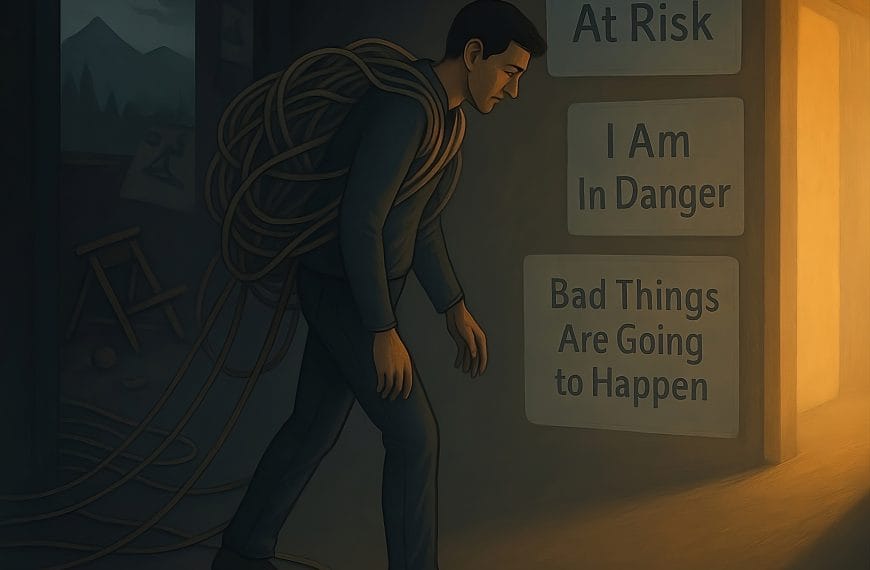
We combine structure, education, and deep reconditioning. Using Pattern Theory™, we help you see how limiting beliefs — such as “I’m not safe unless I control everything” or “If I don’t do this, something bad will happen” — drive obsessive-compulsive loops. Through our Reconditioning process, we use guided imaginal exposure to help your brain unlearn those threat responses at their source, so triggers lose their emotional charge over time.
Is this the same as traditional Exposure and Response Prevention (ERP)?
While we share some principles with ERP, our approach includes additional components that target the deeper cognitive and emotional patterns behind obsessions and compulsions. We combine exposure-based work with education, emotional regulation tools, and mindset reconditioning. This helps clients not only manage OCD symptoms but also understand and rewire the thought patterns that maintain them.
Do I have to stop my compulsive behaviours right away in therapy?
No — therapy is gradual and collaborative. We start by helping you understand what’s driving the compulsions before working toward reducing them. Your therapist will move at a pace that feels safe and manageable, teaching you to recognize triggers and change your responses over time. The goal is confidence and control, not overwhelm.
Do you offer in-person and virtual OCD therapy in Edmonton?
Yes. We provide in-person OCD therapy in Edmonton and secure virtual sessions throughout Edmonton. Both formats follow the same structured and transparent process, so you receive consistent, focused support no matter where you are.
You deserve more from Obsessive- Compulsive (OCD) therapy.
Find the right fit in Edmonton and make the most of the time and money you’re investing in yourself.
Find your therapistOur Edmonton Clinics
ShiftGrit Psychology & Counselling
10445 124 St, Edmonton, AB T5N 1R7
ShiftGrit Psychology & Counselling(Upstairs)
10441 124 St Unit 201, Edmonton, AB T5N 1R7