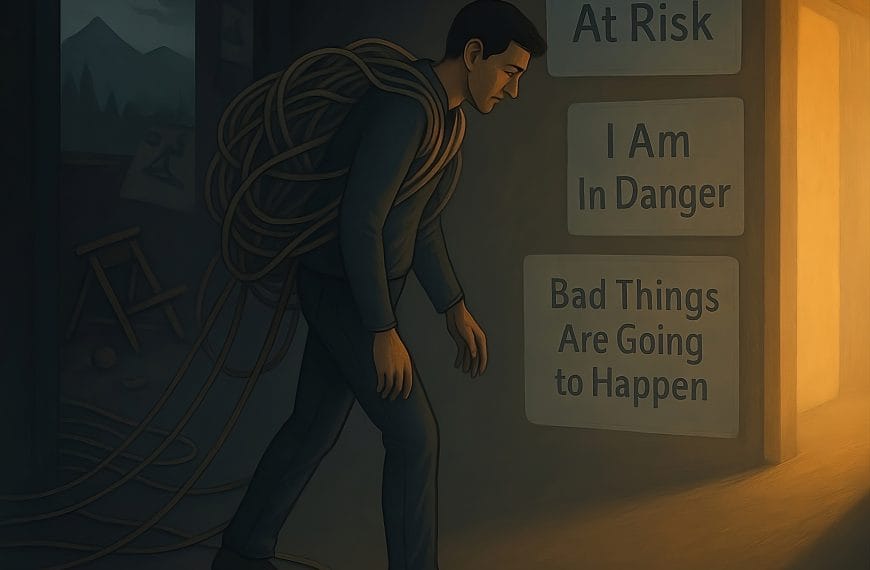
ShiftGrit Core Method™
Our structured framework for breaking outdated identity patterns.
Learn more about ShiftGrit Core Method™In-Person & Virtual Therapy
Self-harm isn’t attention-seeking. Edmonton clients — or their families — come to ShiftGrit when self-injurious behaviour has started to function as a regulation strategy: a way to release or ground overwhelming internal pressure that other strategies aren’t reaching. The behaviour formed because it does something. Reducing it without understanding what it’s regulating tends not to hold.
Our 124 Street studio (downstairs and upstairs levels) serves clients across Oliver, Garneau, Strathcona, and downtown Edmonton within the Identity-Level Therapy orientation. Our clinicians are trained in the ShiftGrit Core Method™, a structured clinical system focused on the pressure that builds before the urge, the identity-level beliefs that make certain emotions feel intolerable or unsafe to express, and the function self-harm serves in the specific pattern. The work is paced and collaborative, with safety central throughout.
In-person and virtual options across Alberta, with same-week appointments typically available.
Identity-Level Therapy targets the belief patterns and emotional loops driving automatic reactions—not just the surface symptoms. By working at the identity layer, clients shift how they interpret safety, regulate threat, and relate to themselves and others. The result: reconditioning at the root of shame, self-sabotage, reactivity, and overwhelm.
It’s organized around three pillars:
Our structured framework for breaking outdated identity patterns.
Learn more about ShiftGrit Core Method™
Real-world examples of loops like perfectionism, procrastination, and shutdown.
Learn more about The Pattern Library
Clear definitions that keep the language sharp and the process transparent.
Learn more about The GlossaryThese identity-level patterns frequently show up for clients seeking self-harming or suicidal behavior therapy. Explore the beliefs to learn the “why” and how therapy can help you recondition them.

You don’t ask for help—even when you need it. The belief “I Am A Burden” forms in environments where your emotional needs were dismissed, punished, or framed as…
Explore this belief
This isn’t about wanting life to end. It’s about believing your presence is the problem. Therapy can break that loop and rewire the belief that you shouldn’t be…
Explore this belief
You show up for everyone—but no one really sees you. The belief “I Don’t Matter” is what takes root when your needs, voice, or presence were chronically dismissed.…
Explore this beliefWant to see how these fit into the bigger pattern map? Explore our full Limiting Belief Library to browse all core beliefs by schema domain and Lifetrap.
Many of our Edmonton clinicians work with self-harming or suicidal behavior. Browse profiles, watch introduction videos, and book online when you're ready.




Connect with one of our Edmonton therapists. Online booking available — same-week appointments are usually possible.
Self-harm, also known as non-suicidal self-injury, refers to the deliberate and intentional infliction of physical harm on oneself. It is often a coping mechanism used to manage negative emotions or difficult life circumstances.
The causes of self-harm are complex and can vary from person to person. It is often associated with underlying mental health conditions such as depression, anxiety, or borderline personality disorder, as well as a history of trauma or abuse.
Self-harm can have serious consequences for a person’s physical and emotional health, and can also increase the risk of suicidal thoughts and behaviors. It can lead to feelings of shame and guilt, and can also cause physical injuries that may require medical attention.
Some signs of self-harm may include unexplained cuts, bruises, or burns on the body, an excessive interest in knives or other sharp objects, and secrecy or attempts to conceal one’s injuries. It is important to note that people who self-harm may go to great lengths to hide their behavior, so it may not always be immediately apparent.
Treatment for self-harm typically involves addressing the underlying causes of the behavior, such as improving mental health and addressing any past trauma. Therapy, such as cognitive-behavioral therapy (CBT) or dialectical behavior therapy (DBT), can be helpful in helping individuals to identify and change negative thought patterns and behaviors related to self-harm. In some cases, medication may also be recommended to help manage symptoms such as depression or anxiety.
To find a therapist for self-harm in Edmonton, you can contact your primary care doctor or a mental health professional for recommendations, search online or through directories such as the Canadian Psychological Association’s “Find a Psychologist” tool, or ask for referrals from friends or family.
The duration of therapy for self-harm can vary depending on the individual and the severity of their symptoms. Some people may see improvement in a few weeks or months, while others may need longer-term treatment. It’s important to work with your therapist to determine a treatment plan that is right for you.
Insurance coverage for therapy for self-harm can vary depending on your specific plan and the province in which you live. In Alberta, most insurance plans cover a portion of the cost of mental health treatment, including therapy for self-harm. It’s a good idea to check with your insurance provider to understand your coverage and any potential out-of-pocket expenses.
To prevent self-harm, it can be helpful to identify and address any underlying mental health conditions, to seek support from friends and family, and to educate oneself about healthy coping strategies. It can also be helpful to set limits and boundaries and to engage in healthy activities, such as exercise and relaxation techniques, to manage stress and negative emotions.
If you are already struggling with self-harm, it’s important to seek help and support from loved ones, a mental health professional, and self-harm recovery resources. Treatment options such as therapy and medication can be effective in supporting recovery and helping individuals to break the cycle of self-harm. It’s also important to be patient with yourself and to recognize that recovery is a journey that may involve setbacks and challenges, but with hard work and perseverance, it is possible to overcome self-harm and build a healthier, more fulfilling life.
Living and working in Edmonton often means navigating responsibility, resilience, and long winters. These guides examine how emotional patterns develop in demanding environments, how identity-level beliefs shape reactions, and how structured therapeutic work supports meaningful change over time.
Authored by
The ShiftGrit Clinical Editorial Team combines the insight of registered psychologists, provisional psychologists, and trained writers to create accessible, evidence-informed therapy resources. All content is clinically reviewed by a Registered Psychologist.
Reviewed by registered psychologists at ShiftGrit, regulated by the College of Alberta Psychologists.
Last updated

ShiftGrit Psychology & Counselling
Address: 815 17 Avenue SW #210,
Calgary, AB, T2T 0A1, Canada
Phone: (587) 352-6463
ShiftGrit Psychology & Counselling
Address: 10445 124 Street,
Edmonton, AB,T5N 1R7, Canada
Phone: (780) 705-6463
ShiftGrit Psychology & Counselling
Areas served: British Columbia
Phone: +1 888-352-7270
ShiftGrit Psychology & Counselling
Areas served: Ontario
Phone: +1 888-352-7270
© 2014–2025 ShiftGrit. All rights reserved. | Sitemap