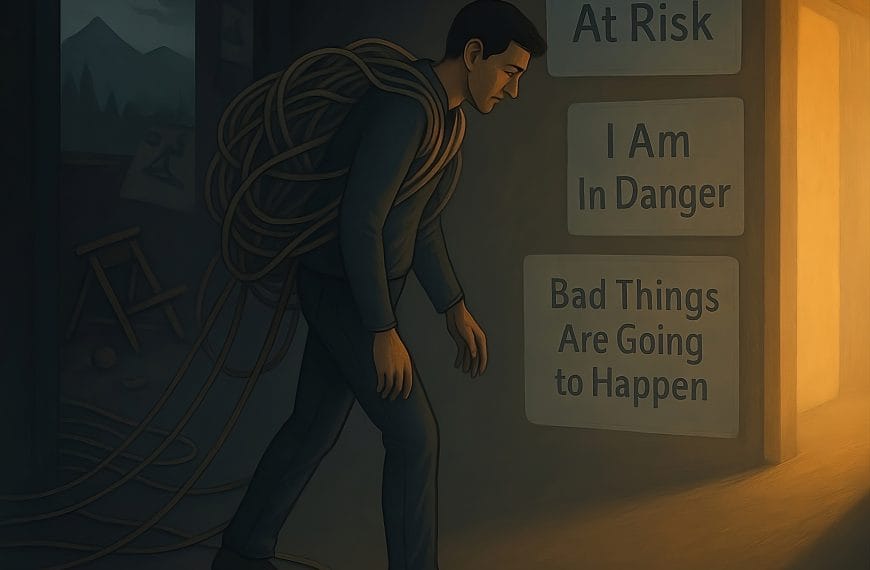
ShiftGrit Core Method™
Our structured framework for breaking outdated identity patterns.
Learn more about ShiftGrit Core Method™Trauma changes the way your nervous system reads the world — not just memory, but reflex. Edmonton clients come to ShiftGrit when the body still reacts as if the event is happening, even when the mind knows it isn’t. Hypervigilance, avoidance, intrusive thoughts, freeze responses, relationship triggers — these aren’t character flaws. They’re protective patterns that made sense at the time.
Our 124 Street studio (downstairs and upstairs levels) serves clients across Oliver, Garneau, Strathcona, and downtown Edmonton within the Identity-Level Therapy orientation. Our clinicians are trained in the ShiftGrit Core Method™, a structured clinical system built to update the belief patterns that keep the nervous system in defensive mode long after the threat has passed. Pacing is calibrated to your tolerance.
In-person and virtual options across Alberta.
Deep dive
Trauma
Identity-Level Therapy targets the belief patterns trauma installed — about safety, trust, worth, or control — alongside nervous-system regulation, rather than memory processing alone.
It’s organized around three pillars:
Our structured framework for breaking outdated identity patterns.
Learn more about ShiftGrit Core Method™
Real-world examples of loops like perfectionism, procrastination, and shutdown.
Learn more about The Pattern Library
Clear definitions that keep the language sharp and the process transparent.
Learn more about The GlossaryThese identity-level patterns frequently show up for clients seeking trauma therapy. Explore the beliefs to learn the “why” and how therapy can help you recondition them.

Even when everything’s quiet, your body stays braced. The belief “I Am In Danger” forms in environments where trauma, chaos, or emotional instability made safety feel impossible. It…
Explore this belief
The belief “I Am Powerless” often forms in environments where autonomy was suppressed and safety depended on submission. It creates chronic helplessness, low agency, and difficulty asserting needs…
Explore this belief
“I Am At Risk” is a core belief rooted in environments where safety felt unpredictable. It often drives patterns of anxiety, catastrophic thinking, and compulsive control.
Explore this beliefWant to see how these fit into the bigger pattern map? Explore our full Limiting Belief Library to browse all core beliefs by schema domain and Lifetrap.
Trauma responses aren’t failures of coping. Edmonton trauma therapy at ShiftGrit treats trauma-related patterns as adaptations — protective by design, even when they later interfere with daily life. The mind and nervous system learned to prioritize survival; the reactions follow the lens that learning installed. We work at the level the patterns operate at.
Our clinicians are trained in the ShiftGrit Core Method™, a structured clinical system applied within the Identity-Level Therapy orientation. Sessions trace how earlier experiences shaped automatic emotional and behavioural responses, how those responses continue to activate today, and the identity-level beliefs trauma installed about safety, trust, or worth. The work is paced and collaborative — clarity, education, and regulation come before processing.
Clients often notice emotional responses still arise but feel less intense or easier to recover from. Calm or neutral moments become more frequent, with less constant vigilance. Capacity to stay present in relationships grows, even when emotions activate. The aim isn’t to relive memories or force resolution — it’s to update the system’s threat assessment so the past stops running the present.
Many of our Edmonton clinicians work with trauma. Browse profiles, watch introduction videos, and book online when you're ready.




Connect with one of our Edmonton therapists. Online booking available — same-week appointments are usually possible.
PTSD is one specific clinical diagnosis. Trauma is broader — it covers any experience where the nervous system’s defensive response became chronic, including events that don’t meet PTSD criteria (developmental trauma, attachment ruptures, medical trauma, single-incident trauma below the PTSD threshold). Both are addressed at ShiftGrit; the method is similar but the entry point may differ.
Yes. Our method doesn’t require detailed retelling. We work at the belief layer the experience installed, not at the narrative layer. Some clients choose to discuss events; others address the patterns without revisiting them. Both paths work.
We pace the work carefully. The risk of “things getting worse” usually comes from sessions that move faster than your system can integrate. Our approach is structured to stay within tolerance, with stabilisation work before any deeper exploration.
Our Core Method™ is its own framework, drawing on cognitive, somatic, and belief-update techniques. Some of our therapists are EMDR-trained as an additional tool. If you’ve worked with EMDR before and want to continue, mention it when booking — we can match you to a therapist who integrates it.
Most clients work in 16–30+ sessions, sometimes longer for complex or developmental trauma. The first 4–6 sessions focus on stabilisation; the core work begins after.
Living and working in Edmonton often means navigating responsibility, resilience, and long winters. These guides examine how emotional patterns develop in demanding environments, how identity-level beliefs shape reactions, and how structured therapeutic work supports meaningful change over time.
Authored by
The ShiftGrit Clinical Editorial Team combines the insight of registered psychologists, provisional psychologists, and trained writers to create accessible, evidence-informed therapy resources. All content is clinically reviewed by a Registered Psychologist.
Reviewed by registered psychologists at ShiftGrit, regulated by the College of Alberta Psychologists.
Last updated

ShiftGrit Psychology & Counselling
Address: 815 17 Avenue SW #210,
Calgary, AB, T2T 0A1, Canada
Phone: (587) 352-6463
ShiftGrit Psychology & Counselling
Address: 10445 124 Street,
Edmonton, AB,T5N 1R7, Canada
Phone: (780) 705-6463
ShiftGrit Psychology & Counselling
Areas served: British Columbia
Phone: +1 888-352-7270
ShiftGrit Psychology & Counselling
Areas served: Ontario
Phone: +1 888-352-7270
© 2014–2025 ShiftGrit. All rights reserved. | Sitemap