






































































Anxiety
A pattern of fear and hypervigilance driven by perceived threat, often showing up as persistent worry, tension, or overthinking—even when nothing appears immediately wrong.
It isn’t a personal weakness or character flaw — it’s a learned pattern of fear and hypervigilance where the nervous system has become organized around perceived threat. It runs automatically, scanning for risk and anticipating problems even when nothing is immediately wrong. Insight alone often doesn’t shift it, because the pattern lives below conscious thought.

Anxiety is not random, and it is not a personal weakness.
It is a predictable pattern that develops when the nervous system learns—often very early—that the world, other people, or certain internal experiences may not be safe. Once established, this pattern can run automatically, even in situations that no longer pose real danger.
Anxiety is a learned pattern
Anxiety develops through repeated experiences of perceived threat. Over time, the brain learns to prioritize vigilance and caution, even when the original threat is no longer present.
It often operates automatically
Many people with anxiety understand logically that their reactions are excessive or unhelpful, yet still feel unable to stop them. This is because anxiety patterns live outside conscious thought.
Anxiety serves a protective function
At its core, anxiety exists to keep you safe. The difficulty arises when this protective system becomes overactive and begins to interfere with daily life rather than support it.
Inner statements
“If I don’t stay alert, something bad will happen.”
People who grew up in unpredictable or high-pressure environments.
“I can’t relax until I know everything is handled.”
High-functioning individuals who take on a lot of responsibility.
“I should be able to control this by now.”
People who have tried multiple strategies but still feel stuck.
Common questions
Q: Is anxiety always a problem?
Anxiety is a normal human response to threat. It becomes problematic when it activates too frequently, too intensely, or in situations that are not actually dangerous.
Q: Why does my anxiety feel irrational, even when I know I’m safe?
Anxiety responses are driven by parts of the brain that operate faster than conscious reasoning. Understanding this gap helps explain why insight alone doesn’t always lead to change.
Does anxiety ever go away on its own?
Anxiety patterns can shift over time, but without addressing what maintains them, they often resurface in new forms or situations.
From The Shift Show
For many people, anxiety isn’t experienced as constant panic.
Instead, it often shows up in subtle, everyday ways—through habits, thought patterns, and reactions that feel necessary in the moment but become exhausting over time. These responses are usually attempts to prevent something bad from happening, even when the risk is unclear or unlikely.
In your thoughts
- Constantly replaying conversations or decisions
- Anticipating problems before they occur
- Difficulty “turning off” your mind, especially at night
- Feeling responsible for preventing negative outcomes
In your body
- Ongoing muscle tension or tightness
- Shallow or restricted breathing
- Fatigue despite adequate rest
- Physical unease without a clear cause
In your behaviour
- Avoiding situations that feel uncertain or uncontrollable
- Over-preparing or over-checking
- Seeking reassurance but not feeling relieved for long
- Procrastinating due to fear of making the wrong choice
When it tends to show up
Anxiety often intensifies during moments of uncertainty, change, or responsibility.
This can include situations where outcomes matter, expectations feel high, or control feels limited—such as work decisions, relationships, parenting, health concerns, or transitions. Even positive events can trigger anxiety when they involve risk or unpredictability.
Common impact areas
- Work
- Relationships
- Sleep
- Self Esteem
At its core, anxiety is the nervous system reacting to perceived threat.
When the brain believes something is unsafe—whether that’s a situation, a feeling, or a possible outcome—it activates protective responses designed to keep you alert and prepared. These responses are fast, automatic, and largely outside conscious control.
Over time, this system can become oversensitized, responding to patterns and predictions rather than actual danger.
A common loop
A potential threat is detected
The brain interprets a situation, thought, or feeling as risky or unsafe—often based on past experiences rather than present reality.
The body prepares for danger
The nervous system shifts into a heightened state, increasing alertness, tension, and scanning for problems.
Protective behaviours take over
Actions like avoidance, overthinking, reassurance-seeking, or control attempts emerge to reduce discomfort or prevent harm.
Short-term relief reinforces the pattern
When these strategies reduce anxiety temporarily, the brain learns that the threat was real—strengthening the loop and making it more likely to repeat.
This loop explains why anxiety often persists despite insight, willpower, or positive thinking.
The systems driving these reactions operate faster than conscious reasoning and are shaped through experience rather than intention. While understanding the pattern is important, meaningful change usually requires working with the level of the nervous system where these responses are learned and maintained.
Anxiety patterns are often supported by deeper, automatic beliefs about safety, control, or responsibility.
These beliefs are not usually conscious choices. They tend to form early, based on lived experience, and can quietly shape how situations are interpreted long before logical reasoning has a chance to intervene.
Below are some of the limiting beliefs that commonly show up alongside anxiety. Exploring them can help explain why certain reactions feel automatic and difficult to change.
Limiting Beliefs Commonly Linked with Anxiety Therapy
These identity-level patterns frequently show up for clients seeking anxiety therapy. Explore the beliefs to learn the “why” and how therapy can help you recondition them.

“I Am At Risk”
“I Am At Risk” is a core belief rooted in environments where safety felt unpredictable. It often drives patterns of anxiety, catastrophic thinking, and compulsive control.
Explore this belief
“I Am Not in Control”
When “I Am Not In Control” is running the show, everything feels like too much. You either grip harder—rigid routines, hypervigilance—or give up entirely. Underneath it all is…
Explore this belief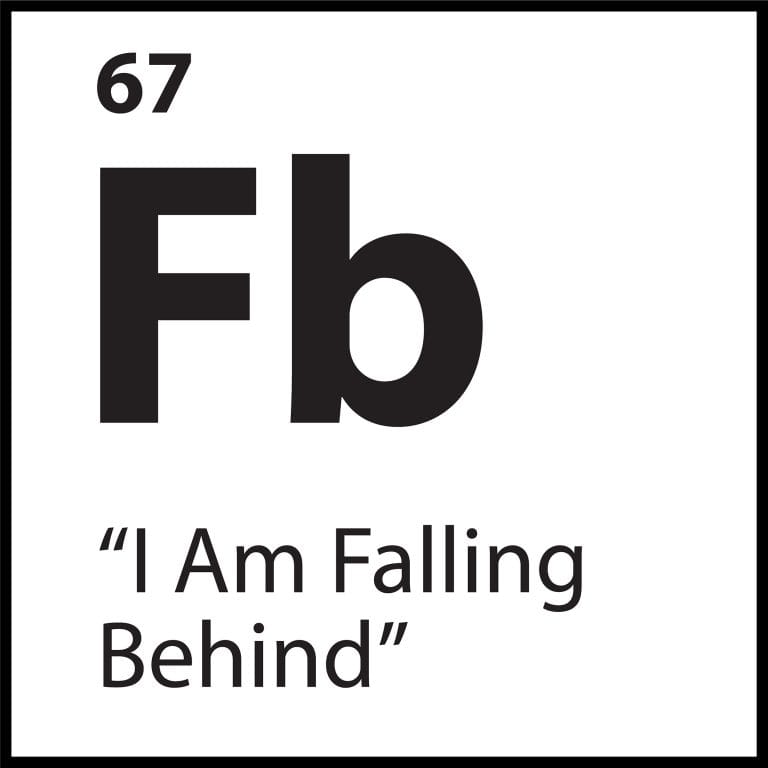
“I Am Falling Behind”
The belief “I Am Falling Behind” shows up as anxiety around progress, panic over timelines, and shame when comparing yourself to others. Therapy addresses the internal pressure and…
Explore this beliefWant to see how these fit into the bigger pattern map? Explore our full Limiting Belief Library to browse all core beliefs by schema domain and Lifetrap.
Over time, the nervous system adapts to the environments and relationships it has to navigate. Certain conditions can shape how safety, control, and responsibility are learned—long before they become conscious beliefs.
Below are some of the common patterns and conditions that often show up alongside the beliefs linked with this concern.
“I Am At Risk”
Schema Domain: Overvigilance & Inhibition
Lifetrap: Punitiveness
Non-Nurturing Elements™ (Precursors)
“I Am Not in Control”
Schema Domain: Impaired Autonomy & Performance
Lifetrap: Enmeshment / Undeveloped Self
Non-Nurturing Elements™ (Precursors)
“I Am Falling Behind”
Schema Domain: Overvigilance & Inhibition
Lifetrap: Negativity / Pessimism
Non-Nurturing Elements™ (Precursors)
This loop shows how beliefs keep themselves alive. The mind gathers what looks like proof, emotional pressure builds, and relief is found through patterned responses. That relief works—but it also strengthens the original belief, making it more likely to activate again. In this way, the belief becomes a self-fulfilling prophecy.
“I Am At Risk”
Evidence Pile
When this belief is active, the mind often scans for signs that something could go wrong and treats uncertainty as a warning signal.
Show common “proof” items
- A strange body sensation (tight chest, dizziness, heart racing)
- A loved one doesn’t reply right away
- A minor symptom or ache that’s hard to explain
- A news story or social post about illness, accidents, or danger
- A small mistake at work that “could” have consequences
The nervous system remains in a state of anticipatory readiness, constantly preparing for harm, loss, or failure that feels imminent—even when nothing specific is happening.
Show common signals
- Constant scanning for "early warning signs"
- Mentally simulating future failure, harm, or loss
- Over-responsibility for outcomes that haven’t occurred
- Treating uncertainty itself as danger
- Feeling unsafe even when things are objectively fine
Temporary relief comes from efforts to predict, prevent, or control potential threats—reducing anxiety short-term while reinforcing the belief that danger is always near.
Show Opt-Out patterns
- Excessive planning or rehearsing “what if” scenarios
- Seeking constant reassurance from others or systems
- Avoiding situations that feel unpredictable or exposed
- Over-monitoring body sensations, mood, or environment
- Staying busy or hyper-vigilant to avoid feeling unprepared
“I Am Not in Control”
Evidence Pile
When this belief is active, the mind looks for signs that outcomes are unpredictable or externally driven, treating uncertainty as proof that control is slipping or already lost.
Show common “proof” items
- Plans change unexpectedly or don’t unfold as imagined
- Other people’s decisions affect the outcome more than anticipated
- Effort doesn’t reliably lead to the desired result
- Situations feel dependent on timing, luck, or external approval
- Even small variables feel capable of derailing progress
When control feels uncertain, tension builds as the system stays hyper-focused on managing outcomes, decisions, and risks—leaving little room for ease or flexibility.
Show common signals
- Mental over-planning or rehearsing every possible outcome
- Difficulty delegating or trusting others to handle things
- Strong discomfort with uncertainty, ambiguity, or waiting
- Feeling tense when plans change or things feel unpredictable
- A sense of responsibility for preventing things from going wrong
When the strain becomes too much, the system releases pressure by either tightening control further—or disengaging entirely to escape the overwhelm.
Show Opt-Out patterns
- Micromanaging, correcting, or taking over tasks
- Reassurance-seeking or repeatedly checking decisions
- Avoiding decisions altogether to escape responsibility
- Procrastination or "freezing" when choices feel loaded
- Emotional shutdown or withdrawal when things feel unmanageable
“I Am Falling Behind”
Evidence Pile
When this belief is active, the mind often scans for signs that others are ahead, progress is too slow, or time is being "wasted."
Show common “proof” items
- Seeing peers reach milestones sooner (career, relationships, finances, family)
- Comparing current progress to where they "thought they’d be by now"
- Noticing missed opportunities or paths not taken
- Feeling behind schedule relative to age, stage, or expectations
- Interpreting pauses, uncertainty, or rest as lack of progress
The nervous system stays oriented toward comparison and time pressure, registering life as something that is moving faster than the person can keep up with.
Show common signals
- Persistent sense of being "late," behind, or outpaced by others
- Frequent comparison to peers’ progress, milestones, or productivity
- Difficulty resting without guilt or urgency
- Feeling pressure to optimize, catch up, or do more—quickly
- Interpreting pauses, uncertainty, or slower progress as failure
Relief comes from pushing harder, accelerating effort, or measuring progress—temporarily easing anxiety while reinforcing the sense that time is running out.
Show Opt-Out patterns
- Overworking or staying constantly busy to avoid feeling behind
- Compulsively tracking productivity, milestones, or outcomes
- Rushing decisions or skipping recovery to "save time"
- Comparing achievements to reassure oneself (or feel worse)
- Difficulty stopping, slowing down, or enjoying progress already made
Therapy for anxiety is not about eliminating fear or forcing calm.
Instead, it often focuses on helping people understand the patterns driving their reactions, reduce automatic threat responses, and build a more flexible relationship with uncertainty. The goal is not to control anxiety, but to reduce its influence over thoughts, emotions, and behaviour.
What therapy often focuses on
Understanding personal anxiety patterns
Therapy often begins by identifying how anxiety shows up for you specifically—what triggers it, how your body responds, and what strategies you use to cope. This creates clarity and direction rather than vague conversations.
Reducing automatic threat responses
Many therapeutic approaches aim to help the nervous system become less reactive to perceived threat, so responses are not driven solely by habit or fear-based prediction.
Expanding choice and flexibility
As reactivity decreases, people often notice more room to pause, reflect, and respond intentionally—rather than reacting automatically in anxious moments.
Addressing underlying beliefs and assumptions
Therapy may explore the deeper beliefs that shape how situations are interpreted, particularly those related to safety, control, responsibility, or self-worth.
What to expect
Clarifying what’s happening
Early sessions often focus on understanding your anxiety patterns, including how they developed and what maintains them. This helps create a clear plan rather than an open-ended process.
Working with reactions as they occur
Therapy typically involves noticing anxiety responses in real time and learning how to relate to them differently, rather than avoiding or suppressing them.
Applying changes outside of sessions
Over time, insights and skills are practised in everyday situations, allowing patterns to shift gradually through experience rather than effort alone.
Change with anxiety is often subtle before it is obvious.
Rather than disappearing all at once, anxiety patterns may begin to loosen their grip—showing up less intensely, lasting for shorter periods, or no longer driving behaviour in the same way. Many people describe feeling more space between what they notice and how they respond.
Common markers of change
Decision-making
Before: Overthinking choices and delaying decisions out of fear of making the wrong one.
After: Being able to make decisions with incomplete certainty, even when some discomfort is present.
Emotional reactions
Before: Anxiety escalating quickly and feeling difficult to interrupt once it starts.
After: Noticing anxiety earlier and experiencing it as more manageable or less overwhelming.
Relationships
Before: Feeling responsible for preventing conflict or managing other people’s reactions.
After: Greater tolerance for discomfort in relationships and clearer boundaries around responsibility.
Internal self-talk
Before: Harsh self-criticism for feeling anxious or “not handling things better.”
After: A more neutral or compassionate response to anxious thoughts when they arise.
Skills therapy may support
Staying present with uncertainty
Developing the ability to remain engaged in situations that feel uncertain without immediately trying to resolve or escape discomfort.
Responding rather than reacting
Pausing long enough to choose actions aligned with values, even when anxiety is present.
Re-evaluating perceived threat
Gently questioning assumptions about danger or responsibility as they arise, rather than automatically accepting them as facts.
Next steps
Reflect on what resonates
You don’t need to relate to everything on this page for anxiety to be worth exploring further. Noticing which parts feel familiar—and which don’t—can be a helpful starting point.
Consider the kind of support you’re looking for
Different approaches to therapy emphasise different things. Some people look for emotional support, others for structure and insight, and many for a combination of both. Clarifying what you’re hoping for can help guide your next step.
Explore options at your own pace
Whether you choose therapy now, later, or not at all, learning more about how anxiety patterns work can be useful in itself. There’s no requirement to move faster than feels right.
Where to go from here
Talk with a therapist
If you’re considering therapy, speaking with a registered professional can help you explore whether support feels appropriate for your situation and goals.
Learn more about underlying patterns
Anxiety often connects to broader patterns in how we relate to safety, responsibility, and uncertainty. Exploring these patterns can provide useful context, whether or not you pursue therapy.
Understand the deeper pattern
Some concerns are supported by identity-level beliefs about safety, responsibility, or control. Exploring these patterns can offer insight—even if you’re not considering therapy right now.
Questions
Q: How do I know if therapy is the right step for me?
Therapy can be helpful when anxiety is interfering with daily life or when existing strategies no longer feel effective. A consultation with a registered therapist can help you decide whether it’s a good fit.
Q: What if my anxiety doesn’t fit neatly into a category?
Anxiety patterns vary widely. Therapy typically focuses on your individual experience rather than fitting you into a specific label.
Q: Do I need to have a clear goal before starting therapy?
Not necessarily. Many people begin therapy with a general sense that something isn’t working and clarify goals as they go.
Q: Can learning about anxiety help even without therapy?
For some people, understanding their patterns can increase awareness and choice on its own. Others find that support helps translate insight into lived change.
Read more about Anxiety
Continue reading our clinical overview of Anxiety — what it is, common signs, contributing factors, treatment paths, and how therapy can help.

