











































































ADHD
ADHD refers to a pattern of attention, regulation, and impulse control differences that can affect focus, organization, emotional responses, and follow-through. These patterns often show up across work, relationships, and daily responsibilities — not due to lack of effort, but differences in how the brain regulates attention and motivation.
It isn’t a willpower problem or distraction issue — it’s a difference in how your brain regulates attention, motivation, emotion, and follow-through. People with ADHD often know what they want to do and why, yet still struggle to initiate or sustain consistently. The disconnect isn’t about effort, it’s about regulation.

ADHD is often misunderstood as a problem with attention alone, but for many people it’s more accurately a difference in how attention, motivation, emotion, and follow-through are regulated.
People with ADHD are often capable, insightful, and driven — yet still find it difficult to consistently start tasks, stay focused, manage time, or regulate emotional responses. These challenges aren’t due to laziness or lack of intelligence. They reflect differences in how the brain prioritizes, initiates, and sustains effort, especially when tasks are repetitive, uninteresting, or externally structured.
Over time, living with these patterns can affect confidence, stress levels, and self-talk, particularly when others don’t see the effort happening internally.
ADHD Is About Regulation, Not Effort
Many people with ADHD put in significant effort but don’t see consistent results. The challenge often lies in regulating attention, motivation, and emotional energy — not in caring or trying hard enough.
External Structure Often Helps
People with ADHD often function best when expectations, timelines, and systems are clear. Difficulties tend to increase when tasks rely heavily on self-direction, long-term planning, or internal motivation alone.
Inconsistency Is a Core Feature
Focus, productivity, and organization may fluctuate depending on interest, urgency, environment, or emotional state. This inconsistency can be confusing and frustrating for both the individual and those around them.
Inner statements
“I know what I should do — why can’t I just do it?”
Adults with ADHD who understand tasks logically but struggle with initiation, follow-through, or consistency.
“I work harder than other people, but still feel behind.”
High-functioning professionals, students, or parents who expend significant effort to meet everyday demands.
“Something about me just doesn’t work properly.”
People who have internalized years of criticism, comparison, or misunderstanding around their attention or productivity.
Common questions
Is ADHD just about being distracted or hyperactive?
Not necessarily. ADHD can involve difficulties with attention, impulse control, emotional regulation, organization, and motivation. Many adults with ADHD don’t appear hyperactive but still experience significant internal restlessness or overwhelm.
Can ADHD show up later in life?
ADHD is typically present earlier in life, but many people don’t recognize it until adulthood — especially if they developed strong coping strategies or were in highly structured environments earlier on.
Is ADHD the same for everyone?
No. ADHD can look very different from person to person. Some people struggle more with attention and organization, while others notice challenges with impulsivity, emotional regulation, or stress tolerance.
From The Shift Show
For many people with ADHD, day-to-day life can feel inconsistent and unpredictable — not because of a lack of ability, but because attention, motivation, and emotional energy don’t always respond on demand.
Tasks that feel manageable one day can feel nearly impossible the next. Focus may come easily when something is interesting or urgent, yet disappear when structure is low or pressure is high. This can create a cycle of intense effort, frustration, and self-criticism, especially when others don’t see what’s happening internally.
Over time, these patterns can be exhausting, even when someone is capable, insightful, and highly motivated.
In Your Thoughts
- Constant mental noise or jumping between ideas
- Knowing what needs to be done, but struggling to start
- Feeling overwhelmed by simple tasks because of where to begin
In Your Body
- Restlessness or difficulty staying still, even when tired
- Sudden bursts of energy followed by mental or physical fatigue
- Tension or agitation when forced to focus for long periods
In Your Emotions
- Strong emotional reactions that feel fast or hard to regulate
- Frustration or shame after struggling with follow-through
- Sensitivity to criticism or perceived failure
In Work, School, or Daily Responsibilities
- Procrastinating until urgency creates focus
- Difficulty managing time, priorities, or deadlines
- Periods of intense productivity followed by burnout
In Relationships
- Forgetting plans, details, or conversations unintentionally
- Interrupting or losing track during discussions
- Feeling misunderstood despite trying hard to show care
When it tends to show up
ADHD patterns often become more noticeable in environments that rely on self-direction, sustained attention, or long-term planning. They may intensify during periods of stress, low structure, fatigue, or emotional pressure.
Many people notice these challenges most when external accountability is low, expectations are unclear, or tasks feel repetitive or unstimulating.
Common impact areas
- Work
- Relationships
- Parenting
- Sleep
- Health
- Money
- Self Esteem
ADHD is best understood as a difference in how the brain regulates attention, motivation, emotion, and action — rather than a lack of ability or effort.
Many people with ADHD can focus deeply under the right conditions, especially when tasks are interesting, urgent, or emotionally engaging. Challenges tend to arise when tasks require sustained attention, delayed reward, or self-directed structure. In these moments, the brain may struggle to prioritize, initiate, or maintain effort, even when the importance of the task is clear.
Because of this, people with ADHD often rely on urgency, pressure, or external structure to get things done. Over time, this can lead to cycles of overexertion, burnout, and self-criticism — not because something is “wrong,” but because the system is working harder to compensate for how regulation naturally operates.
A common loop
Low Structure or Delayed Demands
Tasks without clear deadlines, immediate feedback, or external accountability can be harder for the ADHD system to engage with.
Internal Interpretation
The situation may be interpreted as overwhelming, boring, or mentally inaccessible — even when the task itself is understood.
Emotional Response
Frustration, restlessness, anxiety, or shutdown may arise as the system struggles to mobilize attention and energy.
Behavioural Response
Procrastination, distraction, task-switching, or waiting for urgency to create focus becomes more likely.
Short-Term Relief, Long-Term Cost
Avoidance or delay may reduce immediate discomfort, but often increases stress, time pressure, and negative self-talk later on.
ADHD is closely linked to how the nervous system responds to stimulation, reward, and effort. When engagement is high, the system can become highly focused and energized. When engagement is low, it may be difficult to activate attention or sustain momentum.
Stress and emotional pressure can further affect regulation, making focus and follow-through even more challenging. Over time, repeated experiences of falling behind or needing urgency to function can increase baseline stress, which then feeds back into attention and emotional reactivity.
Understanding these patterns helps explain why ADHD is often inconsistent — and why approaches that rely solely on willpower or insight tend to fall short.
Over time, living with ADHD-related patterns can shape how people understand themselves, their abilities, and their reliability.
These beliefs don’t usually form because someone has evaluated themselves inaccurately. They often develop through repeated experiences of trying hard, falling short of expectations, or being misunderstood by others. When effort doesn’t consistently lead to results, the mind naturally looks for explanations — and those explanations can quietly turn into limiting beliefs.
Bringing these beliefs into awareness isn’t about assigning blame or labels. It’s about understanding how certain interpretations may be influencing stress, motivation, and self-trust today.
Limiting Beliefs Commonly Linked with ADHD Therapy
These identity-level patterns frequently show up for clients seeking adhd therapy. Explore the beliefs to learn the “why” and how therapy can help you recondition them.

“I Am Defective”
“I Am Defective” is a deep-rooted core belief that can leave a person constantly scanning for signs that they’re flawed, broken, or fundamentally unworthy of love and acceptance.…
Explore this belief
“I Am Not Understood”
When no one truly “gets you,” you stop trying to be seen. The belief “I Am Not Understood” forms when your emotions, thoughts, or experiences were routinely dismissed…
Explore this belief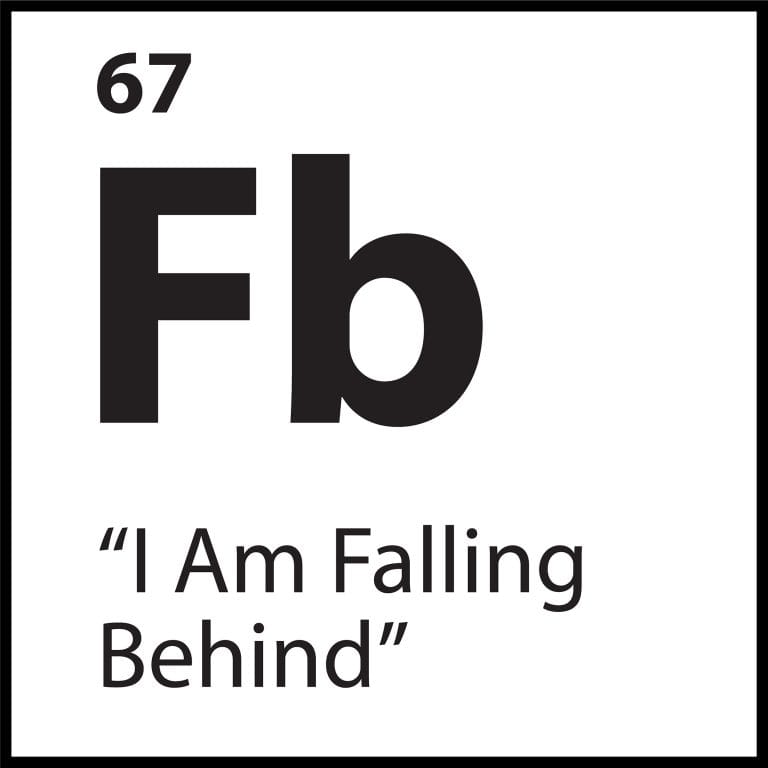
“I Am Falling Behind”
The belief “I Am Falling Behind” shows up as anxiety around progress, panic over timelines, and shame when comparing yourself to others. Therapy addresses the internal pressure and…
Explore this beliefWant to see how these fit into the bigger pattern map? Explore our full Limiting Belief Library to browse all core beliefs by schema domain and Lifetrap.
The beliefs above often belong to broader pattern families (schema domains), and they often form under certain early learning conditions (Non-Nurturing Elements™). Each belief below shows its associated domain and precursors.
“I Am Defective”
Schema Domain: Disconnection & Rejection
Lifetrap: Defectiveness / Shame
Non-Nurturing Elements™ (Precursors)
“I Am Not Understood”
Schema Domain: Disconnection & Rejection
Lifetrap: Emotional Deprivation
Non-Nurturing Elements™ (Precursors)
“I Am Falling Behind”
Schema Domain: Overvigilance & Inhibition
Lifetrap: Negativity / Pessimism
Non-Nurturing Elements™ (Precursors)
In this loop, beliefs function as self-fulfilling systems. An active belief shapes perception, drawing attention to confirming information. As evidence stacks up, internal pressure increases. Relief is then found through familiar response patterns. Although these responses work in the short term, they often generate outcomes that appear to confirm the belief, allowing the cycle to restart.
“I Am Defective”
Evidence Pile
When this belief is active, the mind interprets certain traits, needs, emotions, or reactions as signs of something fundamentally wrong that must be hidden, corrected, or managed to be acceptable.
Show common “proof” items
- Having emotional reactions that feel intense, inconvenient, or different from others
- Being told—directly or indirectly—that parts of you are “too much,” “not enough,” or problematic
- Struggling with the same sensitivities, needs, or patterns despite effort to change
- Feeling exposed, ashamed, or self-conscious when truly seen by others
- Comparing your inner experience to others’ outward composure or ease
The nervous system monitors social feedback, closeness, and exposure for signs that something inherent will be discovered and rejected if fully seen.
Show common signals
- Chronic sense of being “off,” different, or not quite right
- Hypervigilance to others’ reactions, tone, or withdrawal
- Strong discomfort with being known deeply or seen up close
- Interpreting neutral feedback as confirmation of being fundamentally wrong
- Feeling exposed, ashamed, or unsafe when attention turns inward
Relief comes from hiding the perceived defect—either by masking, over-adapting, or withdrawing before rejection can occur.
Show Opt-Out patterns
- People-pleasing, shape-shifting, or mirroring to avoid standing out
- Emotional withdrawal or guardedness in close relationships
- Preemptive rejection ("They won’t accept me anyway")
- Over-explaining, apologizing, or minimizing oneself
- Avoidance of intimacy, visibility, or situations that invite evaluation
“I Am Not Understood”
Evidence Pile
When this belief is active, the mind tracks moments of mismatch, misinterpretation, or lack of attunement and interprets them as evidence that others do not truly grasp your experience, intentions, or inner world.
Show common “proof” items
- Having to repeat, clarify, or explain yourself multiple times without feeling “gotten”
- Others responding to the surface of what you say while missing the underlying meaning or emotion
- Advice or reassurance that feels irrelevant, simplistic, or off-target
- Feeling unseen or mischaracterised in conflict or emotionally charged moments
- Past experiences of being talked over, misunderstood, or emotionally mismatched
As attempts to be understood feel unsuccessful, tension builds around expression, connection, and emotional safety.
Show common signals
- Frustration or agitation while trying to explain yourself
- Emotional exhaustion from repeated clarification
- A sense of isolation even when others are present
- Heightened sensitivity to tone, wording, or response timing
- Feeling invisible, alone, or disconnected despite engagement
To reduce the strain of feeling misunderstood, the system shifts toward protective or relieving patterns that reduce exposure or effort.
Show Opt-Out patterns
- Withdrawing emotionally or “going quiet”
- Oversimplifying or minimising what you share
- Over-explaining, intellectualising, or over-justifying
- Choosing self-reliance over connection
- Disengaging from conversations before feeling misread again
“I Am Falling Behind”
Evidence Pile
When this belief is active, the mind often scans for signs that others are ahead, progress is too slow, or time is being "wasted."
Show common “proof” items
- Seeing peers reach milestones sooner (career, relationships, finances, family)
- Comparing current progress to where they "thought they’d be by now"
- Noticing missed opportunities or paths not taken
- Feeling behind schedule relative to age, stage, or expectations
- Interpreting pauses, uncertainty, or rest as lack of progress
The nervous system stays oriented toward comparison and time pressure, registering life as something that is moving faster than the person can keep up with.
Show common signals
- Persistent sense of being "late," behind, or outpaced by others
- Frequent comparison to peers’ progress, milestones, or productivity
- Difficulty resting without guilt or urgency
- Feeling pressure to optimize, catch up, or do more—quickly
- Interpreting pauses, uncertainty, or slower progress as failure
Relief comes from pushing harder, accelerating effort, or measuring progress—temporarily easing anxiety while reinforcing the sense that time is running out.
Show Opt-Out patterns
- Overworking or staying constantly busy to avoid feeling behind
- Compulsively tracking productivity, milestones, or outcomes
- Rushing decisions or skipping recovery to "save time"
- Comparing achievements to reassure oneself (or feel worse)
- Difficulty stopping, slowing down, or enjoying progress already made
Therapy for ADHD often focuses on helping people better understand how their attention, motivation, and emotional responses are regulated — and how to work with those patterns more intentionally.
Rather than trying to force change through willpower alone, ADHD-informed therapy typically emphasizes clarity, structure, and practical strategies that support regulation in everyday life. The work is collaborative and tailored, with attention to how stress, expectations, and environment affect focus and follow-through.
While experiences in therapy vary, the overall aim is to help people relate to their patterns with more understanding and develop approaches that feel more sustainable over time.
What therapy often focuses on
Understanding ADHD Patterns
Therapy often includes identifying how attention, motivation, and emotional responses interact, and how these patterns show up across different areas of life.
Supporting Consistency and Follow-Through
A common focus is developing external supports, systems, and strategies that reduce reliance on urgency and help tasks feel more accessible.
Emotional Regulation and Stress Response
Many people with ADHD work on understanding emotional reactivity and learning ways to recover more quickly from frustration, overwhelm, or shutdown.
Reducing Shame and Self-Criticism
Therapy often involves addressing internal narratives that developed through years of misunderstanding, helping people separate their patterns from their sense of self.
What to expect
Assessment and Pattern Mapping
Early sessions often focus on understanding how ADHD-related patterns show up in daily life, including strengths, challenges, and environmental factors.
Education and Skill Building
Many people learn about attention regulation, motivation, and emotional processing, while exploring tools and strategies that support focus and organization.
Applying Strategies in Real Life
Therapy may involve experimenting with practical changes and reflecting on what works, adjusting approaches based on real-world feedback.
Integration and Ongoing Support
Later work often centres on refining systems, strengthening self-trust, and maintaining strategies that support consistency and balance.
When ADHD-related patterns begin to shift, the changes are often gradual rather than dramatic.
Many people notice differences in how they approach tasks, respond to pressure, and recover from setbacks. Instead of relying solely on urgency or last-minute stress to function, things may start to feel slightly more accessible, predictable, or manageable. These shifts tend to build over time as understanding increases and strategies become more integrated into daily life.
What change looks like varies from person to person, but it often shows up in consistency, emotional response, and self-trust rather than constant peaks and crashes.
Common markers of change
Work and Productivity
Before: Relying heavily on deadlines, pressure, or stress to get started or finish tasks.
After: Being able to engage with tasks earlier or with less reliance on last-minute urgency.
Emotional Responses
Before: Strong frustration, overwhelm, or self-criticism when focus or follow-through breaks down.
After: Greater ability to notice emotional reactions sooner and recover more quickly when things don’t go as planned.
Time and Organisation
Before: Losing track of time, underestimating how long tasks will take, or feeling constantly behind.
After: Improved awareness of time demands and more realistic planning, even if things aren’t perfect.
Self-Trust
Before: Doubting your ability to follow through or needing excessive reminders and compensation strategies.
After: Increased confidence in your systems and a growing sense that you can rely on yourself more often.
Skills therapy may support
Task Initiation
Developing ways to start tasks with less friction, even when motivation is low or the task feels uninteresting.
Emotional Regulation
Building the ability to respond to frustration, disappointment, or pressure without becoming overwhelmed or shutting down.
Planning and Prioritisation
Learning to break tasks into manageable steps and sequence them in a way that supports follow-through.
Self-Awareness
Recognizing personal attention and energy patterns and adjusting expectations or strategies accordingly.
Next steps
Start with understanding your patterns
Support for ADHD often begins by identifying how attention, motivation, emotional regulation, and energy actually show up in your day-to-day life. This can include noticing when tasks feel overwhelming, when focus comes easily, and what tends to derail momentum — without assuming these struggles mean something is “wrong” with you.
Build systems that work with your brain
Many people with ADHD benefit from practical strategies that reduce friction, such as external reminders, simplified routines, and realistic planning. Support focuses on experimenting with systems that fit how your brain works — rather than forcing yourself into structures that create more stress or shame.
Address emotional and nervous system impacts
ADHD often comes with emotional intensity, rejection sensitivity, burnout, or chronic self-criticism. Therapy can help unpack these patterns, build emotional regulation skills, and reduce the pressure to constantly “push through” at the expense of well-being.
Where to go from here
Get support for ADHD
You don’t have to manage ADHD on your own. Working with a therapist can help you understand your patterns, reduce overwhelm, and develop tools that support focus, self-trust, and sustainability — without trying to change who you are.
Learn how ADHD shows up for you
ADHD looks different for everyone. Therapy can help you explore how it affects your work, relationships, emotions, and sense of self — and what support might actually help.
Calgary Rejection Sensitivity and ADHD: Why Feedback Feels So Big
This Calgary guide explores why feedback can feel unusually intense with ADHD, drawing on research on emotional dysregulation, perceived criticism, and rejection sensitivity, while outlining how ShiftGrit maps the deeper loop underneath.
Questions
Do I need a formal ADHD diagnosis to get support?
No. Many people seek therapy because they recognize ADHD-like patterns in their attention, energy, or emotional regulation — even without a formal diagnosis. Therapy can still be helpful in understanding these experiences and finding supportive strategies.
Is therapy only about productivity and organization?
Not at all. While practical tools can be part of support, therapy also addresses emotional overwhelm, burnout, self-esteem, relationship challenges, and the long-term impact of feeling misunderstood or pressured to function differently.
Can therapy help alongside medication?
Yes. Many people use therapy alongside medication or other supports. Therapy can help with skill-building, emotional regulation, self-understanding, and navigating the everyday realities of ADHD that medication alone may not address.
Read more about ADHD
Continue reading our clinical overview of ADHD — what it is, common signs, contributing factors, treatment paths, and how therapy can help.

