






































Watching Your Hairline Like It's a Countdown
A receding or thinning hairline can stop reading as a neutral physical change and start functioning as a running scoreboard for worth, desirability, virility, or status. That appraisal shift tends to drive repeated mirror checking, concealment, comparison with others, photo avoidance, and reassurance seeking. Each of these behaviours briefly settles anxiety while quietly keeping the underlying fear in place.
A receding hairline can feel like living beside a quiet timer. Each photo, haircut, bright room, or glance in the mirror becomes a way of asking not only how much hair is left, but what the change says about youth, virility, attractiveness, status, and whether you will still be wanted. For many men, the distress quickly moves beyond grooming. The mind starts monitoring, comparing, concealing, researching, and asking for reassurance in an effort to get back control over something that feels public and progressive. From the outside, those moves can look practical. On the inside, they are often driven by shame, exposure, and fear of being seen differently in dating, intimacy, or ordinary social life. The pain is usually less about hair alone than about the limiting beliefs the change has activated: that being attractive, wanted, or enough is now in question.
This concern sits at the intersection of body image and identity. The countdown feeling comes from turning a gradual physical change into a running score of worth, desirability, and social standing. Instead of hair loss being one part of appearance, it starts to organize attention: mirrors become checkpoints, photos become tests, and other men become comparison points. That is why the distress can feel bigger than the amount of visible change. The system is not only reacting to hair; it is reacting to what hair loss seems to mean about belonging, virility, aging, and being chosen. Over time, vigilance, control, concealment, and reassurance can make the concern more central, even when they are meant to calm it.
It starts to mean more than hair
A receding hairline or thinning crown can become loaded with conclusions about aging, desirability, virility, status, and worth. That is why the emotional reaction may feel much larger than a grooming issue. The problem is not only the change itself, but the meaning attached to it.
Monitoring feels protective but keeps it active
Checking mirrors, testing lighting, revisiting photos, and mentally measuring visibility can feel like staying informed. In practice, these habits keep attention locked on the threat and make small cues feel bigger, more frequent, and more emotionally charged.
Control can turn into concealment
Hats, careful styling, avoided angles, research loops, and strategic positioning may offer a sense of agency for a moment. But when they become necessary for feeling safe enough to be seen, they can deepen shame and make ordinary visibility feel risky.
Dating and comparison raise the stakes
This concern often intensifies around attraction, intimacy, and rank. Other men's hair, confidence, or apparent ease can start to function like a scoreboard, while dating cues get read as proof of being less wanted or less attractive.
The pattern often becomes chronic and recurring
Even after a reassuring comment or a better day, the loop can flare again with the next photo, fresh haircut, bright light, or moment of comparison. It tends to recur because the underlying beliefs and the safety behaviours keep feeding one another over time.
Inner statements
If people really notice it, they will see me as older, less attractive, or less worth choosing.
Men whose hair feels closely tied to youth, desirability, or virility.
I just need to manage it better and then I can finally relax.
Men pulled toward control, concealment, and research loops after noticing thinning.
Other guys can pull this off. On me, it means decline.
Men who become highly comparison-based around peers, dating, or status.
If I put myself out there right now, I am setting myself up to be judged.
Men whose distress spikes in photos, dating, bright light, or other exposure moments.
Common questions
Why does this feel so personal when I know it should not matter this much?
Hair can carry meaning about youth, virility, attractiveness, status, and whether you will be chosen. When those meanings are active, a visible change does not stay at the level of grooming. It gets read as evidence about who you are and how other people will see you, which is why the reaction can feel much more intimate than expected.
Is this body-image distress or am I just reacting normally to a change in my appearance?
Both can be true. It is normal to have feelings about a visible, progressive change. It becomes more of a body-image pattern when checking, concealment, reassurance seeking, comparison, and avoidance start organizing daily life, and when the hairline begins functioning like a running score of worth, desirability, or status.
Why do checking, comparing, and trying to hide it make me feel worse over time?
These behaviours often lower uncertainty for a moment, so the brain learns to rely on them. But they also keep attention fixed on the threat, reduce opportunities to learn that visibility is survivable, and turn mirrors, photos, and other people's hair into ongoing evidence collection. Short-term relief can therefore create long-term preoccupation.
Does this mean I am vain, or is something deeper getting activated?
Not necessarily. In this pattern, the stronger issue is usually not vanity but shame, identity threat, and the fear that appearance changes say something final about being wanted or enough. Many men also feel embarrassed because they think they should not care, which can make the concern quieter, more isolating, and more painful.
In daily life, this pattern often shows up less as one dramatic reaction and more as a steady drain on attention. Getting ready can take longer because the hairline needs to be checked, adjusted, or mentally assessed. Mirrors, photos, bright light, comments, and fresh haircuts can all become exposure moments. Social plans may involve quiet calculations about angles, hats, or how visible the change might be. Even when no one else seems focused on it, the mind may keep returning to the same question: how much does this change alter how I will be seen, ranked, or wanted?
Monitoring and checking
- Checking the hairline or crown in mirrors more than once before leaving the house
- Tilting your head or moving between angles to judge how visible the thinning looks
- Testing different lighting because some lighting feels more exposing than others
- Revisiting photos to study whether the change is getting worse
Concealment and control
- Relying on hats, styling, or careful positioning to feel safe enough to be seen
- Planning haircuts around what will reveal the least
- Avoiding certain angles, seats, or camera positions
- Repeatedly researching ways to reverse, slow, or out-control the change
Comparison and ranking
- Scanning other men's hairlines or crowns in social settings
- Using peers' appearance as proof that you are falling behind
- Reading other men's confidence or dating success as evidence about your own status
- Feeling a hit of shame when someone your age seems to be aging better
Dating, photos, and visibility
- Pulling back from photos because they feel like permanent evidence
- Bracing more in dating or intimacy situations where appearance feels judged
- Avoiding bright light or highly visible settings that make the hair feel more exposed
- Worrying that first impressions now start with your hair rather than with you
Reassurance and research loops
- Asking whether it is noticeable and feeling only briefly settled by the answer
- Wanting others to confirm that it is not that bad again and again
- Searching for comparisons, fixes, or stories that might lower panic
- Feeling temporary relief after new information, then returning to doubt
Inner strain in body and mood
- Feeling self-conscious or ashamed in moments that put your appearance on display
- Noticing tension, heaviness, or a hard-to-relax feeling before social exposure
- Ruminating after interactions about how you looked from other people's point of view
- Losing mental bandwidth because attention keeps being pulled back to the hairline
When it tends to show up
It often spikes in situations that make appearance feel public or measurable: mirrors, photos, bright light, comments from others, fresh haircuts, dating, intimacy, and comparison with other men. It can also flare during ordinary getting-ready routines or after noticing a small change, because the mind quickly turns that cue into a wider conclusion about worth or desirability.
In a Body Image concern at the identity-belief level, the deeper issue is not simply that hair is changing. The deeper issue is that the change gets recruited as evidence about self-worth. A receding hairline can activate beliefs like I Am Unattractive, I Am Unwanted, or I Am Less Than, so attention narrows around mirrors, photos, comments, and comparison. Once that happens, the mind starts collecting evidence, the body stays braced for exposure, and behaviours such as checking, concealment, reassurance seeking, withdrawal, or overcontrol begin to manage the threat. These strategies make sense in the short term because they reduce uncertainty and shame for a moment. Over time, they strengthen the message that visibility is dangerous and that worth depends on how successfully the change is hidden or controlled.
A common loop
Trigger
You notice thinning, catch a reflection, see a photo, get a haircut, or enter a setting where your appearance feels more exposed.
Meaning assigned
The change is interpreted as evidence of being less attractive, less wanted, or lower in status, rather than as a neutral physical change.
Shame and vigilance
Self-consciousness, insecurity, comparison, and tension rise while attention locks onto the hairline and how other people might read it.
Control and avoidance
You check, conceal, compare, research, ask for reassurance, or pull back from visibility to lower the threat and regain a sense of control.
Brief relief
These strategies reduce uncertainty for a moment, which makes them feel necessary and increases the urge to use them again next time.
Belief confirmation
Because life gets organized around hiding, ranking, and monitoring, the mind treats ongoing preoccupation or reduced connection as proof that something is wrong with you.
When appearance starts to feel like a threat, the nervous system can behave as if exposure equals danger. Mirrors, photos, comments, dating, or bright light may create a vigilant, hard-to-settle state in which attention keeps scanning for evidence and the body stays slightly braced. Many men notice heaviness, tension, mental looping, or a sharp increase in self-consciousness before and after visibility moments. Concealment and avoidance can calm that activation quickly, which is why they are so compelling. The problem is that short-term relief prevents the deeper relearning that being seen is survivable and does not automatically lead to rejection, humiliation, or loss of worth. Over time, the body can start responding to ordinary appearance cues as if they are recurring identity threats.
The beliefs shown on this tab are meant to name the deeper conclusions that hairline monitoring can activate. In this concern, the change is often not processed as my hair is different but as I am less attractive, less wanted, or less than other men now. That is why mirrors, photos, dating cues, and comparison can feel so emotionally loaded. These beliefs are teaching anchors rather than a full inventory of everything a person thinks or feels. They help explain why the reaction can become global and identity-based instead of staying at the level of grooming. The point is not to pathologize caring about appearance. It is to recognize when appearance has become fused with worth, belonging, and status.
Limiting Beliefs Commonly Linked with Body Image Therapy
These identity-level patterns frequently show up for clients seeking body image therapy. Explore the beliefs to learn the “why” and how therapy can help you recondition them.
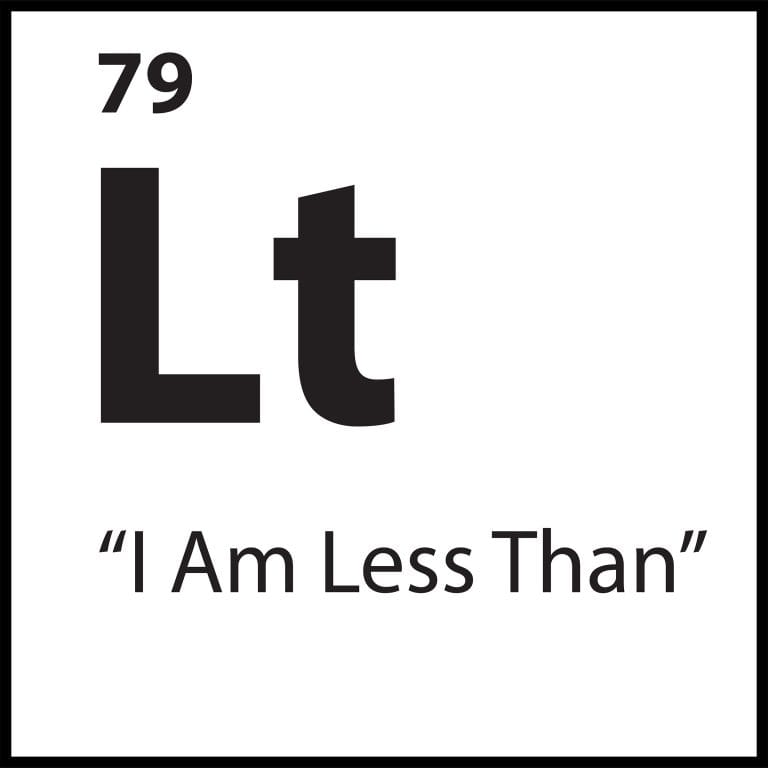
“I Am Less Than”
“I Am Less Than” reflects a chronic comparison-based identity belief where worth is measured against others. This pattern often drives overachievement, self-criticism, and internal pressure to prove value.…
Explore this belief
“I Am Unwanted”
The “I Am Unwanted” belief doesn’t just hurt — it wires the nervous system to expect rejection and chase approval. ShiftGrit targets the root pattern, not just the…
Explore this belief
“I Am Unattractive”
"I’m not desirable." This belief might whisper rather than shout, but its impact is deep. It fuels comparison, blocks intimacy, and keeps you stuck in shame — even…
Explore this beliefWant to see how these fit into the bigger pattern map? Explore our full Limiting Belief Library to browse all core beliefs by schema domain and Lifetrap.
This pattern often makes more sense when placed in a longer story of how worth, belonging, and appearance became linked. Hair loss itself may be recent, but the intensity of the reaction is often older than the hairline change. Earlier experiences of criticism, comparison, exclusion, emotional absence, or approval that depended on performance or image can teach the system to treat visible difference as risk. For some men, attractiveness, status, or being wanted were already carrying a heavy emotional charge before any thinning began. That does not mean there is one single cause, or that everyone with this concern shares the same background. It means the current distress may be plugging into older learning about how safe it is to be seen, judged, wanted, or ranked.
“I Am Less Than”
Schema Domain: Impaired Autonomy & Performance
Lifetrap: Failure
Non-Nurturing Elements™ (Precursors)
“I Am Unwanted”
Schema Domain: Disconnection & Rejection
Lifetrap: Defectiveness / Shame
Non-Nurturing Elements™ (Precursors)
“I Am Unattractive”
Schema Domain: Disconnection & Rejection
Lifetrap: Defectiveness / Shame
Non-Nurturing Elements™ (Precursors)
Hairline anxiety often becomes chronic because the behaviours that reduce distress in the moment also keep the threat alive over time. When you check, conceal, compare, research, ask for reassurance, or withdraw, the system gets a short burst of certainty or protection. That relief makes the strategy feel justified, especially when the hair change is ongoing and partly outside your control. But the same pattern keeps attention narrowed, limits corrective experiences, and leaves the mind ready to treat the next photo, comment, or bright room as fresh evidence. The concern then starts to run on anticipation as much as reality. Repetition here is not a sign that you are shallow or weak; it is what happens when a believable coping system keeps confirming the danger it was built to manage.
“I Am Less Than”
Evidence Pile
When active, the mind constantly ranks and compares.
Show common “proof” items
- Someone else performing better
- Not being the most competent person in the room
- Mistakes interpreted as proof of inferiority
- Praise dismissed as luck
- Social media comparison
- Being corrected publicly
- Observing others’ confidence
Ongoing comparison builds internal pressure to prove worth.
Show common signals
- Perfectionistic striving
- Fear of falling behind
- Anxiety around evaluation
- Reluctance to attempt visible risks
- Chronic self-criticism
Pressure releases through overworking, avoidance, or self-sabotage — each reinforcing inadequacy.
Show Opt-Out patterns
- Over-preparing to avoid exposure
- Avoiding competitive environments
- Downplaying achievements
- Procrastinating to protect ego
- Over-achieving but dismissing success
- Withdrawing after mistakes
- Seeking constant validation
“I Am Unwanted”
Evidence Pile
When this belief is active, the mind often points to moments of distance, lack of initiation, or perceived disinterest as evidence that one is not wanted.
Show common “proof” items
- Others don’t initiate contact or plans
- Messages or invitations feel one-sided
- People seem distracted, busy, or emotionally unavailable
- Neutral behaviour (short replies, delayed responses) interpreted as rejection
- Being excluded from plans or conversations
- Relationships ending or drifting without clear explanation
Ongoing monitoring of others’ availability and responsiveness can create emotional strain, leading to feelings of tension, sadness, or insecurity over time.
Show common signals
- Emotional tightness or heaviness in the chest
- Increased sensitivity to tone or response time
- Rumination after social interactions
- Feeling emotionally drained from relationships
- Persistent loneliness even when around others
When the pressure becomes too much, the system may release through behaviours that reduce vulnerability or pre-empt rejection.
Show Opt-Out patterns
- Emotional withdrawal or shutting down
- Pulling away before others can
- Avoiding initiating connection altogether
- Becoming overly agreeable or self-silencing
- Ending relationships prematurely
- Self-blame or internal criticism
“I Am Unattractive”
Evidence Pile
When this belief is active, the mind points to perceived lack of attention, comparison, or feedback about appearance as evidence that one is not visually or relationally desirable.
Show common “proof” items
- Not receiving romantic or sexual interest
- Comparing one’s appearance to others
- Neutral social interactions interpreted as lack of attraction
- Past rejection or lack of pursuit
- Critical comments (direct or indirect) about appearance
- Photos, mirrors, or social media reinforcing comparison
- Interpreting aging, body changes, or style as decline
Ongoing self-monitoring and comparison around appearance can create emotional strain, often experienced as insecurity, self-consciousness, or preoccupation.
Show common signals
- Heightened self-consciousness in social settings
- Anxiety around visibility or attention
- Rumination after interactions
- Fluctuating confidence based on perceived feedback
- Emotional exhaustion from comparison
Pressure is released through hiding, withdrawal, comparison, and pre-emptive disengagement, which reduces visibility and opportunity for connection — reinforcing the belief of being unattractive.
Show Opt-Out patterns
- Avoiding visibility or attention
- Withdrawing from dating or flirtation
- Hiding the body or face
- Over-monitoring appearance
- Excessive comparison to others
- Seeking reassurance about attractiveness
- Pre-emptive rejection or disengagement
- Performing confidence rather than inhabiting it
- Over-editing or controlling self-presentation
Therapy for this concern usually works on both levels at once: the practical behaviours that keep the pattern active and the deeper meaning the hairline has come to carry. The goal is not to make you stop caring about your appearance. It is to reduce shame, loosen the link between hair and worth, and build more choice in how you respond when the threat gets activated.
What therapy often focuses on
Mapping the threat meaning
Therapy can help clarify what the hairline has come to represent in your mind: aging, reduced desirability, lower status, rejection, or loss of control. Naming the meaning matters because the pain usually lives there, not only in the physical change.
Reducing checking and reassurance
A practical part of treatment is identifying the behaviours that keep the loop active, such as repeated mirror checks, angle testing, reassurance seeking, comparison, or photo review. The aim is to loosen habits that keep the threat front and centre.
Working with shame and defectiveness
Many people need more than behaviour change alone. Therapy may also work with the shame, defectiveness, and exposure themes that make hair loss feel like a verdict on being desirable, wanted, or enough.
Separating worth from appearance
When self-esteem has become heavily appearance-contingent, therapy can help widen the sources of value, belonging, and identity you live from. That does not erase appearance concerns; it reduces their power to define the whole self.
Building tolerance for visibility
Change often includes learning to stay present in photos, social settings, dating, or bright environments without immediately hiding, bracing, or over-controlling. This helps the nervous system relearn that being seen is uncomfortable at times, but not automatically unsafe.
Exploring older learning
If the current pattern plugs into earlier experiences of criticism, comparison, exclusion, or conditional worth, therapy can explore those links carefully. The goal is not to force a single explanation, but to understand why this particular change lands so hard.
What to expect
Getting specific about the loop
Early work often focuses on concrete situations: what set the threat off, what meaning showed up, what the body did, and which coping response followed. This helps turn a vague fear into a workable pattern.
Changing the behaviours that keep it active
Part of therapy may involve reducing checking, concealment, reassurance, comparison, or avoidance. This can feel uncomfortable at first because those strategies often act like short-term regulators before deeper change is established.
Working underneath the shame
As the pattern becomes clearer, therapy can start addressing the beliefs and emotional learning underneath it. This is often where concerns about being unattractive, unwanted, less than, or exposed begin to loosen.
Practising visibility with more choice
Later work often involves showing up differently in the situations that used to trigger bracing or withdrawal. The goal is not perfect confidence, but more flexibility, less panic, and fewer decisions driven by shame.
Change usually looks less like total indifference and more like relief, flexibility, and a wider life. You may still notice your hairline, but it stops functioning like a daily countdown to lost worth. Triggers such as photos, bright light, comments, dating, or fresh haircuts may still register, yet they no longer pull you automatically into checking, concealment, or spiraling comparison. The shift is often from panic-driven management to choice-based decisions, and from identity threat to a steadier sense that appearance is only one part of you.
Common markers of change
Attention and monitoring
Before: Every mirror or reflection becomes a checkpoint for how bad the hair looks today.
After: You can notice your hairline without turning it into a full review or a prediction about your value.
Social visibility
Before: Photos, bright light, and being visibly seen create bracing, positioning, or avoidance.
After: You can be in more settings with less pre-planning, less hiding, and less urge to escape.
Self-worth and identity
Before: Thinning automatically means I am less attractive, less wanted, or falling behind.
After: Hair loss may still matter, but it no longer acts as total proof about your desirability or worth.
Grooming decisions
Before: Haircuts, hats, styling, or shaving are driven mainly by panic, concealment, or emergency management.
After: Hair choices become more deliberate and based on preference, practicality, or values rather than shame.
Relationships and dating
Before: You seek repeated reassurance, compare yourself constantly, or withdraw before rejection can happen.
After: You can stay more present with uncertainty, ask for less reassurance, and show up without assuming the worst.
Daily mental bandwidth
Before: Large parts of the day get taken over by checking, ranking, researching, or replaying how visible the hair looked.
After: More attention returns to work, rest, relationships, and ordinary presence because the concern is no longer running the day.
Skills therapy may support
Trigger mapping
Recognizing that photos, bright light, fresh haircuts, comments, and dating do not all activate the same fear helps you respond more specifically instead of spiraling everywhere.
Checking reduction
Learning to delay or limit mirror checks can interrupt the cycle in which every glance becomes a new source of alarm and evidence.
Uncertainty tolerance
Practising being seen without immediately fixing, hiding, or asking for reassurance helps build tolerance for not having total control over how you are perceived.
Comparison interruption
Catching the moment when other men's hair or confidence turns into a scoreboard can help you step out of ranking before shame fully takes over.
Shame-aware self-talk
Replacing harsh conclusions such as I am declining or no one will want me with more grounded language can reduce how quickly the hairline becomes an identity verdict.
Identity broadening
Strengthening sources of worth beyond appearance makes it easier to relate to hair loss as one change to navigate rather than a total definition of who you are.
Next steps
Map a recent spike
Write down one recent moment that set the concern off, such as a photo, comment, bright room, or fresh haircut. Note what the hairline seemed to mean in that moment and what you did next to manage the threat.
Name your management moves
Make a practical list of the behaviours you use to cope: checking, hats, styling, avoided angles, comparison, research, reassurance, dating withdrawal, or photo avoidance. Specificity makes the pattern easier to work with.
Track the relief window
Notice which strategies help for a few minutes but leave you more preoccupied later. That brief relief often marks a maintaining behaviour rather than a true solution.
Look for the deeper belief
Ask whether the hardest part is really the hair, or the conclusion attached to it: less attractive, less wanted, less desirable, less enough. That question can help guide the kind of support that will be most useful.
Where to go from here
Get matched with a ShiftGrit psychologist
If the hardest part is the meaning underneath the hair, our team can help you work on the belief, not just the mirror.
Explore body image support
See how ShiftGrit works with appearance-related distress and the beliefs that drive it.
Research: the psychological consequences of hair loss
A systematic review on how androgenetic alopecia affects self-esteem and quality of life. Aukerman and Jafferany, 2022.
Research: the psychosocial impact of hair loss in men
A systematic review and meta-analysis on hair loss and the wellbeing of men. Frith and Jankowski, 2023.
Questions
How do I know when this has crossed from ordinary frustration into a pattern worth getting help for?
It may be worth getting help when the concern is taking over mental bandwidth, shaping what you wear, where you sit, whether you date, whether you take photos, or how you feel about yourself day to day. A good marker is when the hairline stops being just a change and starts functioning like evidence about your worth, desirability, or status.
Can therapy help even if the hair loss itself is real and progressive?
Yes. Therapy does not require pretending the hair loss is imagined or unimportant. The work is usually about the pattern around it: the meanings attached to the change, the shame and exposure it activates, and the behaviours that keep the threat feeling constant. Real change can still be addressed without letting it define the whole self.
What if the worst part is dating, being seen, or feeling exposed around other people?
That is a common presentation of this concern. Hairline distress often intensifies where being wanted, chosen, or ranked feels most immediate, especially in dating, intimacy, and social visibility. Therapy can help with the loop that turns these situations into proof of being less attractive or less wanted, rather than simply helping you talk yourself out of it.
Will therapy ask me to stop caring about my appearance altogether?
Usually no. The goal is not forced indifference or pretending appearance never matters. The goal is a looser link between appearance and worth, with less checking, less concealment, less panic, and more freedom to make grooming decisions from preference rather than shame.
What if I feel embarrassed talking about hair loss because it seems superficial or unmanly?
That embarrassment is part of why the concern can become so isolating. Many men absorb the message that appearance should not matter to them, which can turn a real grief about change, desirability, or aging into something private and shameful. Talking about it does not make the concern superficial. It often helps name the deeper identity threat that has been running quietly in the background.
Can I still get help if I am also considering treatments, camouflage, or shaving my head?
Yes. Getting support does not require choosing one appearance decision first. Therapy is not about policing whether you pursue treatment, camouflage, or shaving. It is more about understanding whether those choices feel deliberate and values-based, or whether they are being driven mainly by panic, concealment, and fear of what the hairline means about you.
What if reassurance helps for a minute but I keep needing more of it?
That pattern usually suggests reassurance is working as a short-term regulator rather than a lasting solution. It lowers anxiety briefly, but it can also teach the mind that the fear needs constant checking and outside confirmation. Therapy can help you understand that loop and build ways of responding that do not keep feeding the need for more reassurance.
Read more about Body Image
Continue reading our clinical overview of Body Image — what it is, common signs, contributing factors, treatment paths, and how therapy can help.

